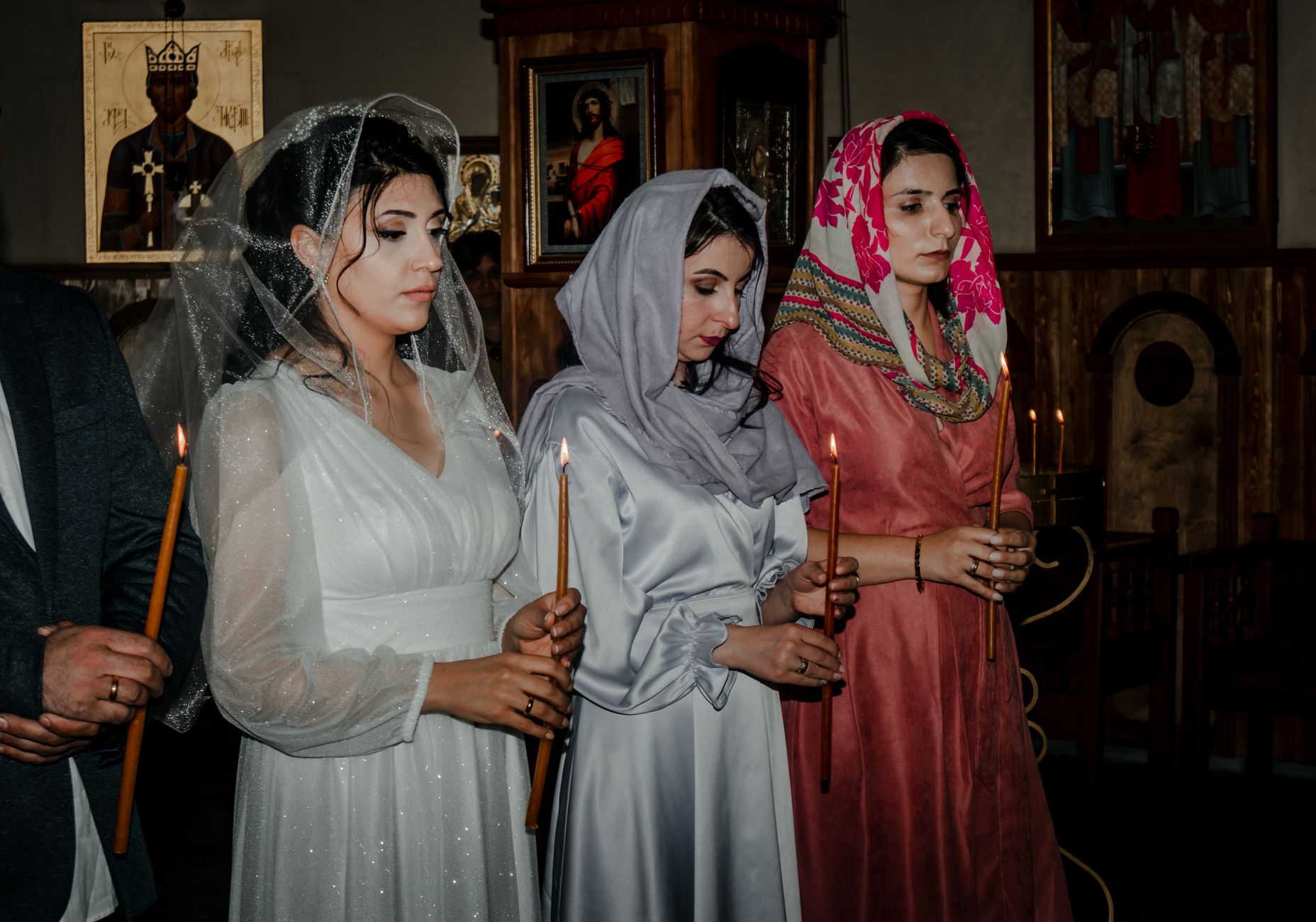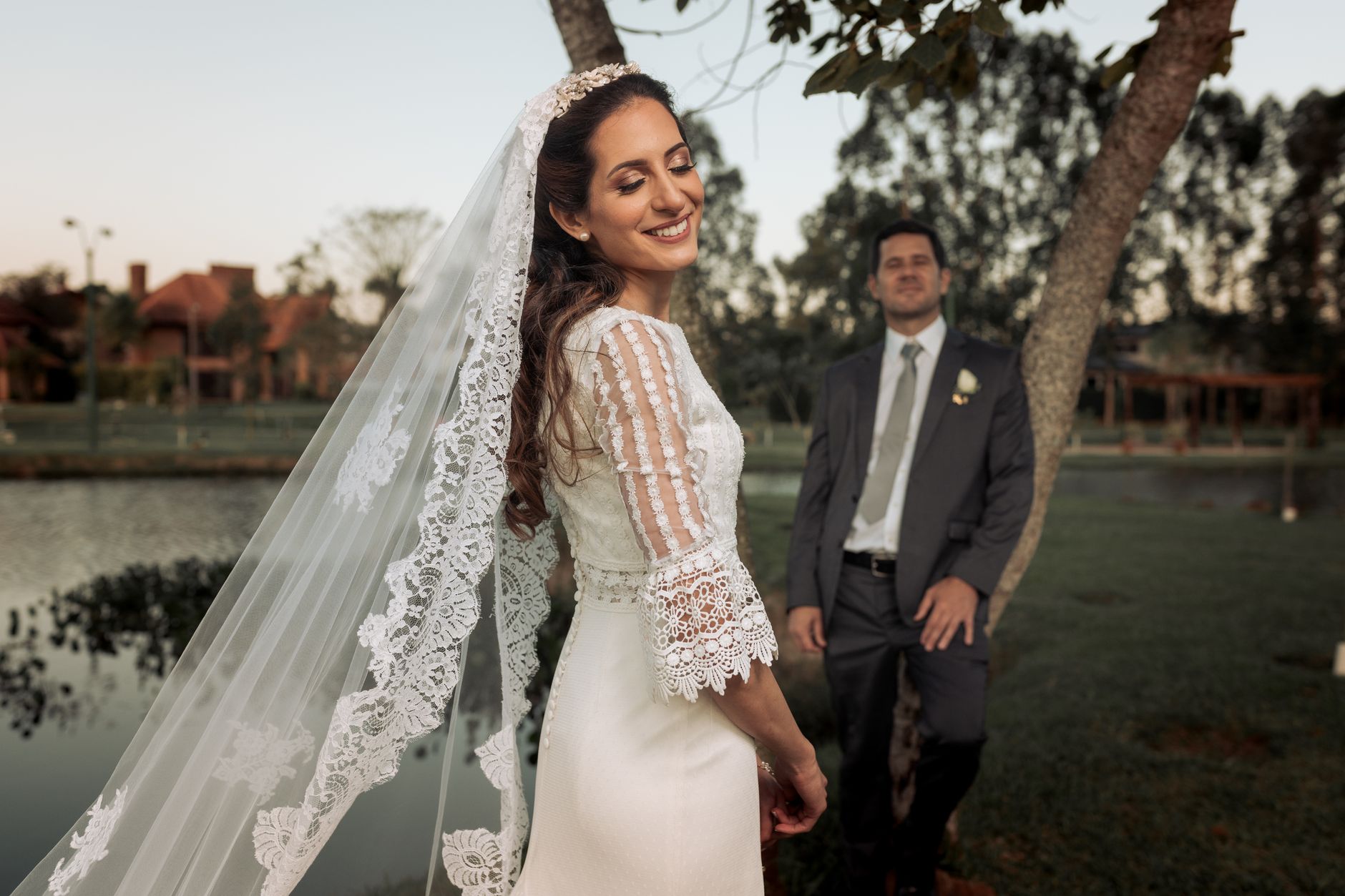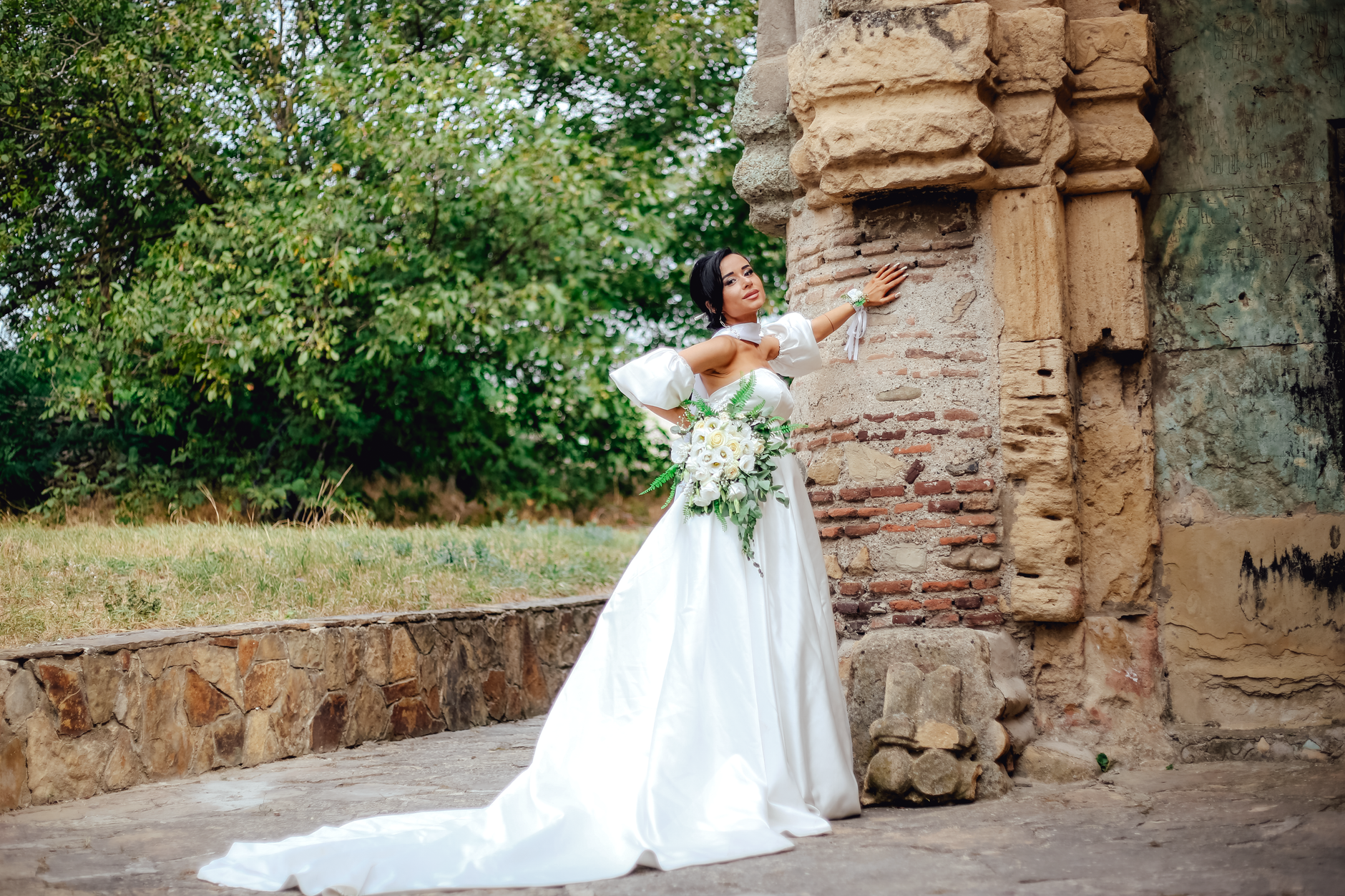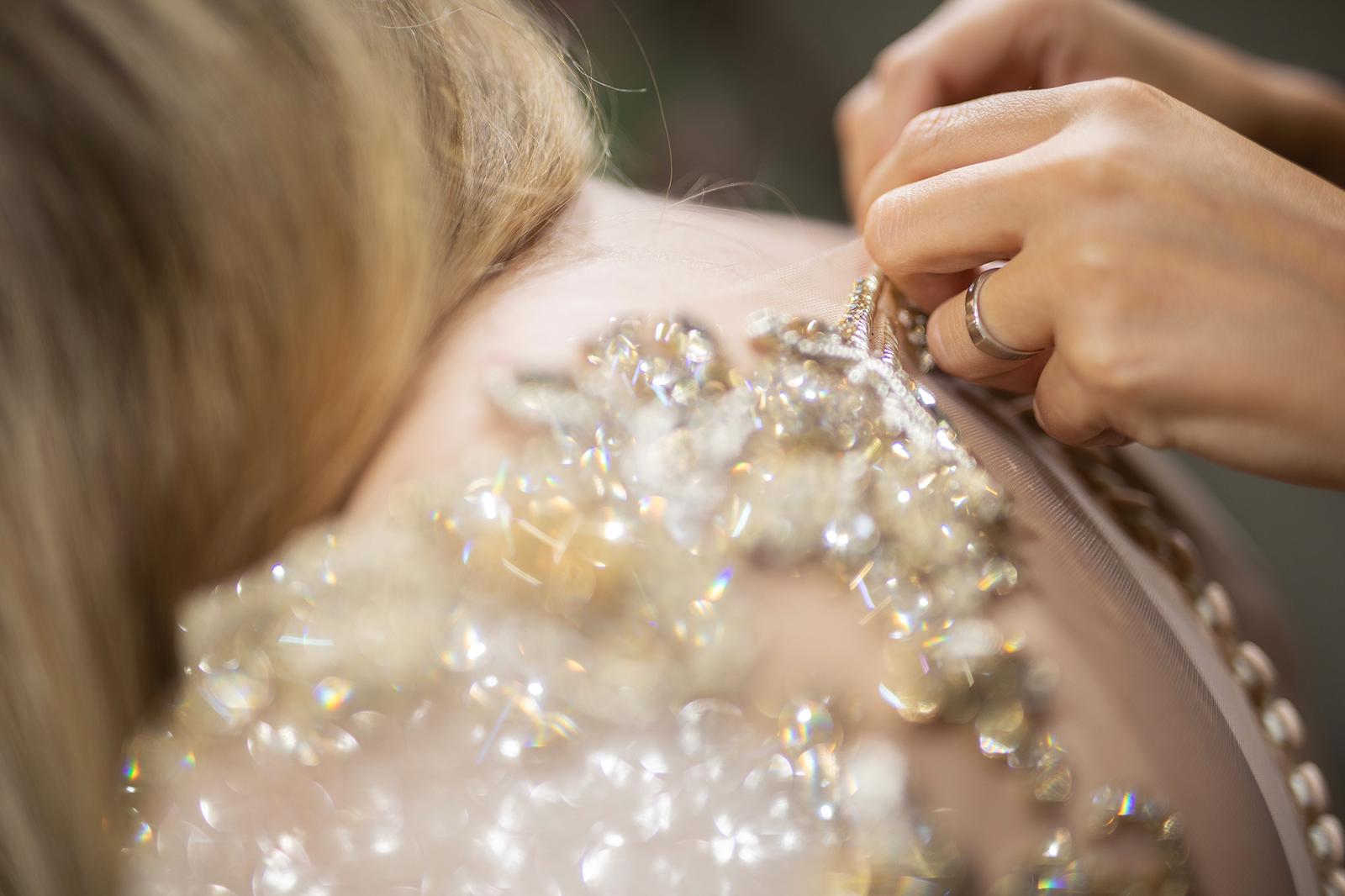

This season has little interest in restraint. Fitting rooms are full of corseted bodices, generous skirts, lace laid over lace, small pearls and flowers that lift away from the cloth. The question is no longer whether a wedding gown may be decorated, but how several kinds of ornament on one dress can speak with a single voice.
One detail leads, the rest follow
A richly worked gown stays calm only when it is clear what comes first. If the skirt carries volume and texture, let the neckline stay clean. If the bodice is densely embroidered, the skirt can be the smooth plane that holds it. The test is simple: close your eyes in front of the mirror, open them, and notice what you saw first. If no answer comes, two stories are competing on the same dress.
Repetition is quieter than mixing
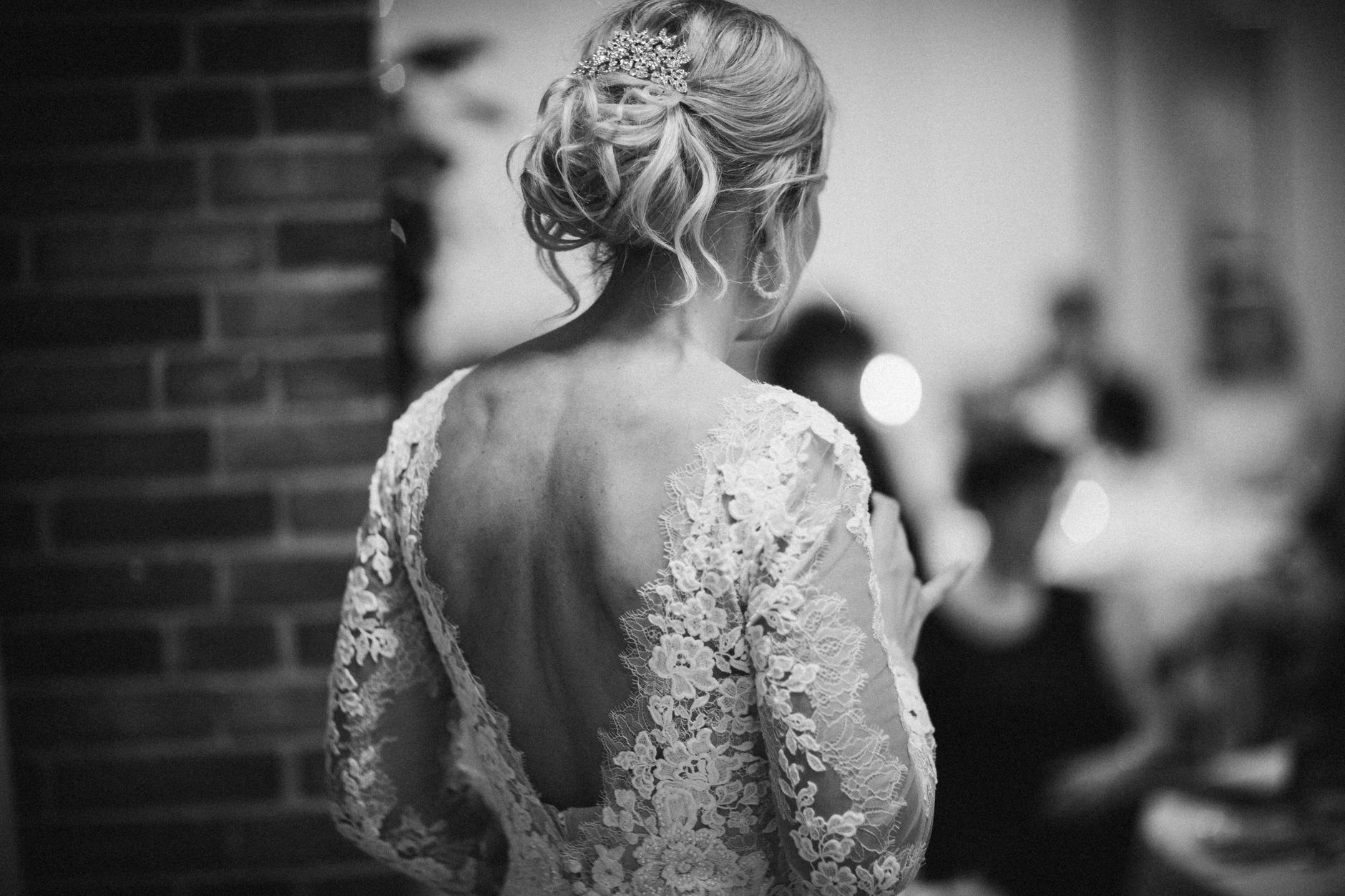
The most harmonious opulent gowns rarely collect many different materials. They repeat one. The same lace appears on the sleeve and again, discreetly, along the edge of the veil; the same floral motif travels from the waist down the train and fades there. Repetition suggests one hand made the whole dress, while a sum of unrelated trims always betrays that they were added later.
The same is true of shine. Matte pearl sits beautifully on matte satin, while crystal asks for a quieter setting and a little space around it. When two kinds of light meet on one gown, in photographs one will always swallow the other.
Scale, empty space and movement
A large motif needs a large surface: the train, the lower skirt, the back. Fine work belongs closer to the face, where it is read from very near and all day long. Between them, leave at least one quiet zone — usually a band of plain fabric at the neckline or the waist — so the eye has somewhere to rest.
- Volume tolerates less ornament than brides expect; the silhouette is already a statement.
- Details that move, such as three-dimensional petals or fringe, read far stronger than they look on the hanger.
- Embroidery that follows the seams flatters the cut; scattered embroidery breaks it.
How to test it at a fitting
In the fitting room it is worth walking, sitting and turning, then asking someone to look at you from three steps away. An elaborate gown must survive both scales: the detail seen in an embrace, and the silhouette read from the far end of a room. Weight deserves a thought too, as layers of beading and embroidery can surprise you late in the evening.
Our fittings are arranged in advance and held privately, in sizes 34 to 44, including softer lines for brides who are expecting. Gowns may be rented or purchased, and our rental contract is valid across the border, which makes planning simpler for brides from Serbia, Croatia and the diaspora.