
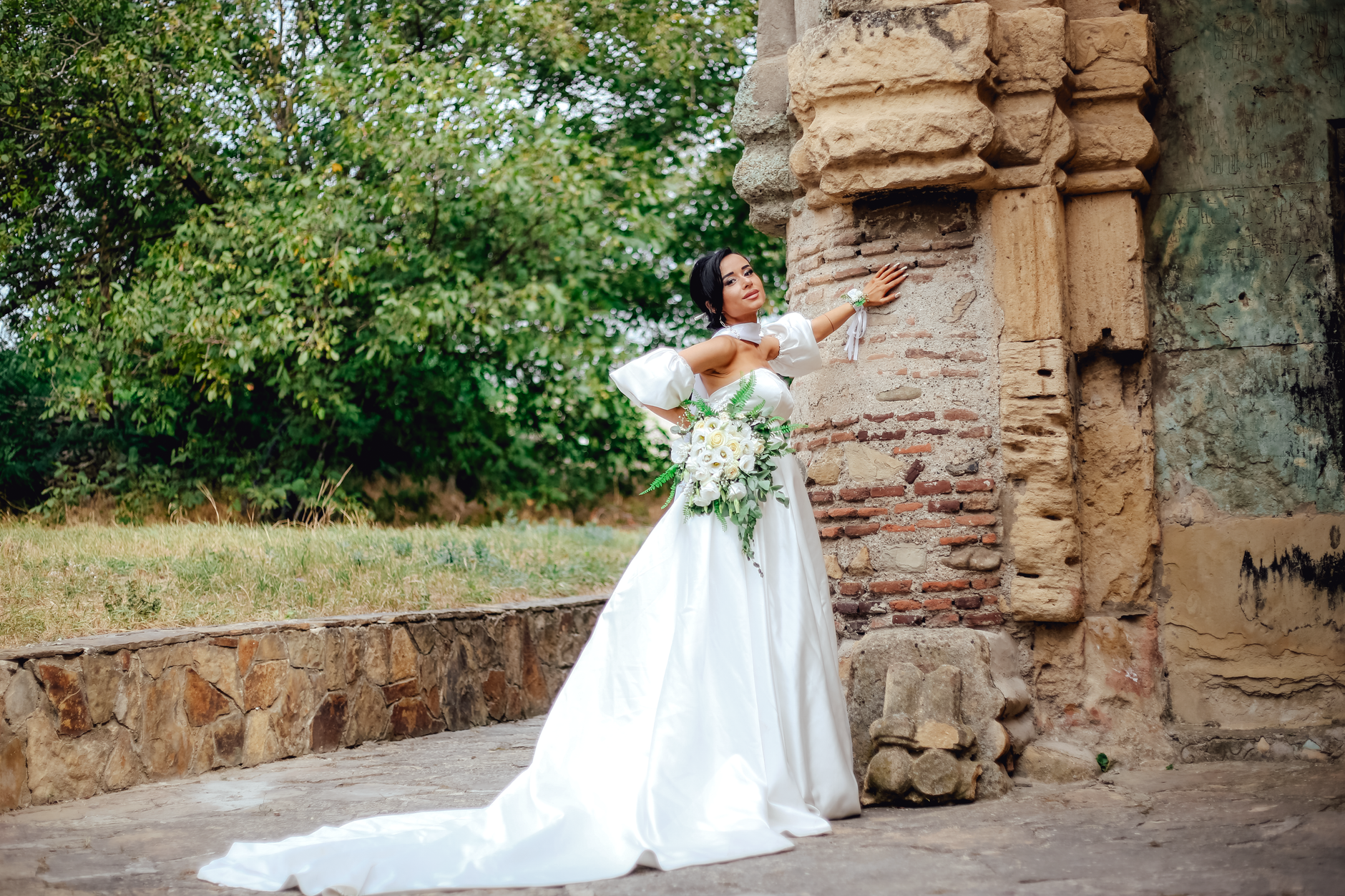
Of all the fabrics quietly entering bridal this season, linen is the most unexpected. For years it belonged to the groom's suit and to long summer days by the sea; now it is appearing in white, in collections made for brides marrying in a vineyard, in the courtyard of an old stone house, or on a terrace above the water. It is not a fabric for every gown — but where it belongs, it belongs completely.
Why linen, and why now
Linen does not shine. It absorbs light and gives it back softly, with a faintly sandy texture, so white never looks harsh on it; the tone sits closer to ivory, cream or unbleached cloth. That is exactly why it stays calm in strong summer light, where satin can be unforgiving. Then there is comfort: linen breathes, it does not cling, it does not hold heat — and at a midday ceremony that matters more than any embellishment.
In the salon we most often see it blended, with silk or viscose. These cloths keep the character of linen but fall more softly and crease far less than pure flax. It is worth asking for the finer, more closely woven qualities, too: they read closer to silk than to household linen, and the difference only shows up close.
The cuts linen likes
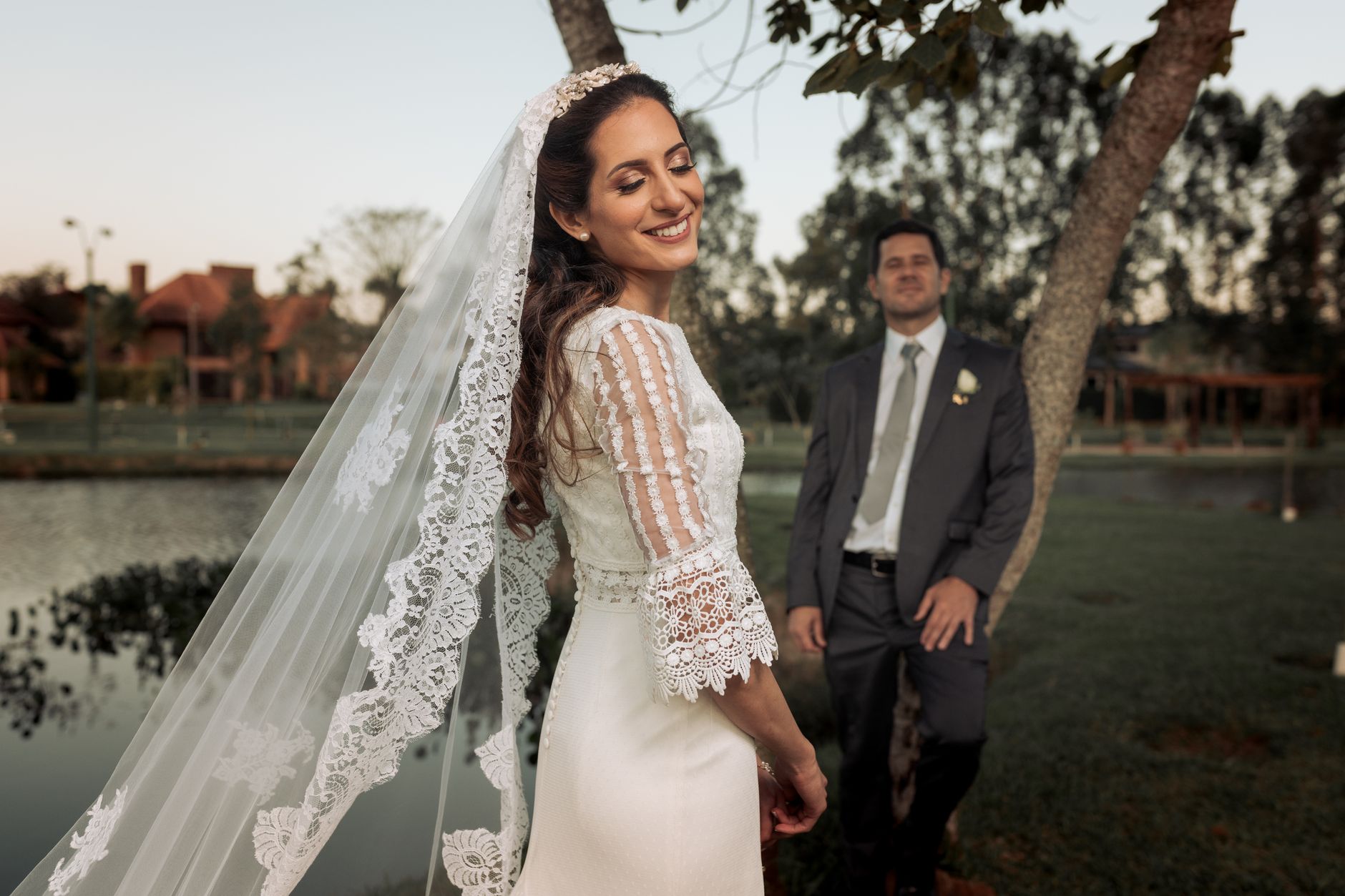
Linen dislikes complication. It looks best when it is allowed to stay simple, which makes the straight column, the quiet A-line and a soft, slightly lowered waist its natural allies. A square neckline, fine straps or a discreet collar are content enough; beading and heavy embroidery tend to look borrowed on this cloth. If you want ornament, let it come from the fabric itself — from a seam, a fold, hand-worked openwork or a crocheted edge, a pairing very much of this season.
It is a generous fabric for brides who are expecting, as well: a soft line falling from under the bust, with no corsetry or boning, leaves room and does not press through a long day.
Creases that will not be pressed away
Let us be honest: linen creases. After the drive, the table, the embraces, the day leaves its marks on the cloth. That is not a flaw but the nature of the fibre, and a bride who chooses linen chooses that too. Blends recover faster, and folds in a skirt all but disappear as you walk. If a perfectly smooth gown in the very last photograph matters greatly to you, linen is probably not your fabric — and that is entirely fine.
At the fitting
Try a linen gown the way you will wear it: sit down, walk, raise your arms. Look at it in daylight, because the texture only reads properly outdoors. Check the lining — a good lining decides whether the dress falls calmly or clings.
We keep gowns in natural fibres both to rent and to buy, in sizes 34 to 44, and fittings are private and unhurried, by appointment. For brides coming from Serbia, Croatia or the diaspora, the rental agreement is valid across the border, so the gown can travel to the ceremony and come quietly home.