
One of the most consequential details of a wedding gown sits where the bride herself rarely sees it: at the back. The way a dress closes decides how precisely it fits, how it reads in photographs taken from behind, and how calm the hour before the ceremony will feel. With structured, elongated bodices returning this season, the question of closure has become part of the style again, not merely a matter of technique.
Lacing: the most room to adjust
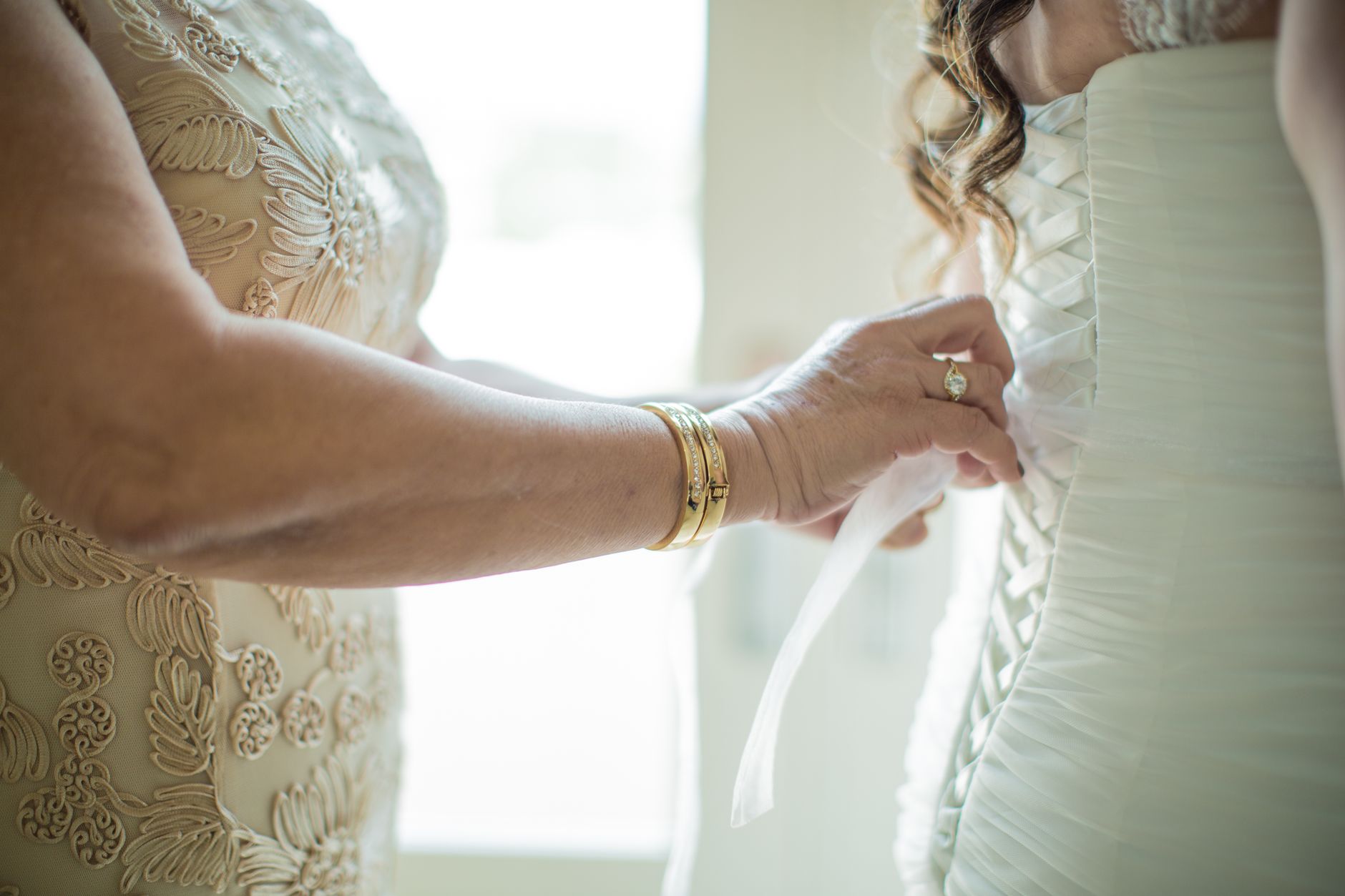
A satin or organza ribbon drawn through a column of eyelets gives the back softness and movement. Beneath it there is usually a narrow panel of fabric that keeps the back covered while the lacing is tightened, so the gown stays closed even when the ribbon is loosened. The practical advantage is real: lacing allows several centimetres of tolerance in either direction. That makes it a natural choice for brides who choose their gown far in advance, for those expecting a baby who want a soft line above the waist, and for any cut that must settle without a last-minute alteration. For a gown that is rented, lacing often means the same dress sits beautifully across a wider range of sizes, from 34 to 44.
A hidden zip: the unbroken line
Smooth, densely woven fabrics — crepe, mikado, heavy silk — look best when nothing interrupts them. A concealed zip set into the seam preserves a clean vertical and never breaks the weave. This closure asks for more exacting work, because a zip does not forgive later changes the way lacing does. In return, dressing is quick and the back stays still and architectural, which suits narrow, columnar cuts particularly well.
Fabric-covered buttons
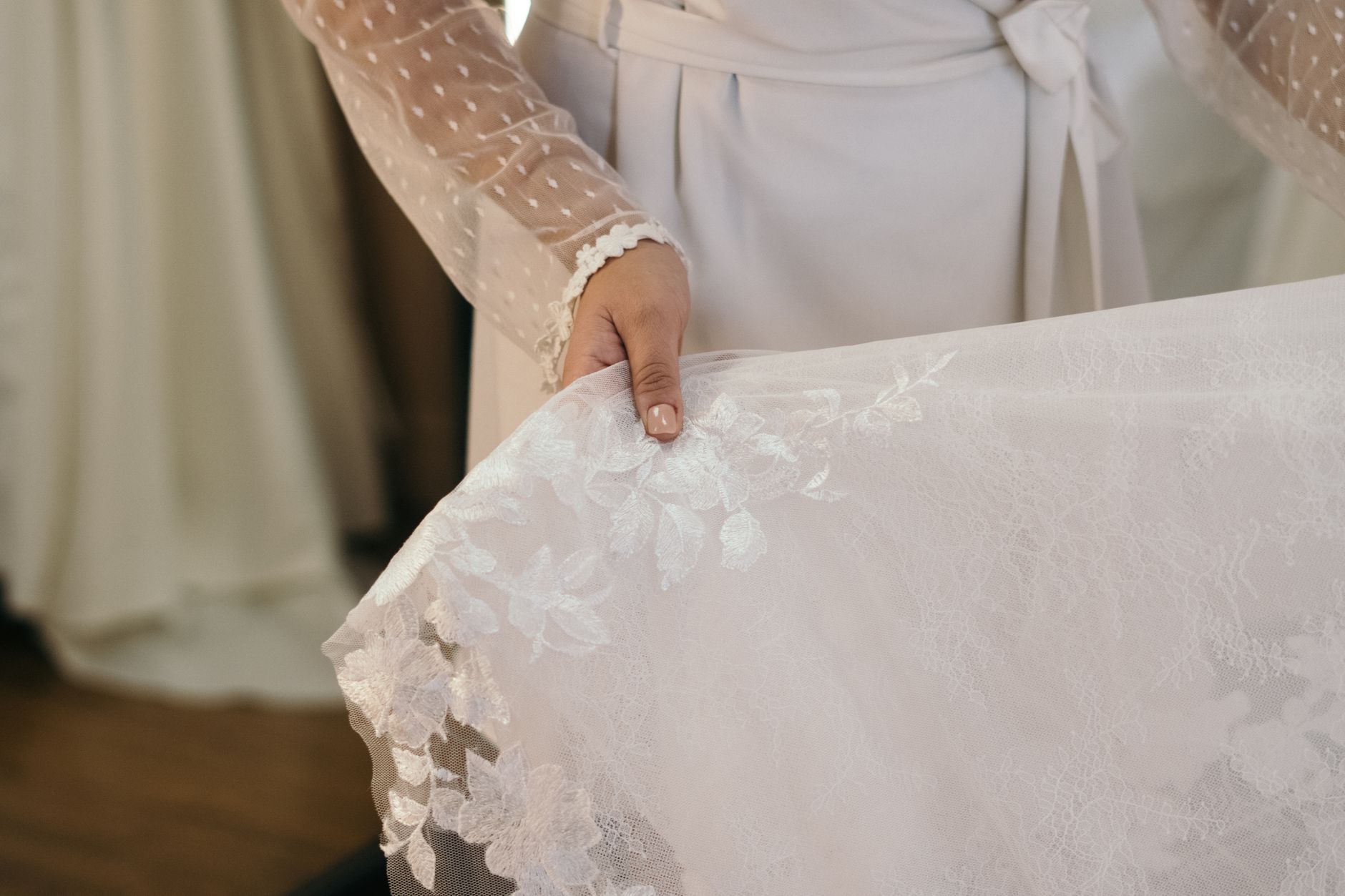
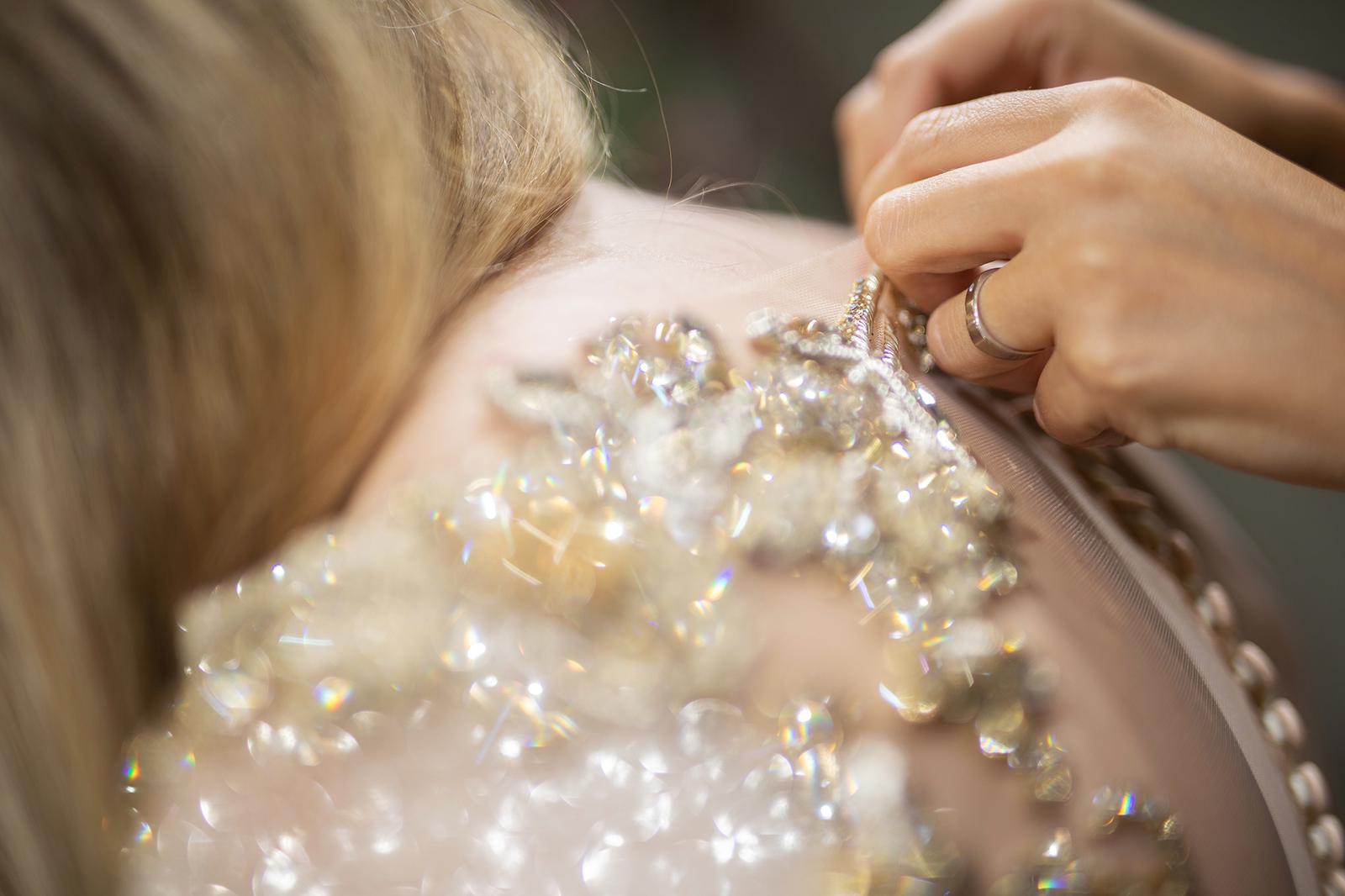
A row of small buttons descending from the nape, past the waist and on towards the hem feels restrained and quietly traditional. It lengthens the back and gives the eye a line to follow, especially when glimpsed through the tulle of a veil. Buttons are rarely asked to work alone today: a closure underneath carries the fit, while the buttons remain ornament. Worth knowing, too, that dressing takes longer and needs another pair of hands — a lovely, unhurried moment, but one to allow for in the morning's timing.
What to test at the fitting
- Sitting and dancing: whether the closure stays flat as the body bends.
- Breathing: a bodice should hold, not grip; lacing is tightened gradually.
- The view from behind: how it reads under a veil and in daylight.
- Time: who will dress you, and how many minutes it truly takes.
At a private fitting, arranged by appointment, these questions are answered unhurriedly — equally for brides who buy their gown and for those who rent it. For brides coming from Serbia, Croatia or further afield, the rental agreement holds across the border, so the dress travels to the ceremony as carefully as it was chosen.