
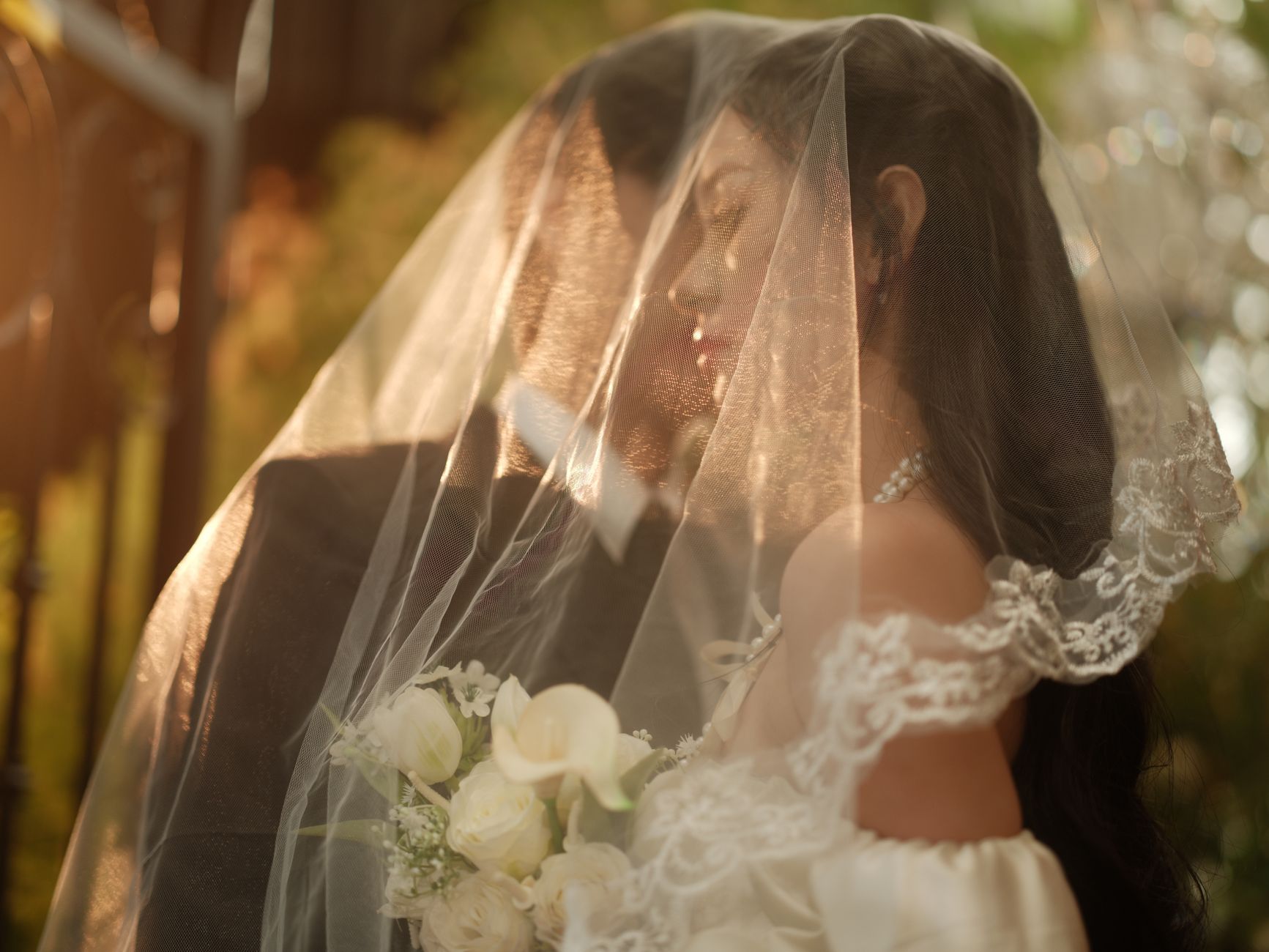
The veil has quietly returned to where it once belonged — in front of the face. Not the heavy, opaque curtain of old photographs, but a fine, almost weightless tulle through which features remain visible. Brides are asking for the moment again: the walk behind a soft screen of fabric, and the hand that lifts it just before the vows.
The short front layer
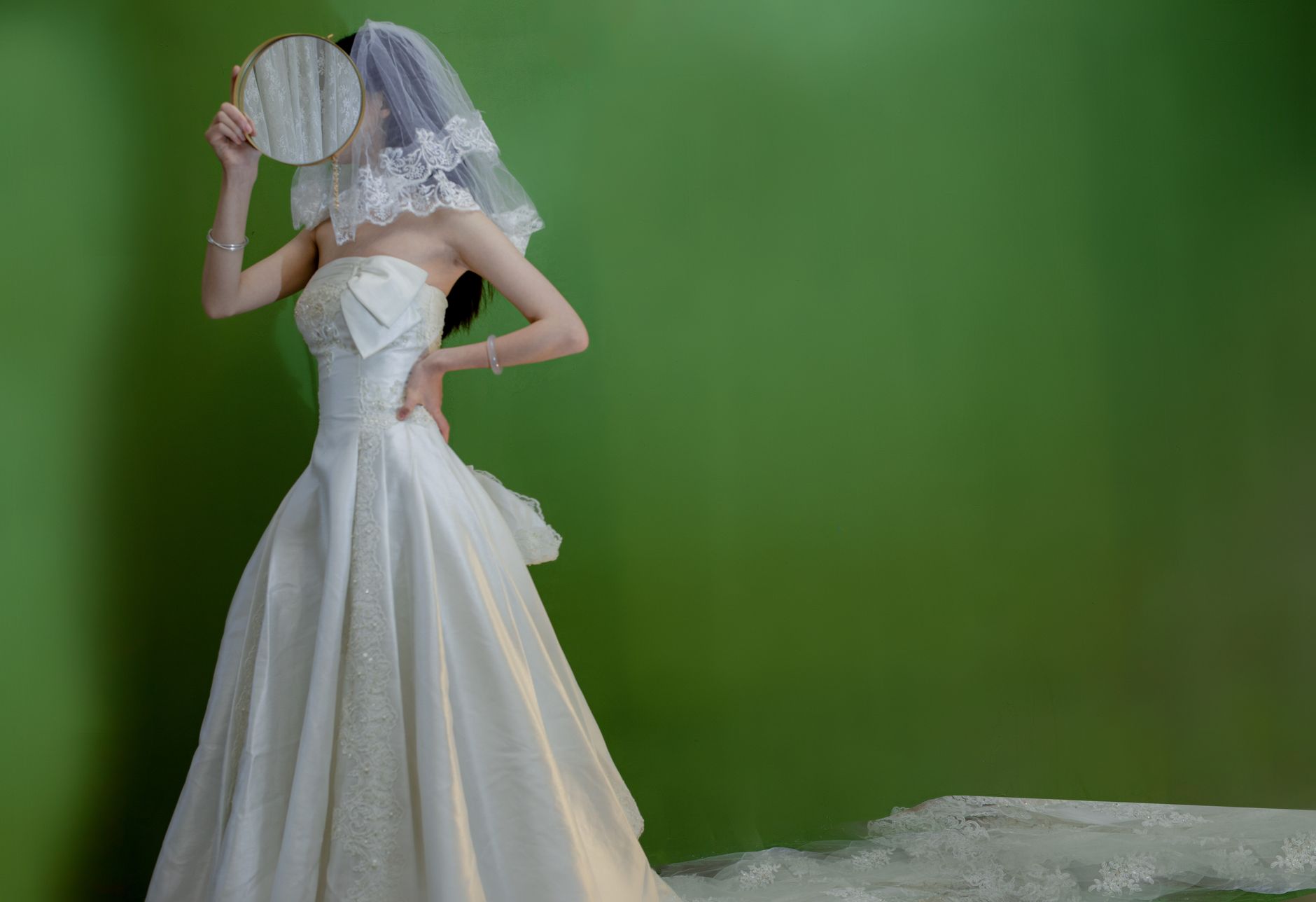
Most often this means a two-tier veil: the longer tier falls down the back, while the shorter front tier covers the face and ends below the chin, at the shoulders, or by the elbow. Length is not a detail. A chin-length layer feels composed and keeps attention close to the face; a shoulder-length one creates a softer, hazier frame and photographs far more kindly. Today's versions are cut from fine illusion tulle, much lighter than the netting of decades past, so what shows through is an expression rather than an outline.
Netting: the same idea, shortened
Alongside it, the small net veil has come back — a short, wider-weave piece that crosses the eyes or stops mid-face. It sits on a comb or beside a modest ornament in the hair, left plain or finished with pearls along the edge. It suits the bride who wants restraint and unmistakable ceremony at once, particularly for a smaller, quieter service.
What the gown has to give in return
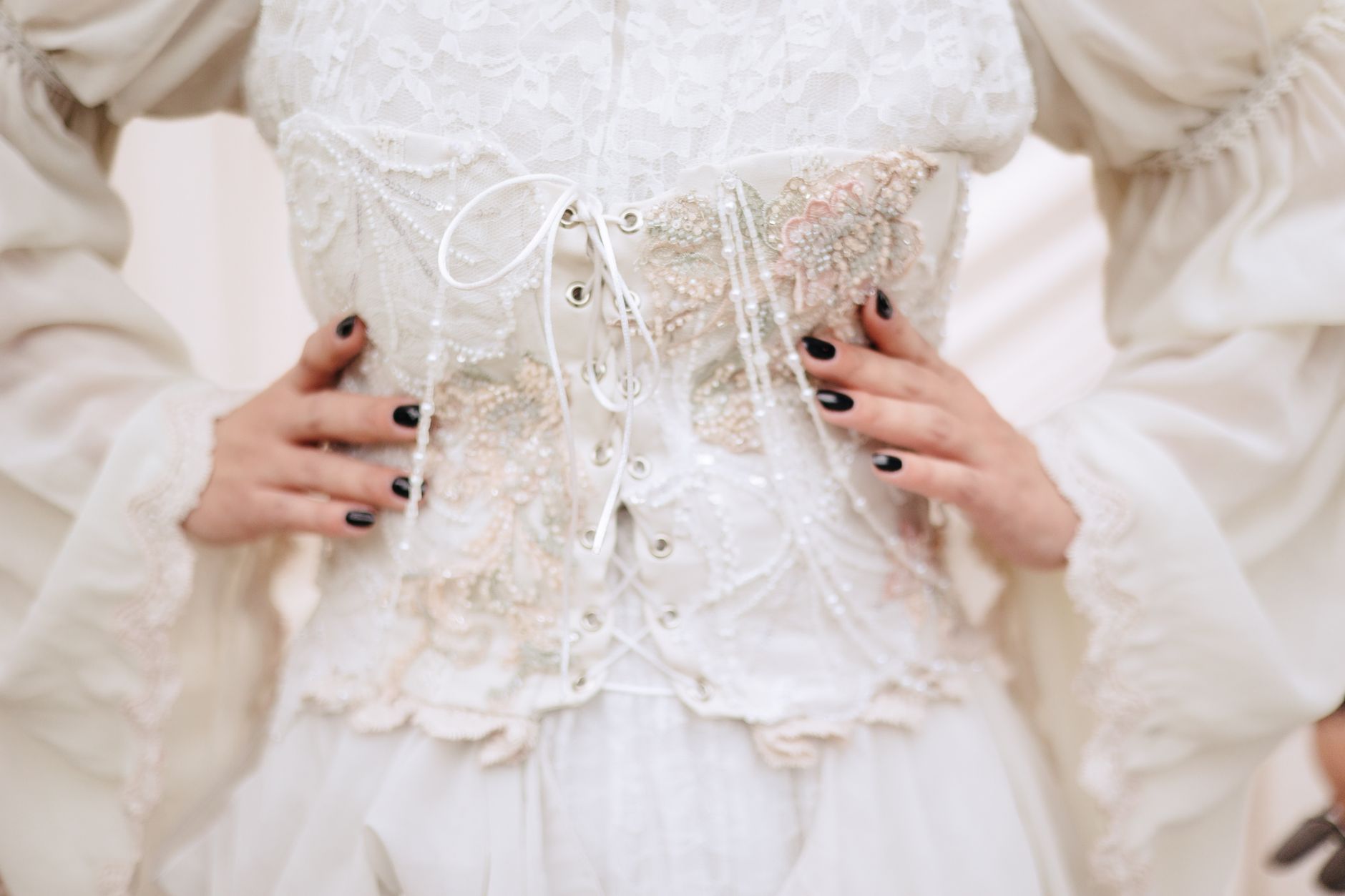
The rule is simple: if the veil covers the face, the bodice should stay calm. A high neckline, heavily embroidered sleeves and two layers of tulle crowd one another within seconds. Quiet necklines — a straight line, a shallow V, fine straps — leave the veil room to be the event. If the veil carries a lace edge, let it echo the lace of the gown rather than match it exactly.
- Hair: a low chignon or pinned hair holds a comb most securely under the weight of two tiers.
- Wind: for an outdoor ceremony we choose a slightly shorter front tier and add extra pins.
- Proportion: the front layer visually shortens the upper body, so it is balanced against the waistline.
At the fitting
A veil is never chosen apart from the gown. At the fitting we lower it over the face, walk in it, sit down, turn — and rehearse the lift, because those few seconds are remembered for a lifetime. We also decide who performs it: a father, a partner, or the bride herself, with one unhurried movement backwards. Whether your gown is rented or bought, veil and dress are tried together in the same appointment, without haste and without an audience, since only side by side do they show their true measure.