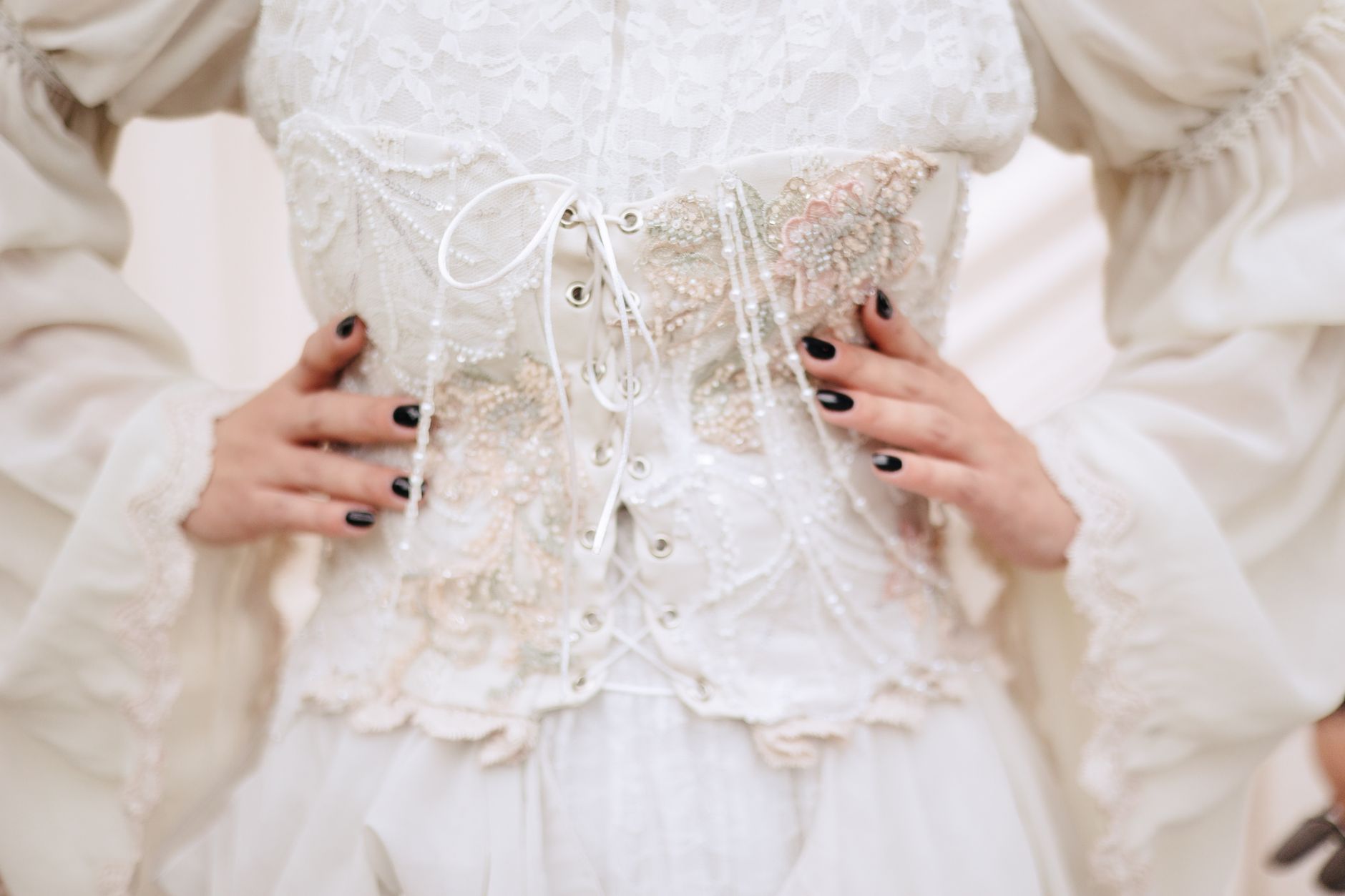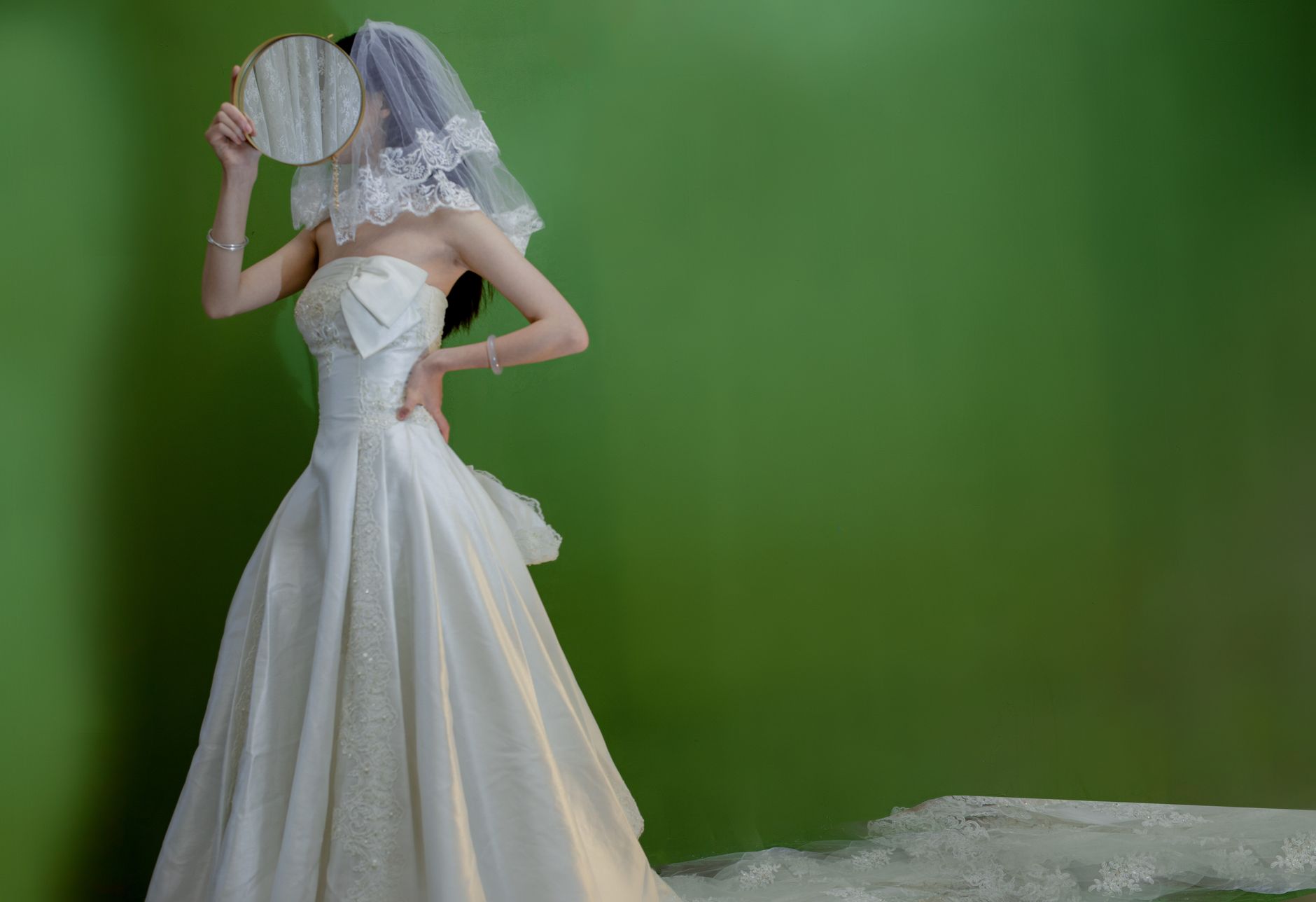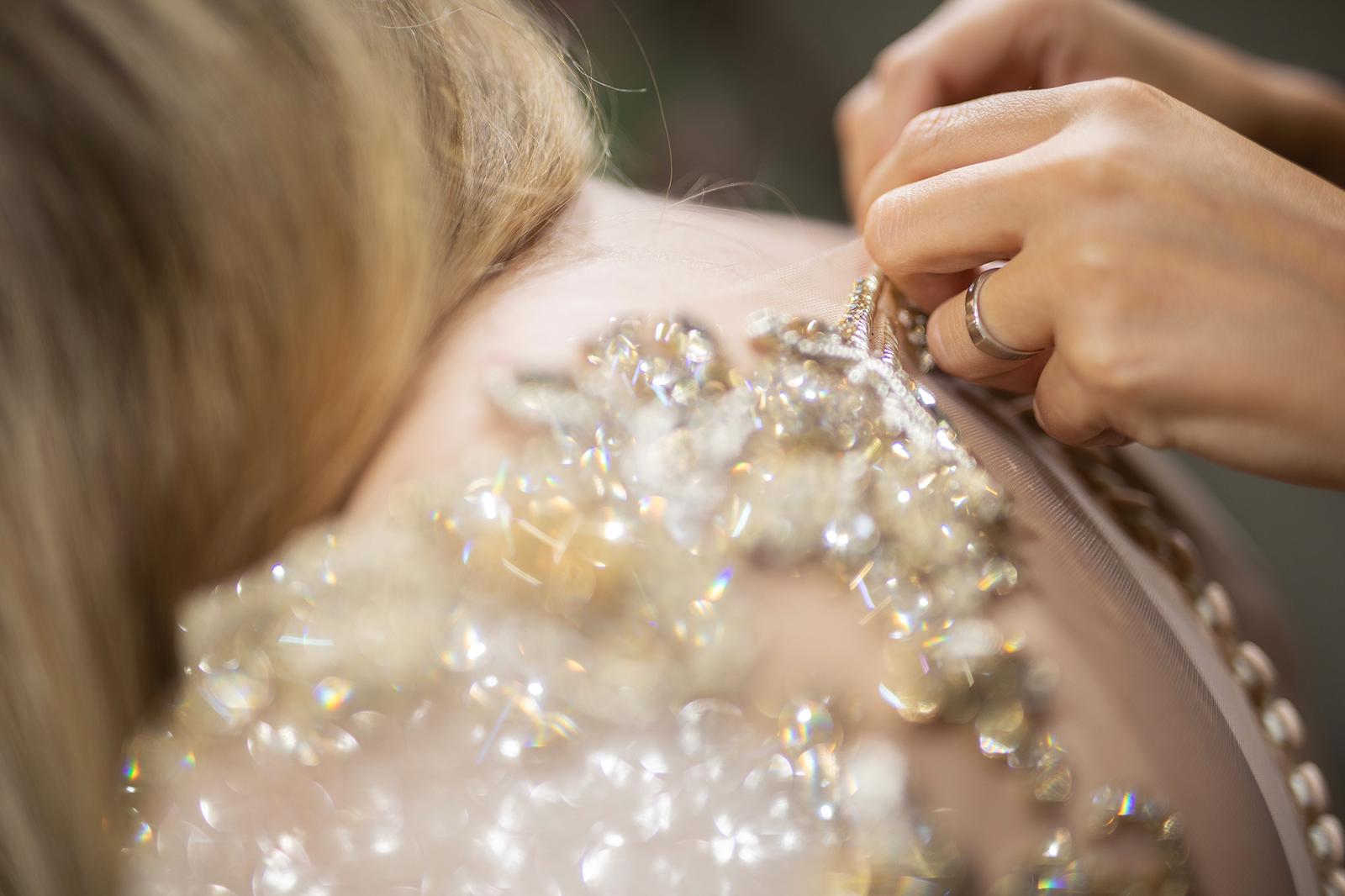

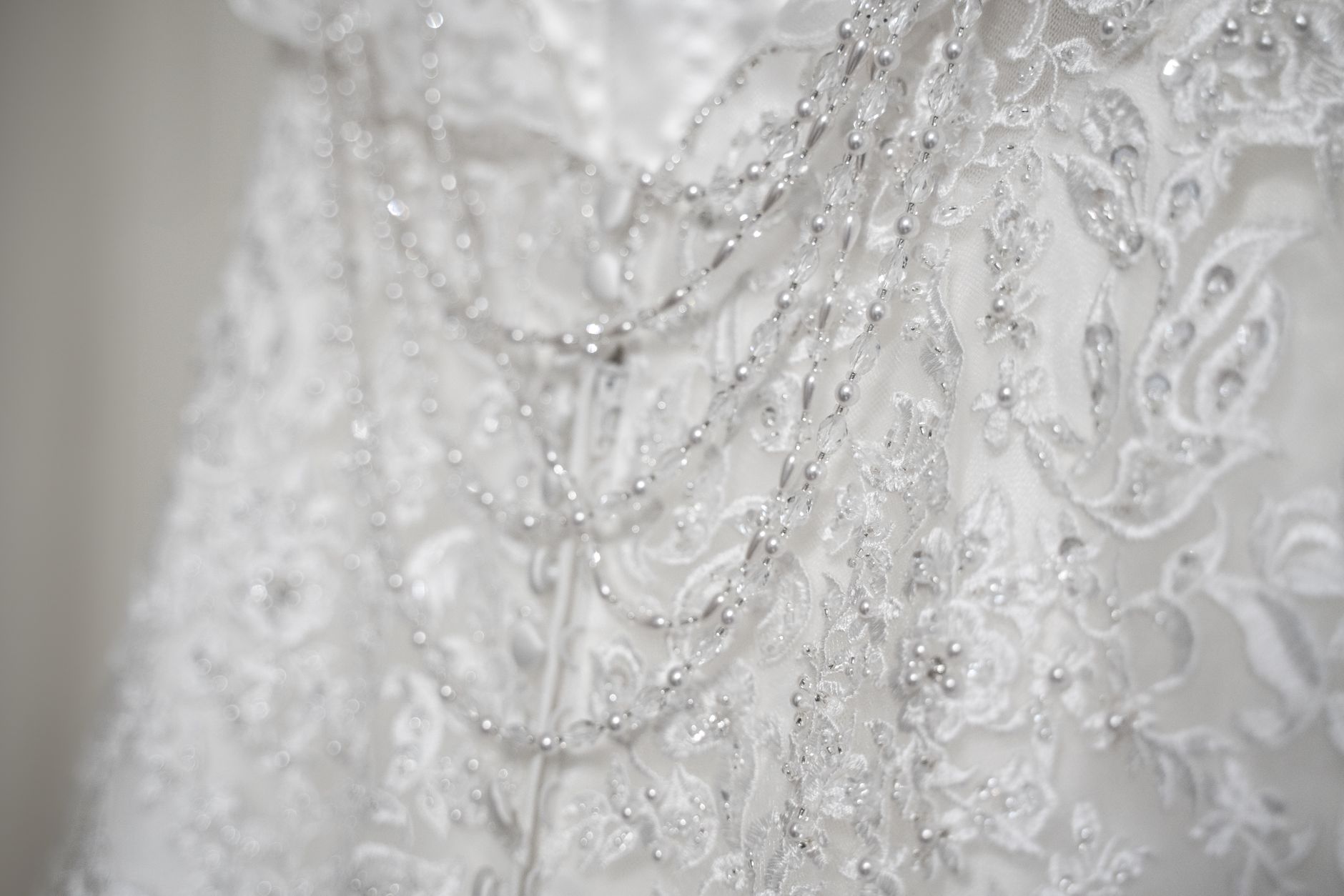
Sparkle has not gone away this season; it has simply moved. Instead of gowns that glitter evenly from shoulder to hem, we are seeing dresses where the beadwork is measured and placed exactly where it has work to do — along the neckline, around the waist, down the spine, or at the very edge of the skirt. The question for a bride is no longer how much shine, but where it sits.
Shine that fades
The most recognisable gesture of the moment is graduated beading: dense at one end of the gown, thinning out until it disappears into the cloth. Most often it begins on the bodice and fades somewhere around the knee, keeping the eye high while the skirt stays calm. The reverse is just as lovely — a clean, almost bare upper line with the shine gathering towards the hem, so that the dress lights up only once you begin to move.
The transition is what separates fine work from clumsy work. On a carefully made gown there is no visible border: the beads thin out gradually and in an irregular rhythm, so the eye never catches the point where they stop.
Scattered or gathered
The second decision is density. Beads scattered across tulle, constellation-like, read as light that happened to fall on the fabric; close up such a gown is delicate, and from the back of a room it glows very quietly. Gathered beadwork does the opposite — a band of small pearls at the neckline or the waist behaves like a drawn line that leads the eye.
It helps to know how those lines behave. A horizontal belt of shine at the waist cuts the figure and visually shortens the torso, while beading arranged in vertical runs, along the front seams or down the back to the closure, lengthens instead. For brides choosing a soft, raised waistline, maternity cuts among them, beadwork gathered above the waist usually sits best, with the fabric below left entirely still.
What beadwork asks of a fitting
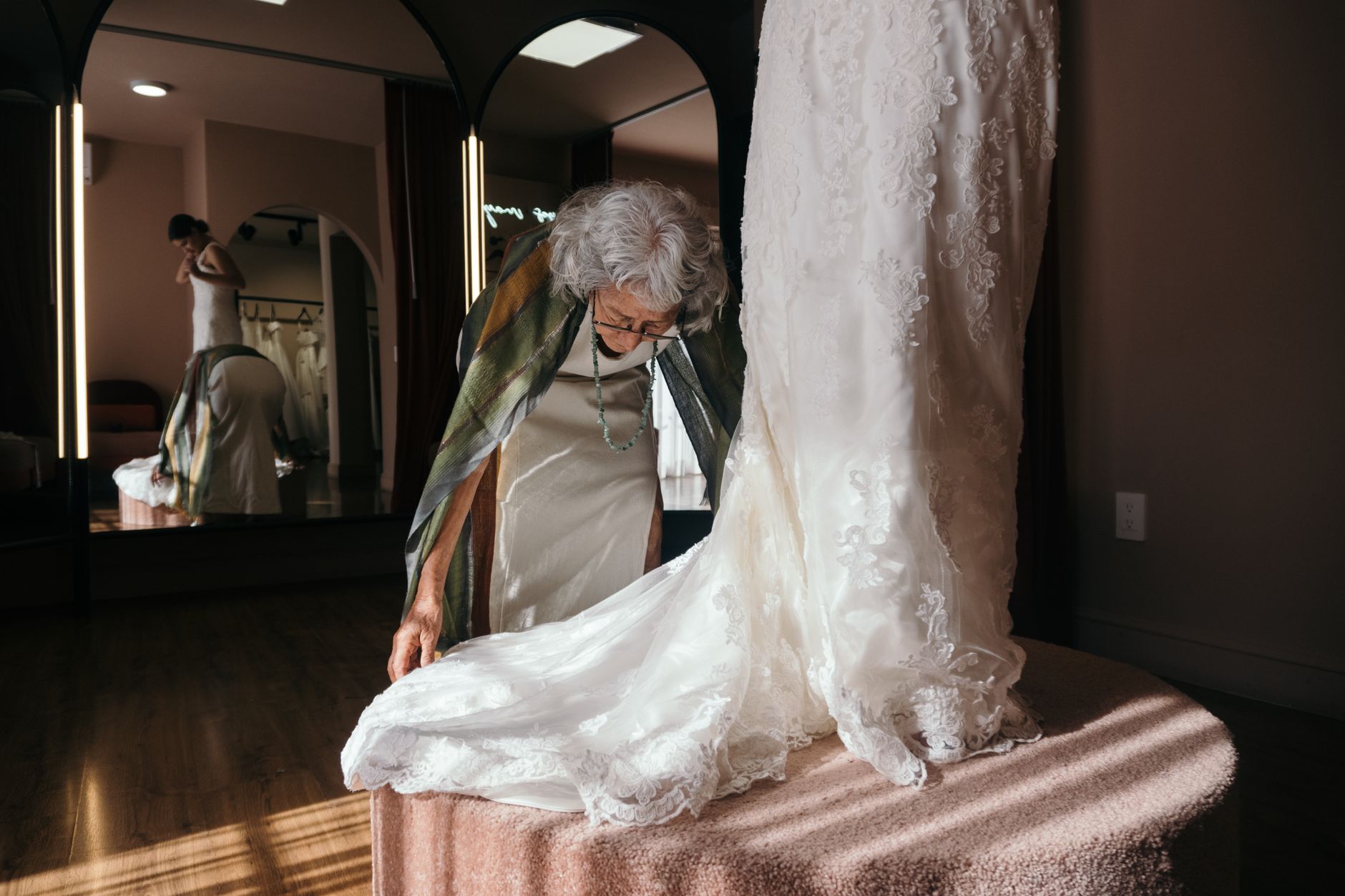
An embellished gown is worn differently from a smooth one, and that is best discovered unhurried, in a private fitting.
- Weight. Beading near the hem changes how the fabric falls and pulls a train downward; put the dress on and stay in it for half an hour.
- The inside. Good embroidery is backed with a soft lining and cannot be felt against the skin, especially under the arm and along the closure.
- Light. Look at yourself by the window and then in the dimmer part of the salon — the same bead behaves quite differently by day and by candlelight.
- Alterations. A heavily beaded seam has less freedom than a plain one, so taking in or letting out should be discussed at the very first fitting.
Across our sizes 34 to 44 the same gown carries the same pattern of beading on different torso lengths, so a line of shine sometimes needs to shift by a centimetre or two — which is why fittings are by appointment and never rushed. Whether the dress is rented or bought, well-placed shine is the kind you notice a moment after you notice the bride.