
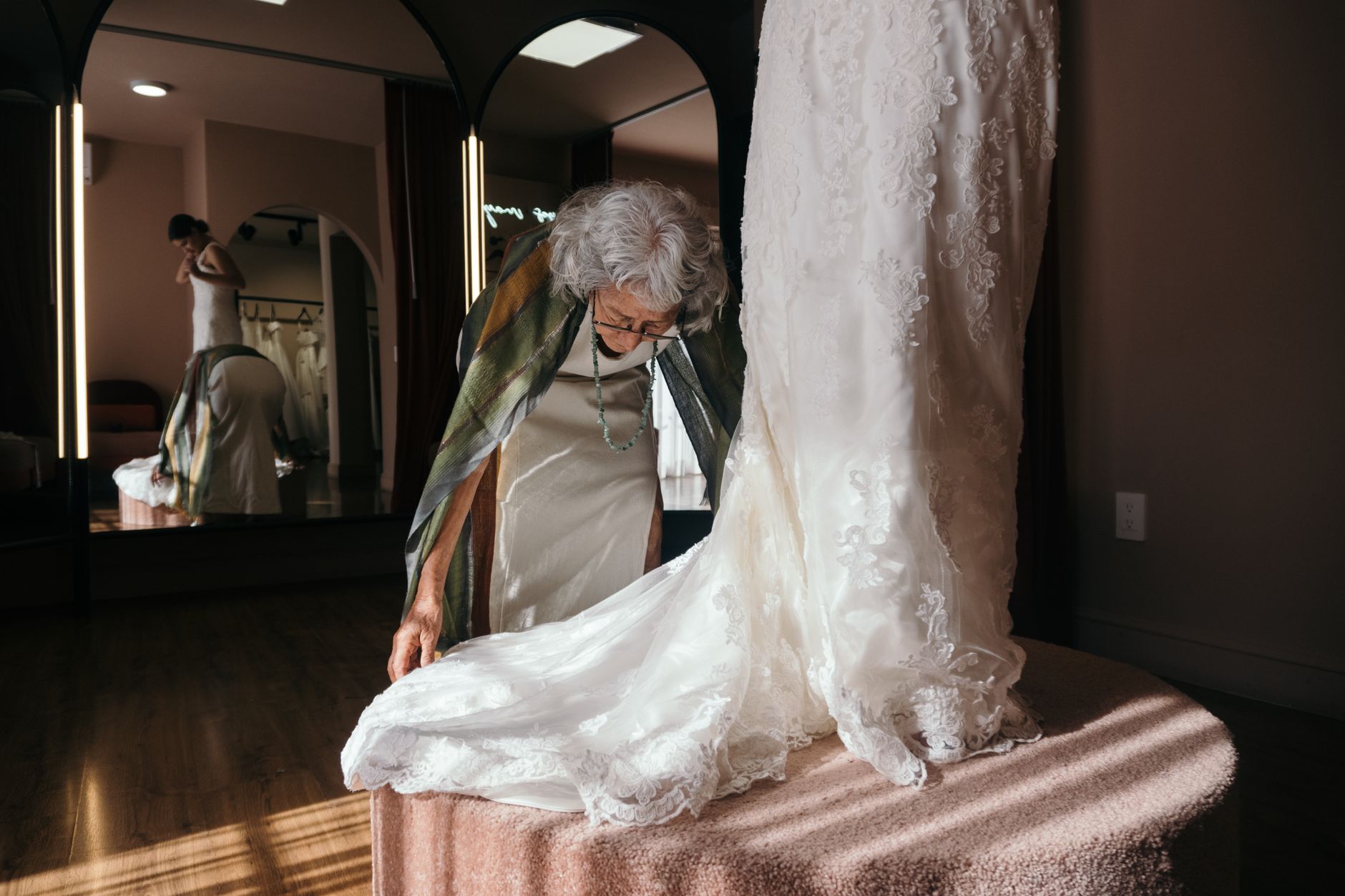
A wedding gown on the hanger tells only half the story. It hangs from a single point, gravity pulls it flat, and everything that was carefully built into it — the boning, the lining, the way lace was laid over tulle — simply waits for a body. This is why brides so often walk straight past the gown they will eventually wear.
What the hanger hides
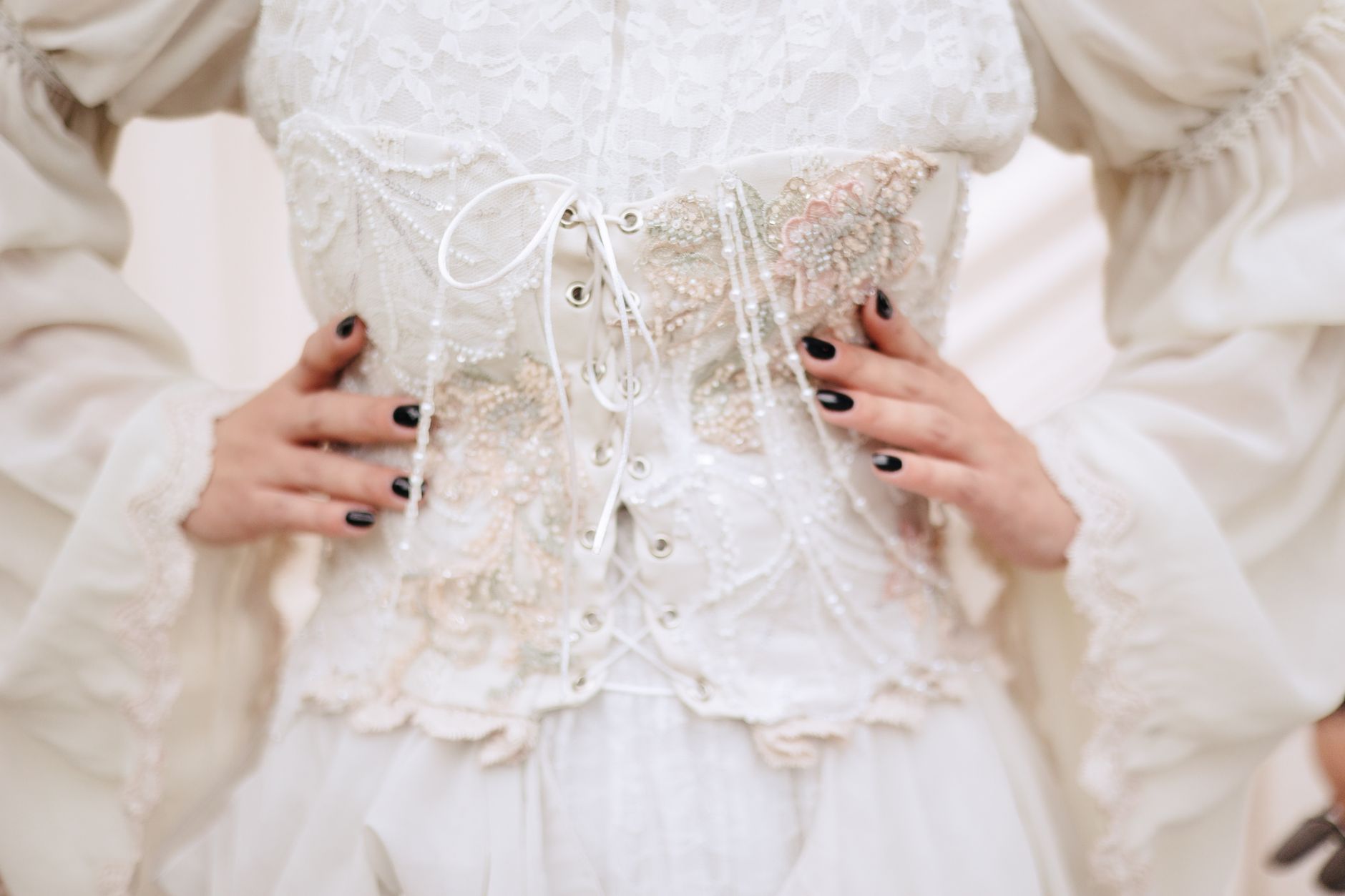
A structured bodice looks rigid and unpromising until it closes around the waist. Only then can you see how much it lifts, where the line truly ends, and how much room it leaves for breathing. This season brings many soft, draped transitions towards the hip and a waist set a little lower than usual; on the hanger that reads as surplus fabric, on the body as a calm diagonal that lengthens the torso.
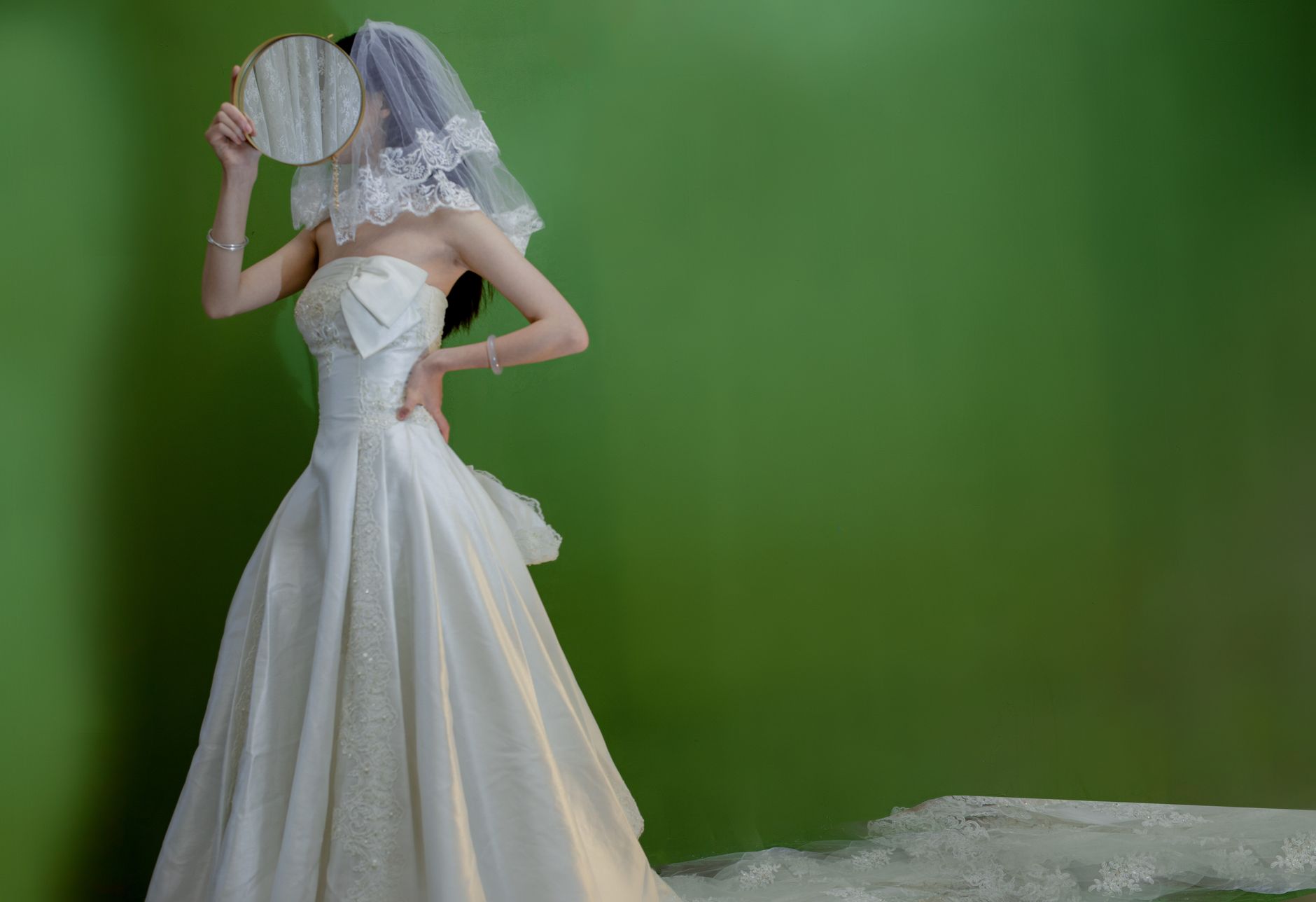
Volume is just as deceptive. An organza or tulle skirt looks enormous standing still, yet once it opens around your stride it is often lighter and more willing than it promised. Smooth satin does the opposite — quiet, almost plain on the rail, then demanding an upright posture and revealing every seam.
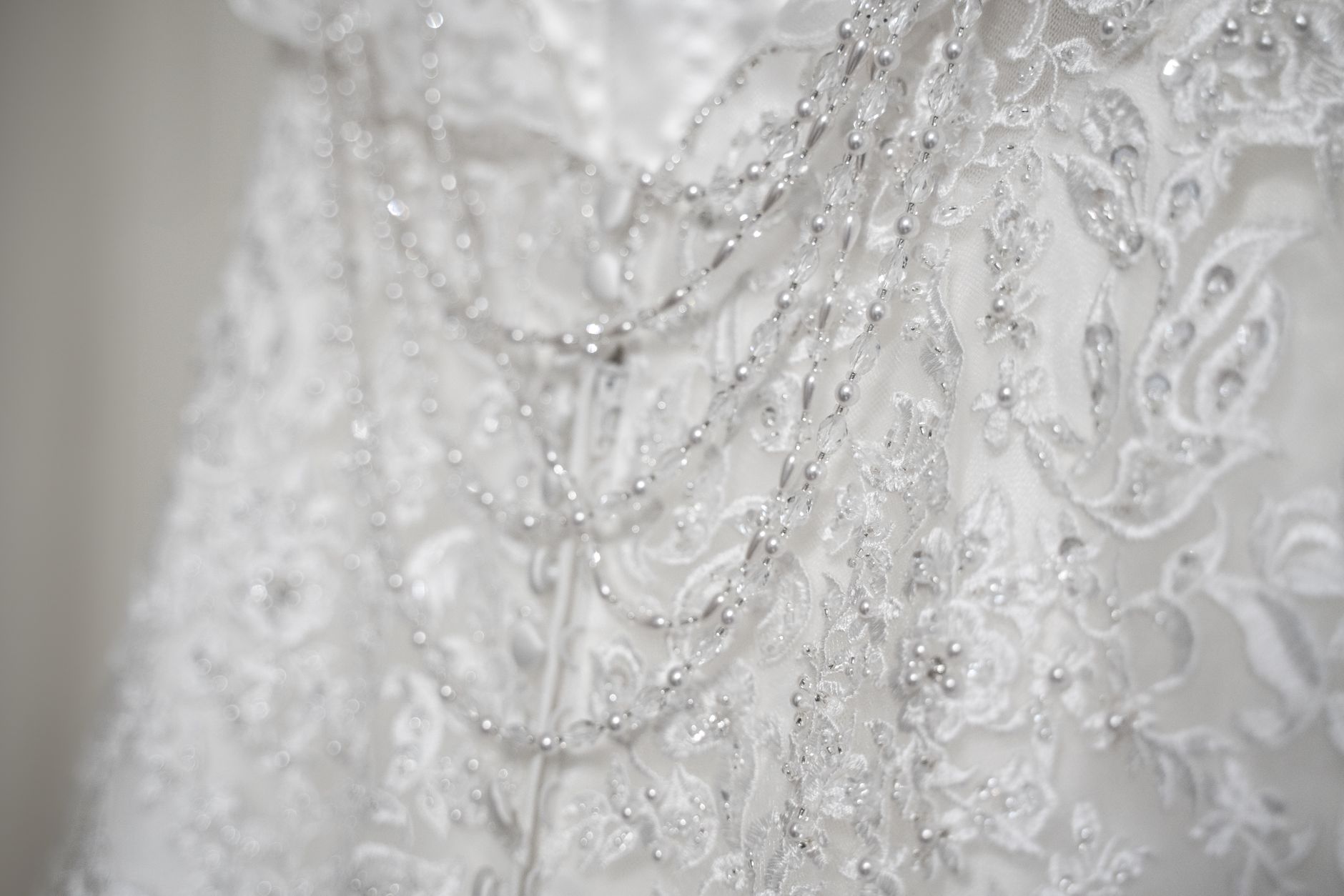
Sheer passages can only be read on skin. A tulle sleeve, a narrow side panel, a back veiled in lace: each shifts in tone against your complexion and against the light in the room. Even all-over lace keeps its rhythm hidden until the pattern aligns with shoulder, waist and hip.
The cut you would never choose yourself
Which is a good argument for leaving room on the appointment for one unexpected gown. The narrow column many brides dismiss as too severe is frequently the softest thing in the mirror, while the full skirt that looks theatrical on the rail can turn surprisingly serene above a bodice with visible boning. A high lace neckline, one of the defining notes of the current season, changes entirely the moment it meets the throat.
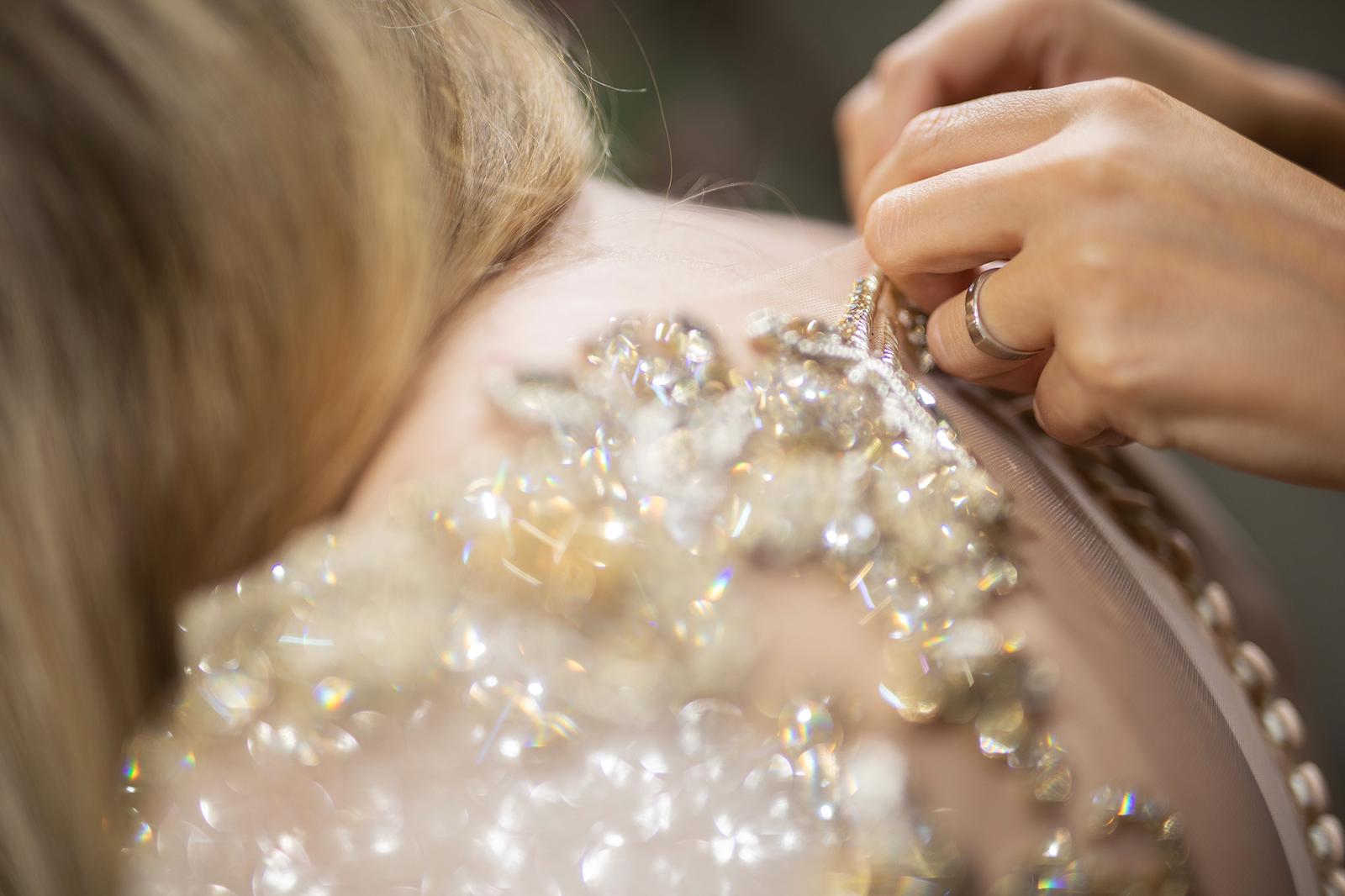
For that reason our fitting gowns run from size 34 to 44 and are pinned in place during the appointment: the dress is brought temporarily to your measurements so you see the real line rather than an approximation.
How to look, not only to try on
- Look away from the mirror first — feel where the gown holds, where it slips, how much you carry on the shoulders and how much at the waist.
- Walk, sit and raise your arms; a waistline that rides up when you sit will not settle later in the evening.
- Read the whole before the detail: silhouette from a distance, then embroidery and hem.
- Ask what can be altered and what belongs to the construction and will stay as it is.
The same gown can be rented or bought, and brides expecting a baby are guided towards softer lines that follow the change rather than restrict it. Appointments are private and arranged in advance, unhurried — because the difference between hanger and body only reveals itself in stillness.