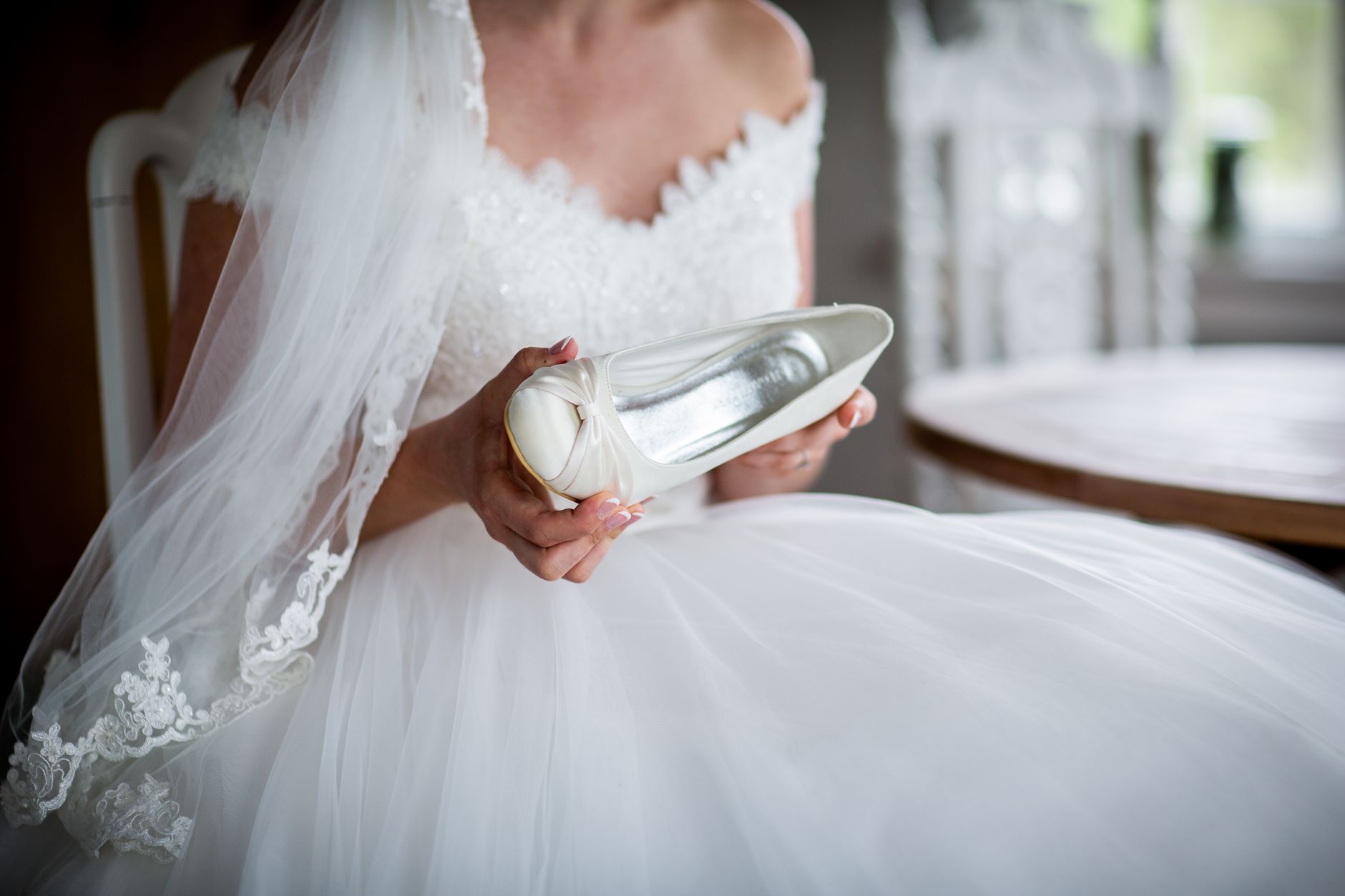

The gown is chosen first, but the look is only finished by what goes over it. This season, the veil and the light cover-up have stopped being afterthoughts: they are cut, embroidered and chosen with the same care as the dress itself, and brides increasingly read them as part of the silhouette rather than a decoration added at the end.
Length and texture have returned
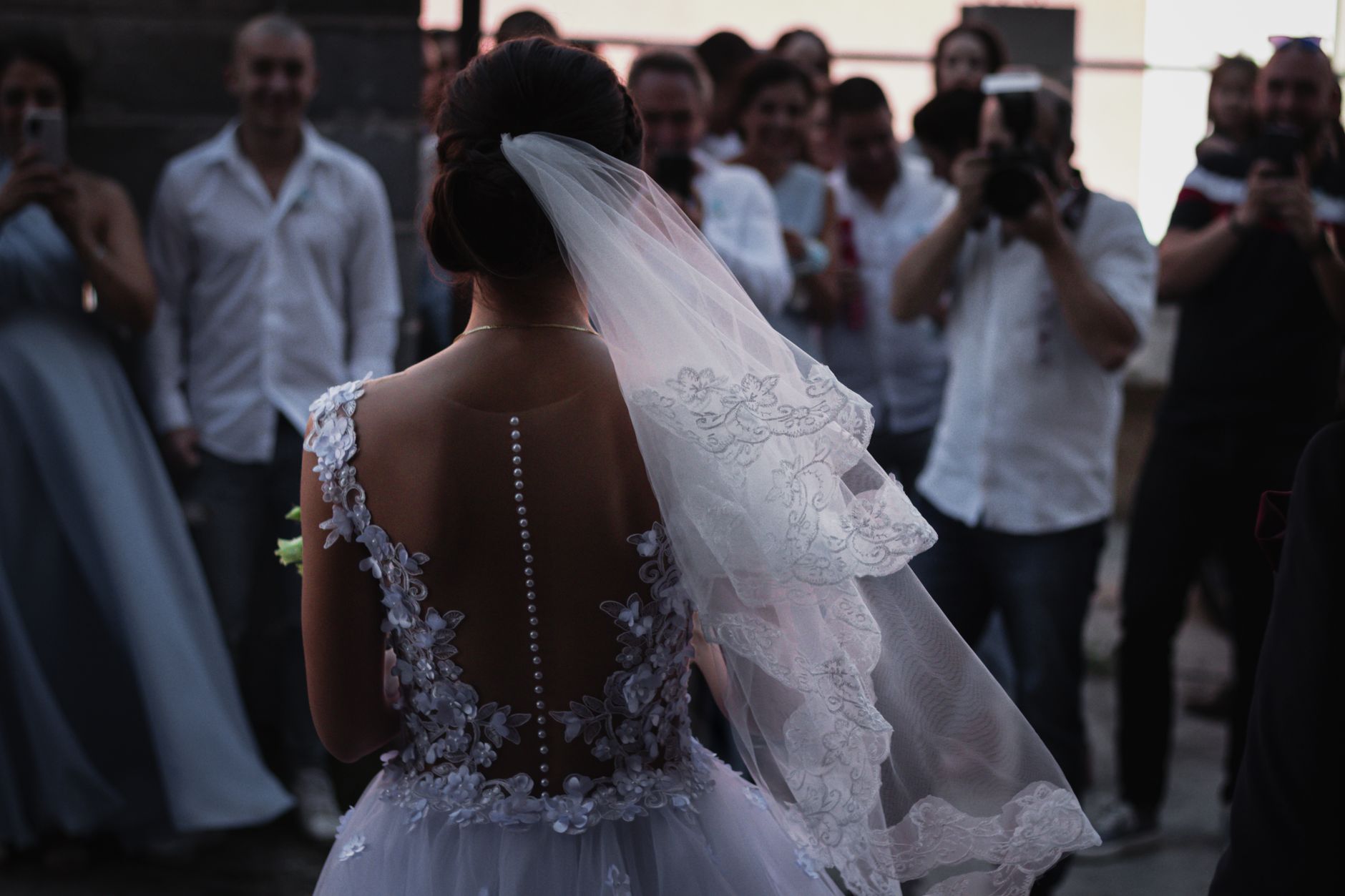
Long veils — cathedral and chapel — are firmly back, because they create movement, a sense of arrival and a strong outline from behind. One rule holds regardless of fashion: a veil should either extend clearly beyond the train or stop noticeably short of it, never end at exactly the same point.
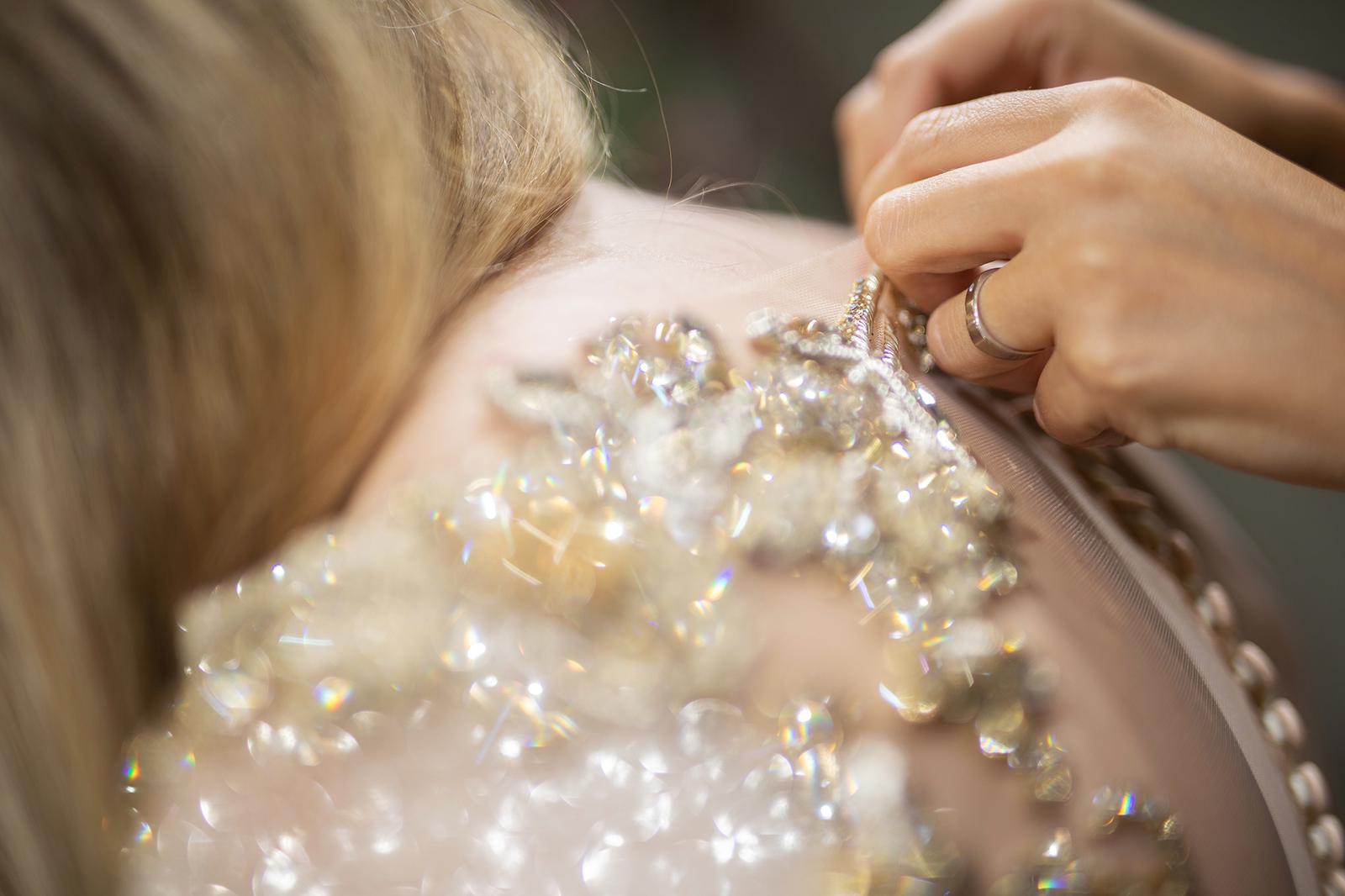
What has genuinely changed is the surface. Flat tulle is giving way to pleats, crinkles, layers and sculptural folds that lend a minimal gown depth without a single crystal. Lace is returning, but more deliberately: botanical motifs, fine borders, and mantilla-style drapes that frame the face. Colour enters through embroidery in muted threads — pale blue, lilac, soft green — while the tulle stays transparent and unmistakably bridal.
The blusher has come back too: the short front layer lifted during the ceremony. It is one of the few details that carries a moment, not only a photograph.
When a veil is not your story
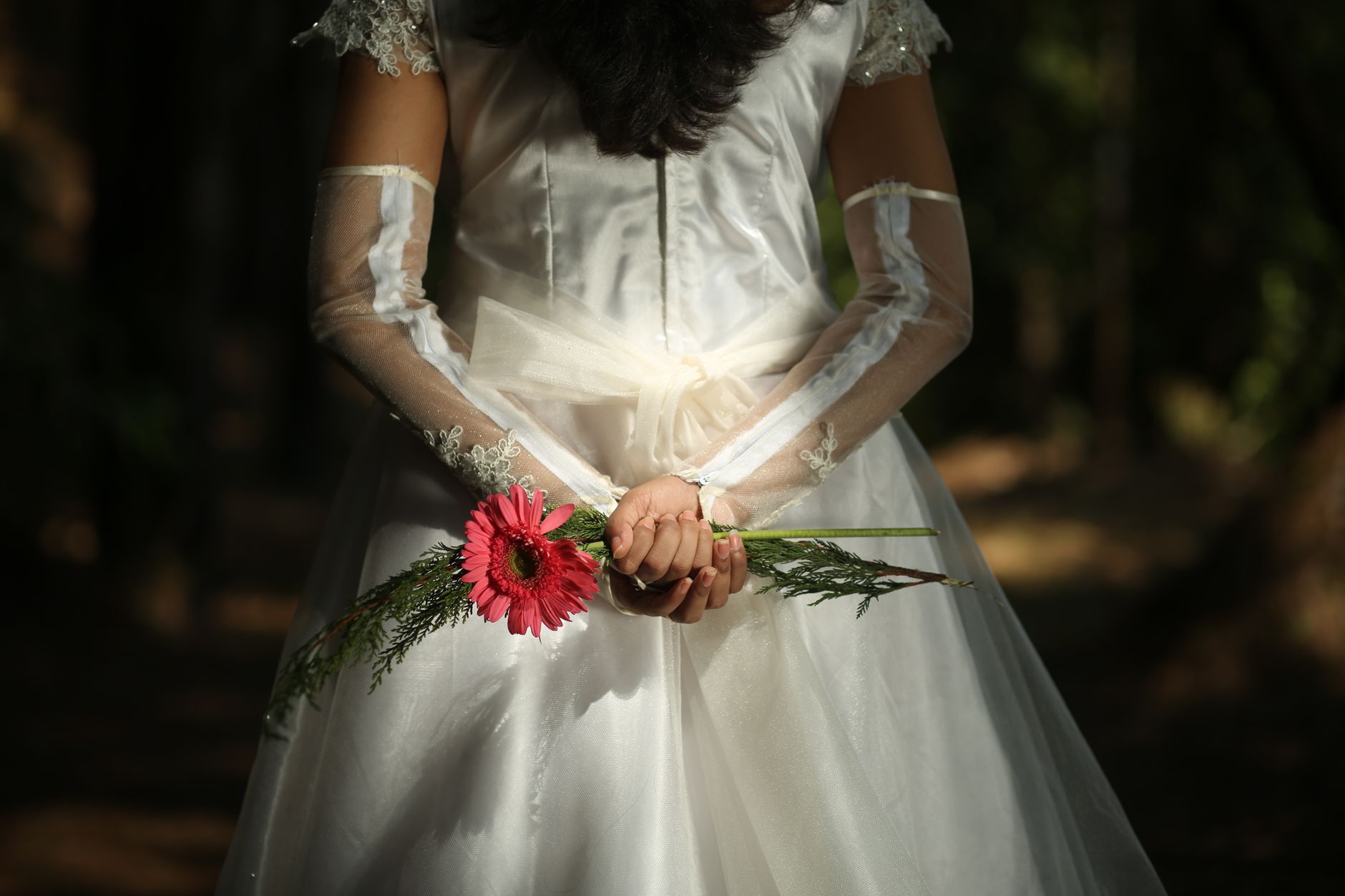
Not every bride wants one. This season offers serious alternatives: a cape falling from the shoulders across the back, a cropped lace bolero, small caps and slim ribbons worn in the hair. Each gives ceremony and coverage — often needed in a church — without a traditional veil.
- A tulle cape — lengthens the line of the back and follows narrow cuts beautifully.
- A bolero or detachable sleeves — a covered ceremony, an open silhouette afterwards.
- A lace cap or headband — ideal for short hair, and for brides who want nothing across the face.
- A fingertip veil — the practical choice for summer and travelling ceremonies.
Choosing well: order matters
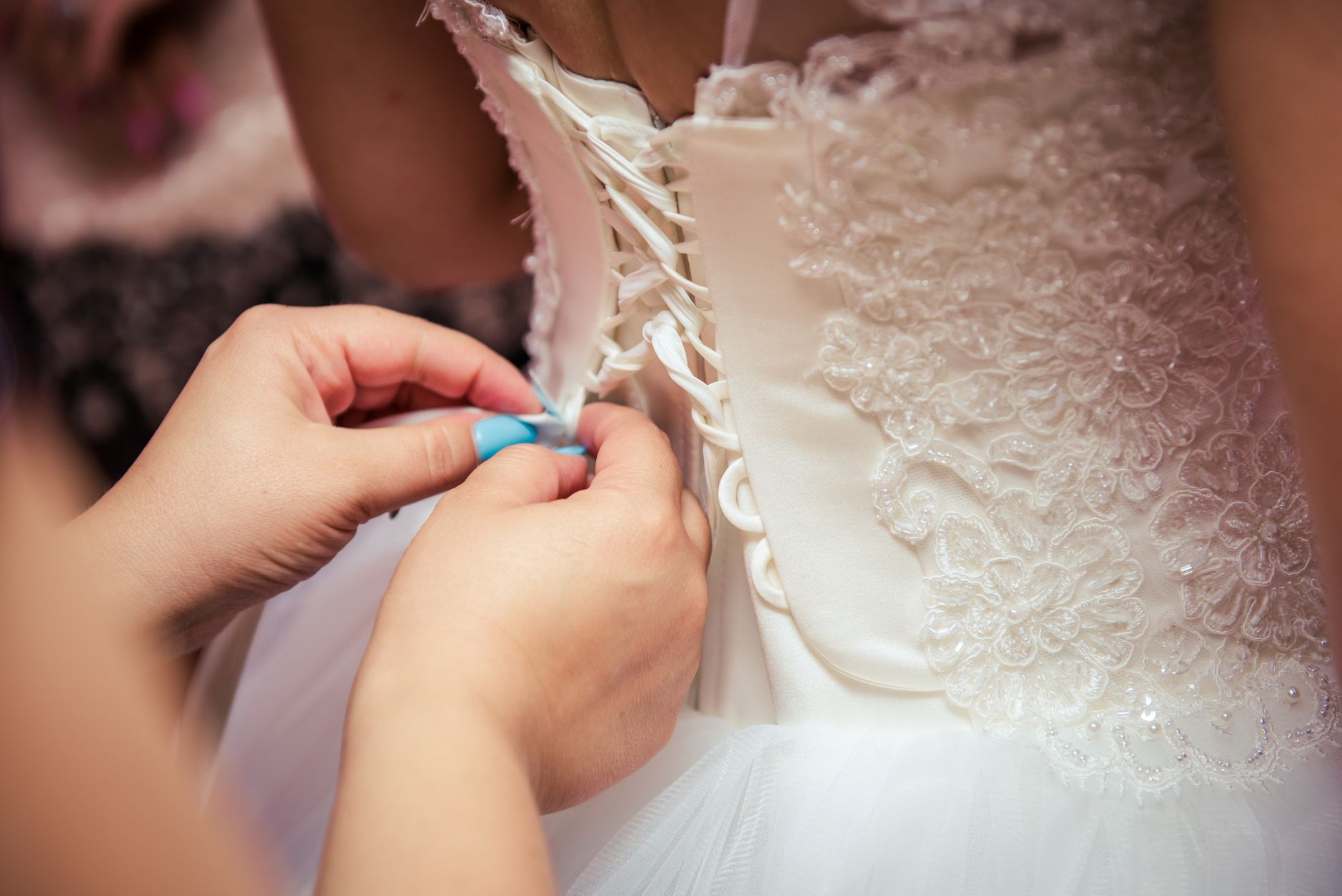
The layer is always chosen against the gown, never separately. A richly embroidered dress asks for a quiet veil; a plain satin one can carry an ornamented edge. If the back of the gown has been carefully worked, choose a sheerer tulle that lets it show through.
Hair comes before the veil, not after. An updo supports heavier, longer styles, while hair worn down calls for something lighter and softer. At private fittings we suggest trying at least two layers, even if you are certain a veil is not for you — many brides only recognise the whole picture once they see it in the mirror.
Our gowns may be rented or purchased, in sizes 34 to 44, with cuts that suit maternity silhouettes as well. Fittings are by appointment only, unhurried and quiet, because this last layer deserves to be chosen slowly — and only once the dress already sits exactly as it should.