
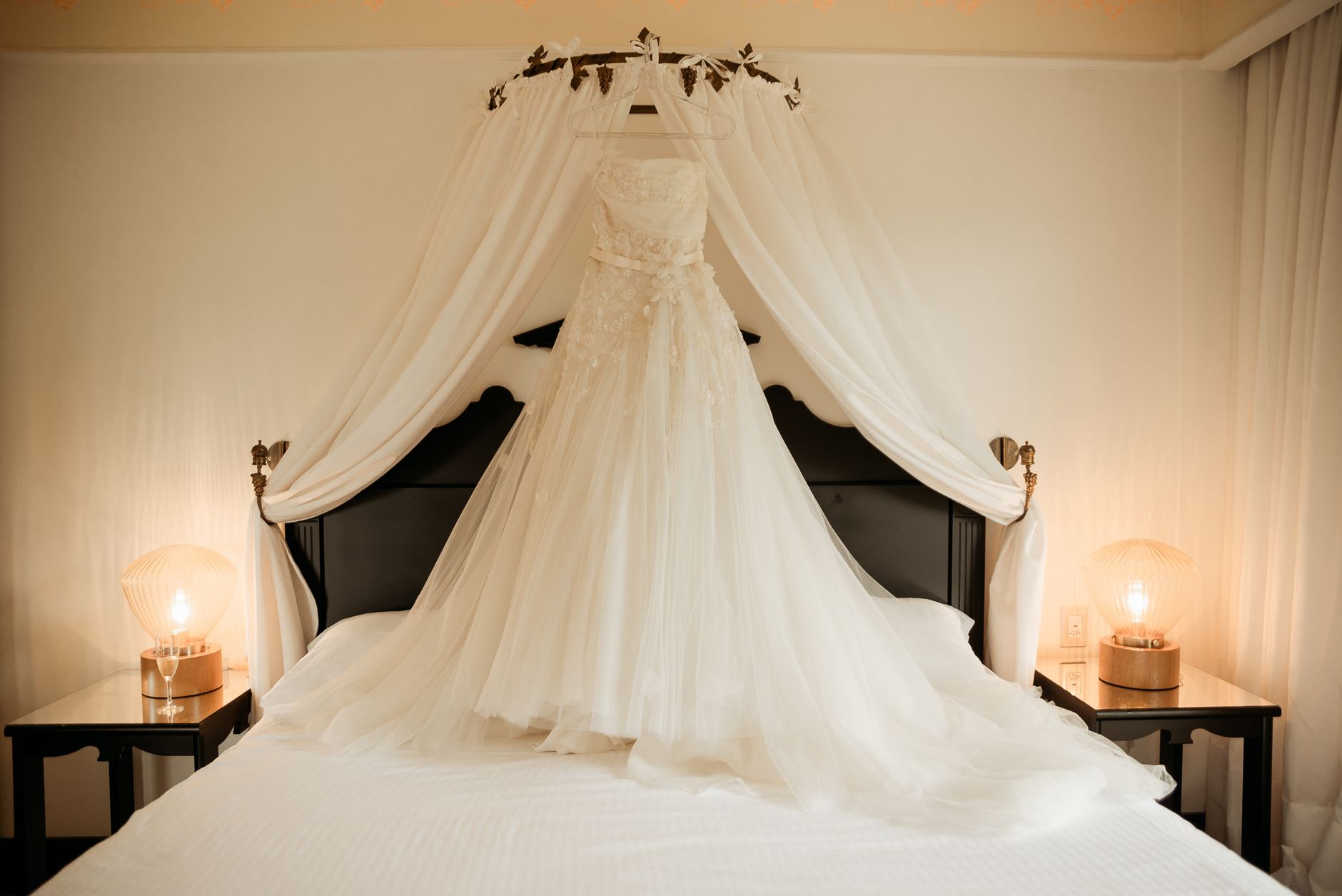
This season's collections rarely invent a new shape. They quote one. A late nineteenth-century bodice, the calm line of the fifties and the quiet of the nineties now hang in the same salon — and the difference between a gown with a reference and a costume lies only in how many quotations end up in a single dress. One is almost always enough.
Nineteenth-century structure
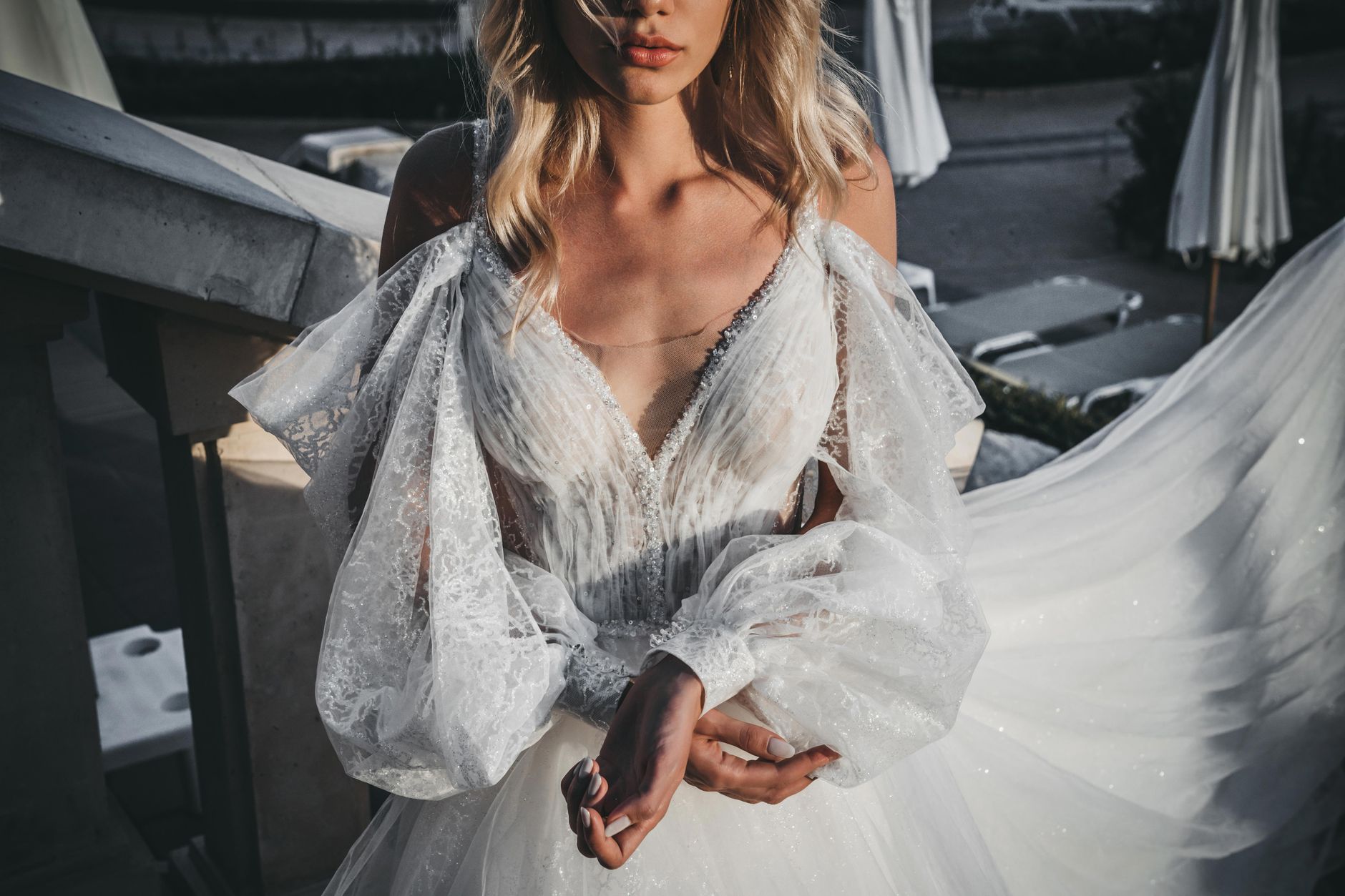
The loudest return comes from the Victorian repertoire: a long, gently pointed waist, a back closed with a row of small buttons, shoulders suggested beneath a soft layer. A gown like this needs fabric with body — dense satin, heavier tulle, something that holds its shape when no one is holding it. It is worn differently, too. You feel the support under the bust first and see the silhouette second. At the fitting, check the two small things that decide the whole day: whether you can take a full breath, and whether you can lift your arms to shoulder height, because you will do it a hundred times.
The calm line of the fifties
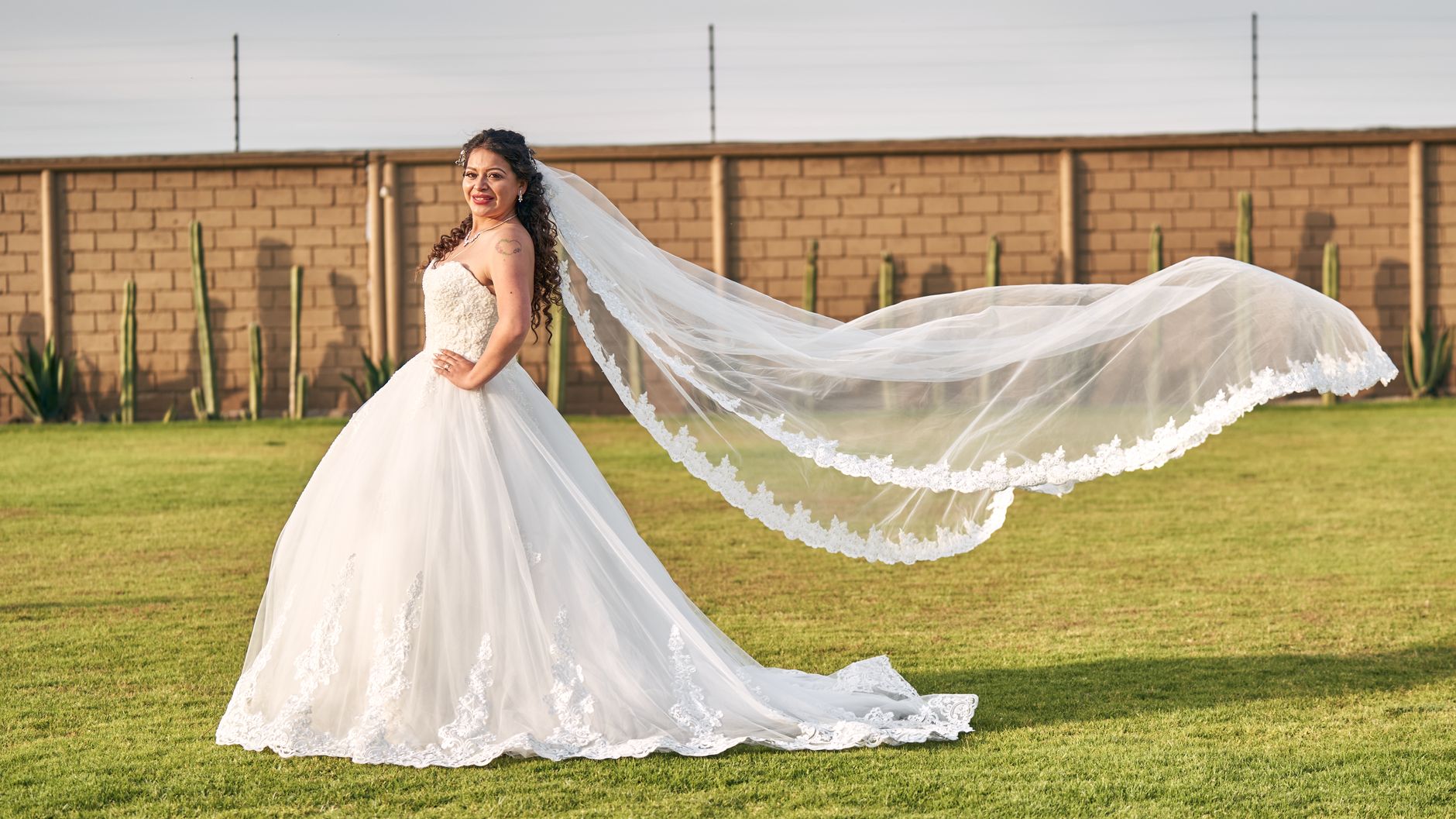
The second quotation is gentler, and this season the most common. The fifties return through a clean, high-sitting neckline — straight, round or only faintly sweetheart — and a skirt that gains width from the cut rather than from ornament. The bodice stays almost empty, so attention travels naturally to the face and throat. This reference is generous: it suits a church and a celebration equally, reads beautifully from a distance, and leaves room to move. A softer version follows easily for a bride who is expecting — the same calm above, more space released below the bust.
The quiet of the nineties
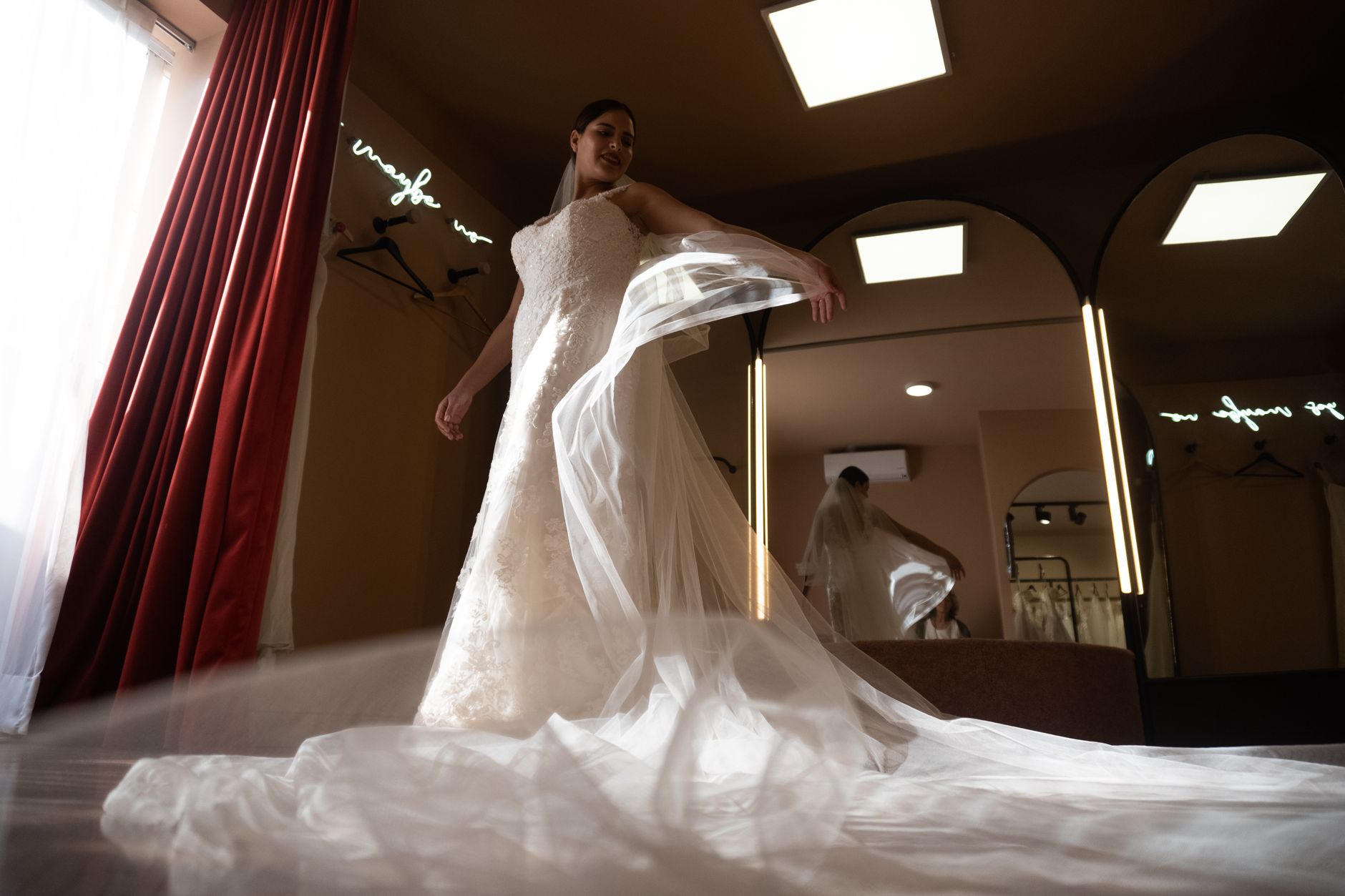
The third reference says almost nothing. Heavier satin or crepe, a straight line that follows the body without gripping it, a low back, no decoration at all. It looks the simplest and is in fact the most demanding: every seam is visible, with no lace or shimmer to cover it. That is why it should be chosen by fabric rather than by sketch, and why it asks for a few rounds of alteration. In return, it looks entirely contemporary and never dates in photographs.
One era per gown
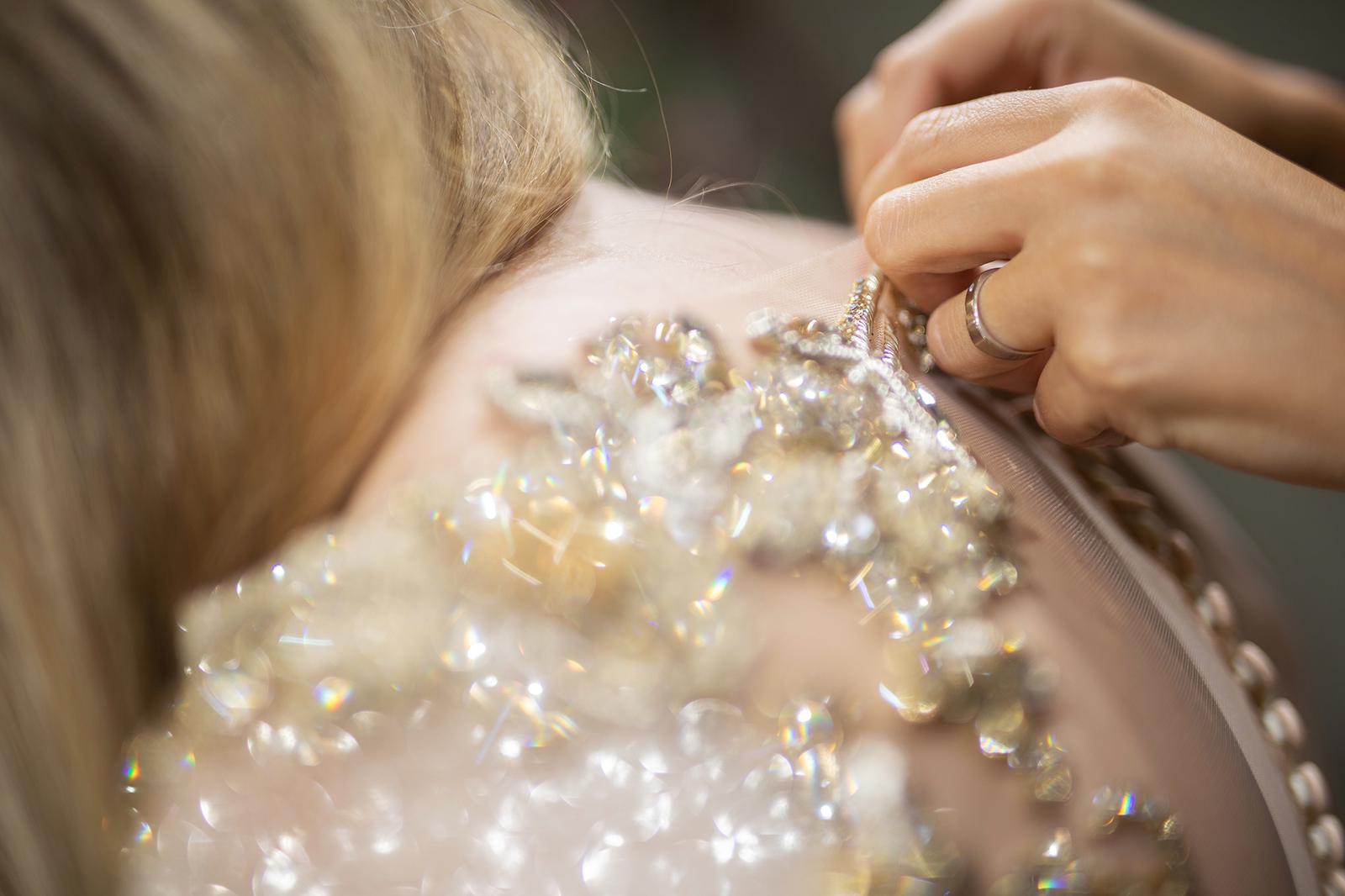
The rule is simple. If the cut is historical, keep everything else composed — a plain veil, understated jewellery, a shoe nobody notices. If the cut is minimal, the reference can live in a detail: a fine ribbon, a lace edge, a soft glove. Trouble begins only when three eras meet on one dress.
The surest way to recognise your own reference is to try all three at a private fitting, arranged in advance — structure, calm volume and the straight line — in sizes 34 to 44. The difference shows within minutes. The gown may then be rented or bought, and for brides coming from Serbia, Croatia or the diaspora the rental agreement holds across the border, so appointments can be planned slowly and without pressure.