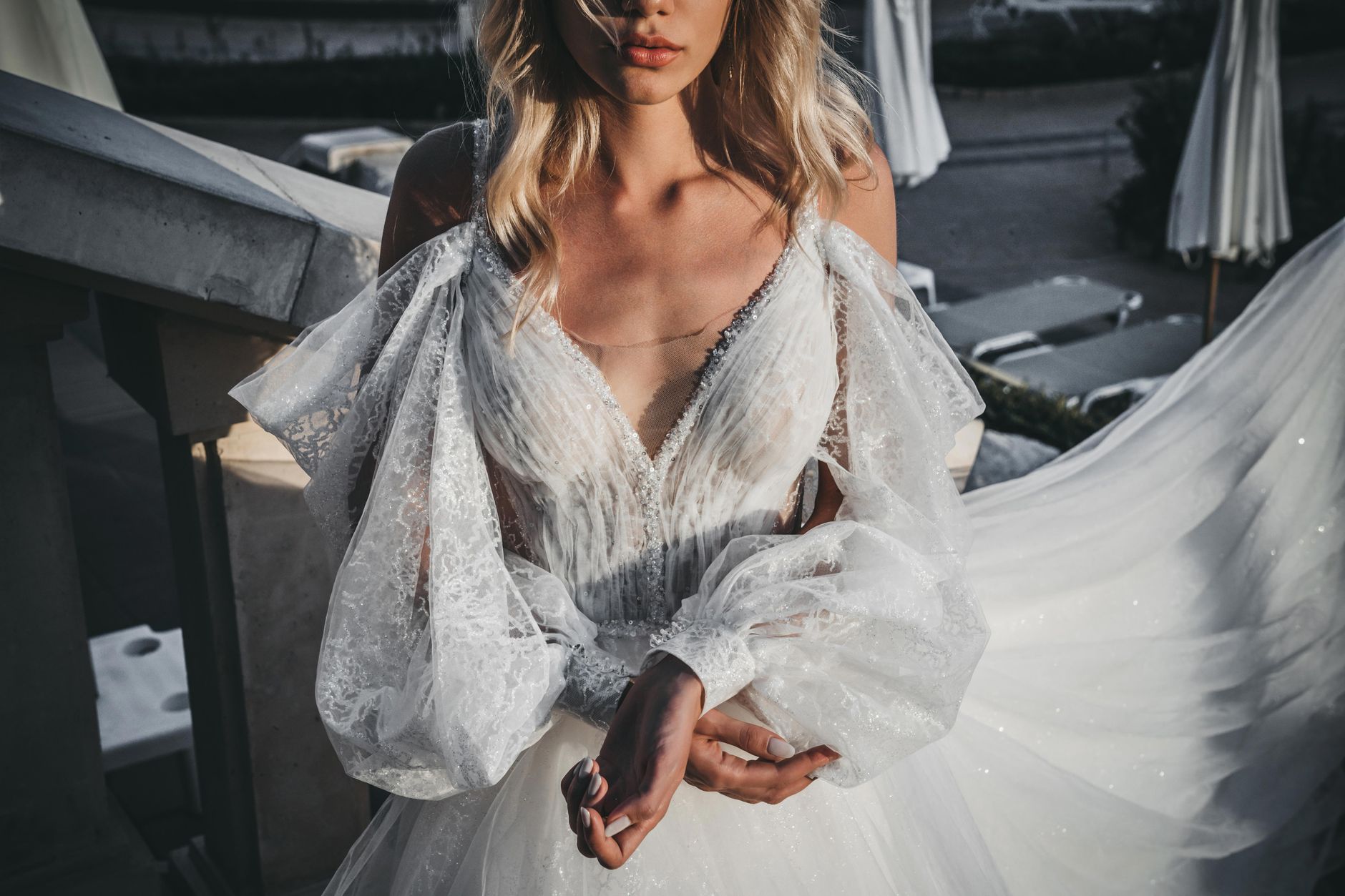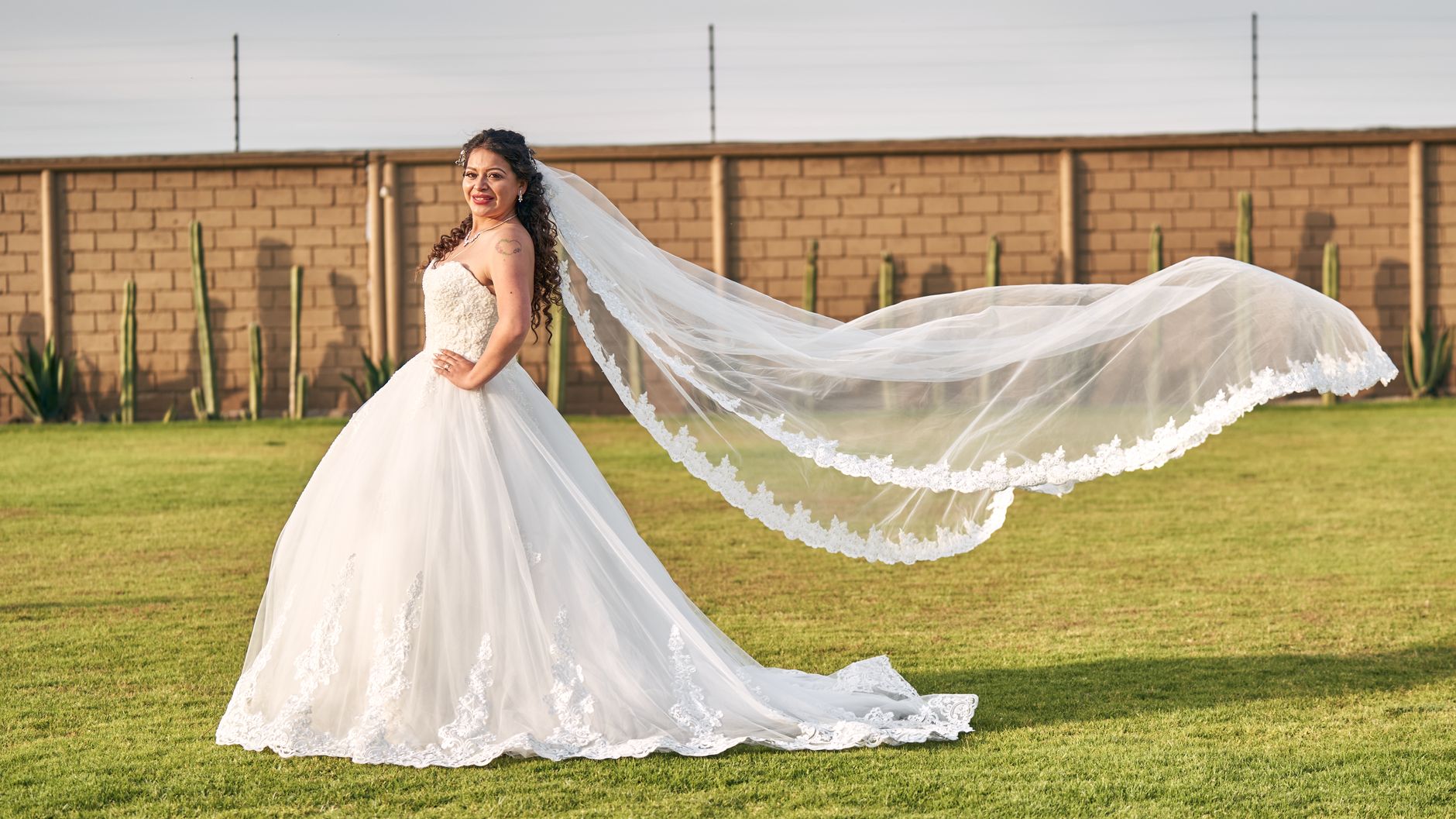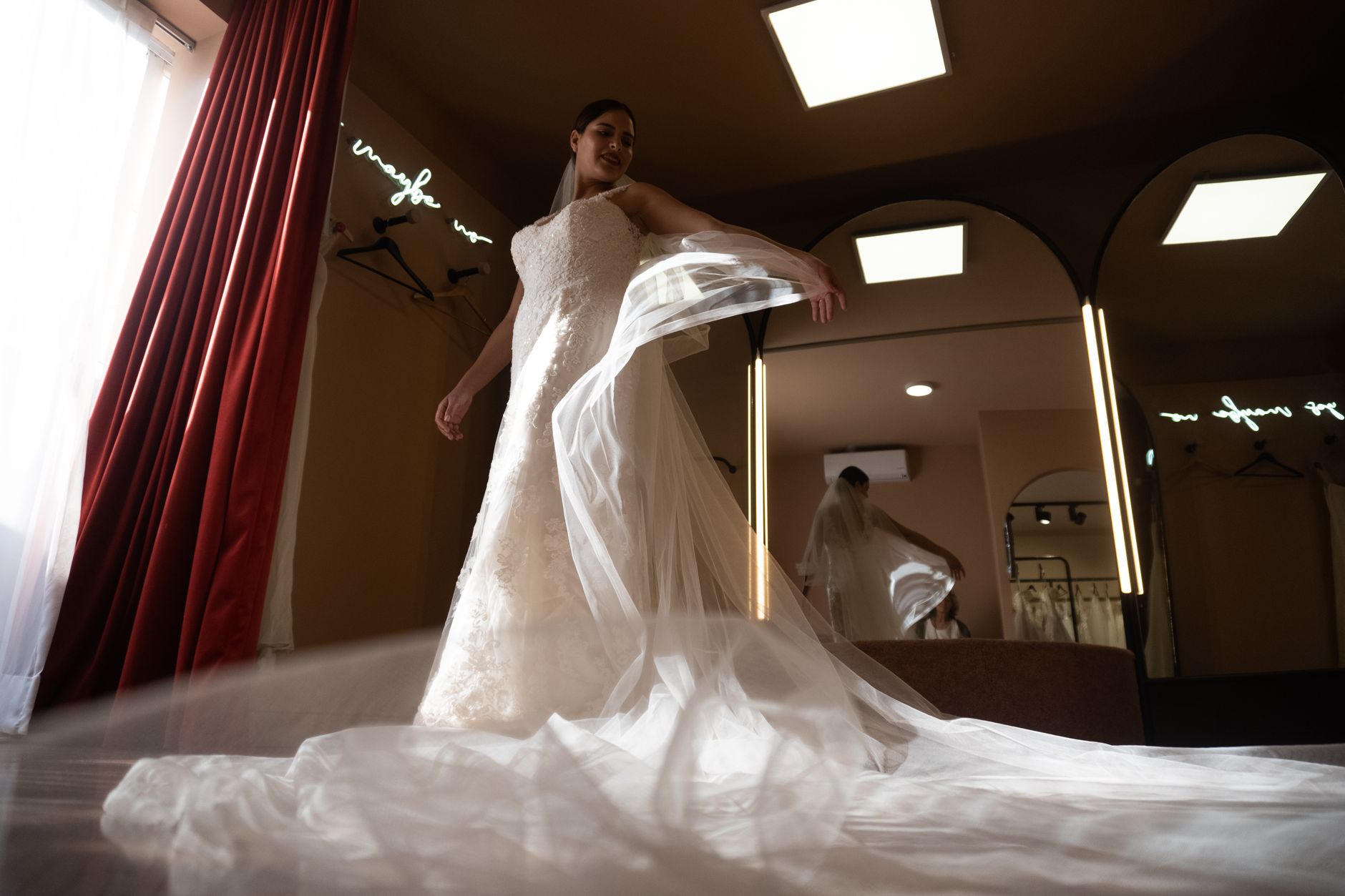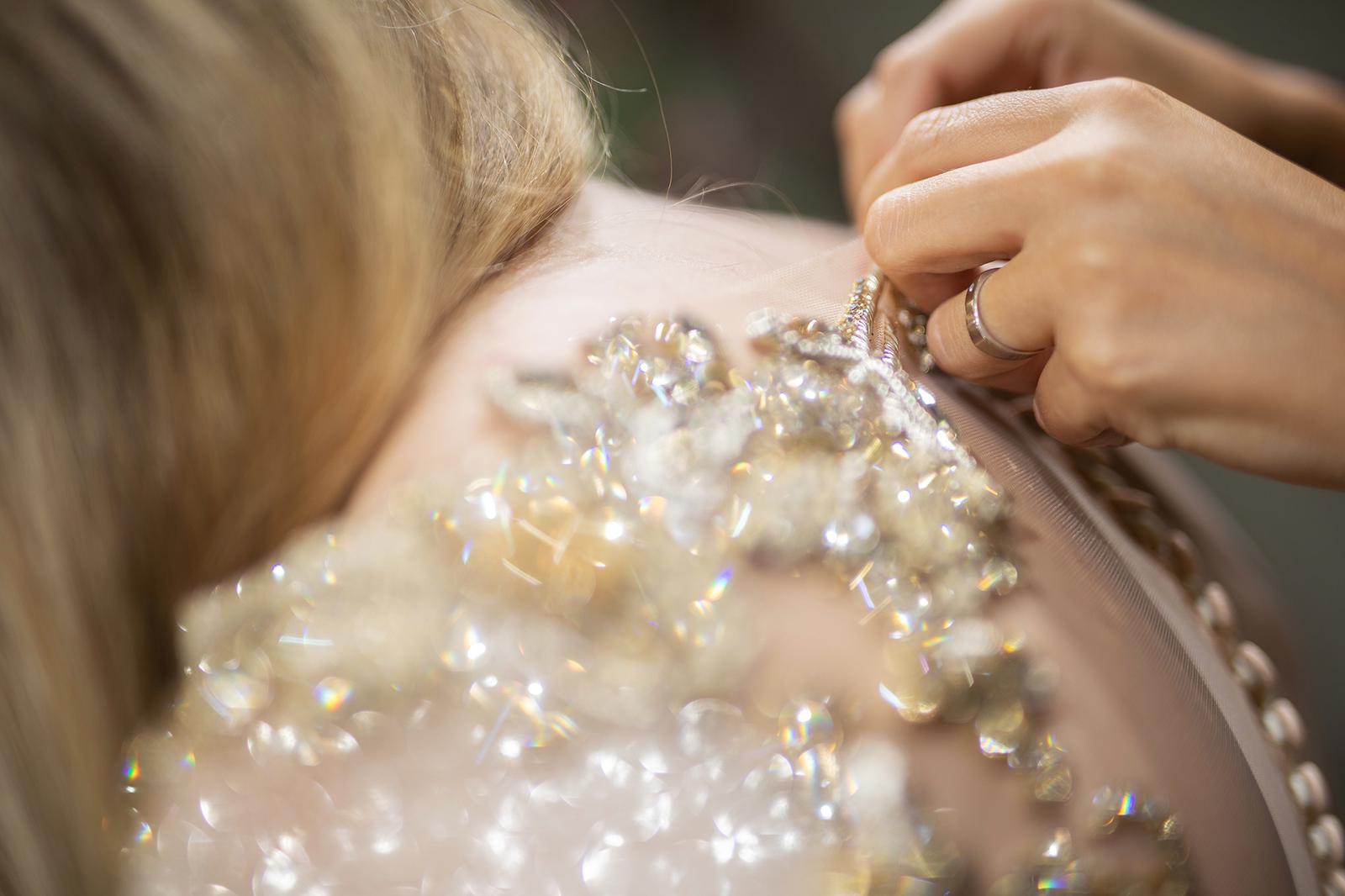

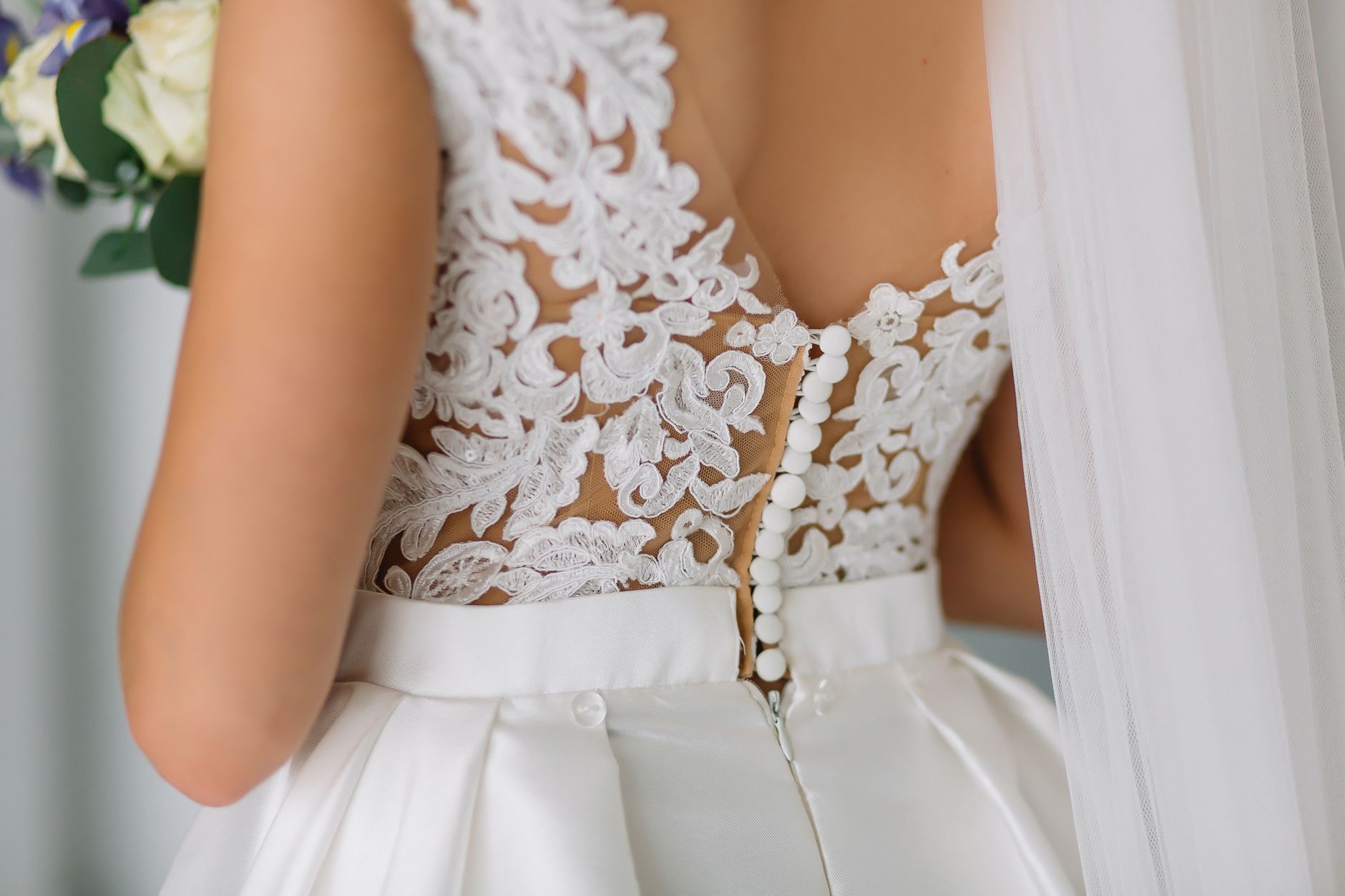
This season, the wedding gown is asking for far less ornament. The collections arriving in salons lean towards sculptural simplicity: a calm column, a clean A-line, bodices without a single appliqué, and fabrics confident enough to hold their own shape. Once the crystals, the lace and the ruffles are taken away, what carries the dress is the thing no one ever talks about — the seam.
A line that shapes rather than decorates
In a wedding dress, a seam is not a technical necessity but a drawing. Princess seams, running from the shoulder or the armhole across the bust and down to the hem, shape the body without a single gather and lengthen the figure at the same time. Narrow vertical panels create the same illusion of height as a deep neckline, only far more quietly. A curved seam at the waist can lift the waistline by a couple of centimetres, and no one will quite know why the silhouette looks longer.
- Vertical panels — elongate and give the body a calm, upright line.
- Curved seams over the hip — build a soft roundness exactly where you want it.
- Seams cut on the bias — the fabric settles and follows movement instead of standing away.
- A deliberately visible seam — a graphic detail on satin, usually along the back or the side.
The fabric decides how much the seam shows
Mikado and heavier satin hold an edge sharply: on them every seam reads as a drawn line, which is exactly why it has to be perfectly placed. Crepe forgives less than brides expect, because a matte surface does not play with light and any unevenness stays visible. Lace behaves differently — a good atelier hides the seams inside the pattern, joining motif to motif so the gown looks cut from a single piece. On tulle the seams disappear into the layers, but the structure beneath them must be faultless, since it is that structure, and not the fabric, that keeps the bodice in place.
What to look for at a fitting
Stand sideways to the mirror and check whether the side seam falls straight towards the floor; if it drifts forward or back, the dress is not yet yours. Then sit down, raise your arms, walk a few steps — the waist seam should stay calm, without puckering. At the back, look at whether the closure follows the line of the spine and whether the lace motif continues across it.
A simple gown depends entirely on precision, and precision asks for time. Our fittings are private and arranged by appointment, with sizes from 34 to 44 and softer-lined styles for brides expecting a baby. Gowns may be rented or bought, and a rental agreement holds across the border for brides coming from Serbia, Croatia and the diaspora. Come without hurrying: with cuts like these, the difference lies in what you only notice when you look closely.