
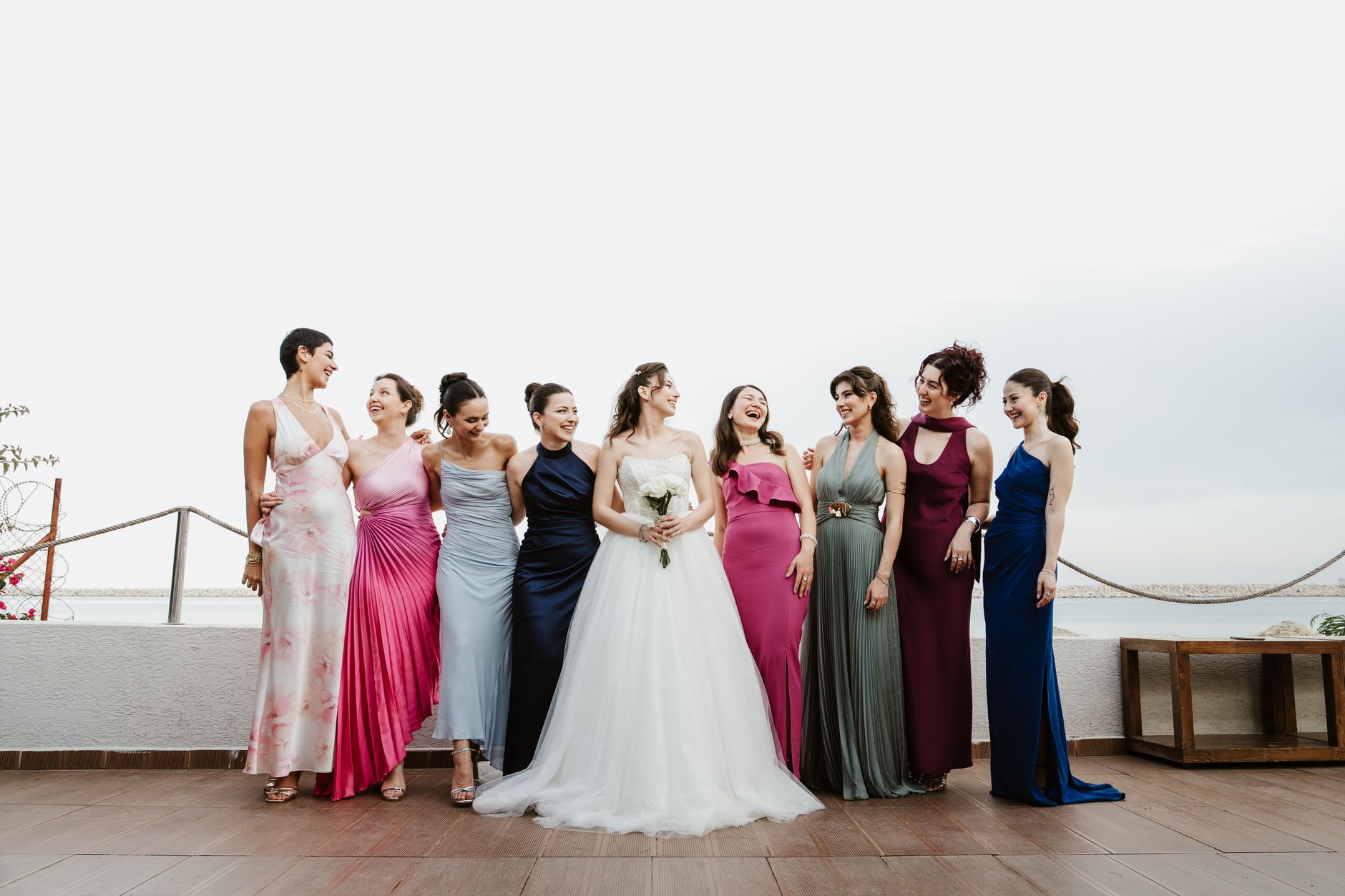
Trains are discussed endlessly; hems almost never. Yet the hem is the line that shows every time you take a step: it decides how you walk, how the gown behaves on stairs, and how much shoe, ankle and movement appears in your photographs. This season the hem has stopped being a measurement and become a design decision.
The bubble hem: volume without a heavy underskirt
The clearest new idea is a hem gathered and turned under into a soft, sculptural curve. A bubble hem creates volume and movement without layers of petticoat and without the weight of a traditional ball gown. It works best in organza, taffeta-like weaves and firmer mikado — fabrics that hold a shape and remember it.
Two practical notes. A bubble hem shortens the leg visually, so it rewards a raised waistline and a clean, unembellished bodice above it. If the hem is the event, let everything else stay quiet: one strong idea per gown always reads as more considered than three.
Shorter lengths: midi and tea length
A shorter wedding dress is no longer reserved for the registry office. Midi and tea length — somewhere between knee and ankle — return in this season's collections as a serious choice, particularly for city weddings, for brides who intend to dance without holding a skirt, and for a second look later in the evening.
With shorter hems, millimetres decide everything. The line should fall above or below the widest part of the calf, never exactly on it. A shorter skirt also gives the shoe, the stocking and the glove somewhere to be seen, so plan those together with the gown rather than afterwards.
Full length: where exactly to stop
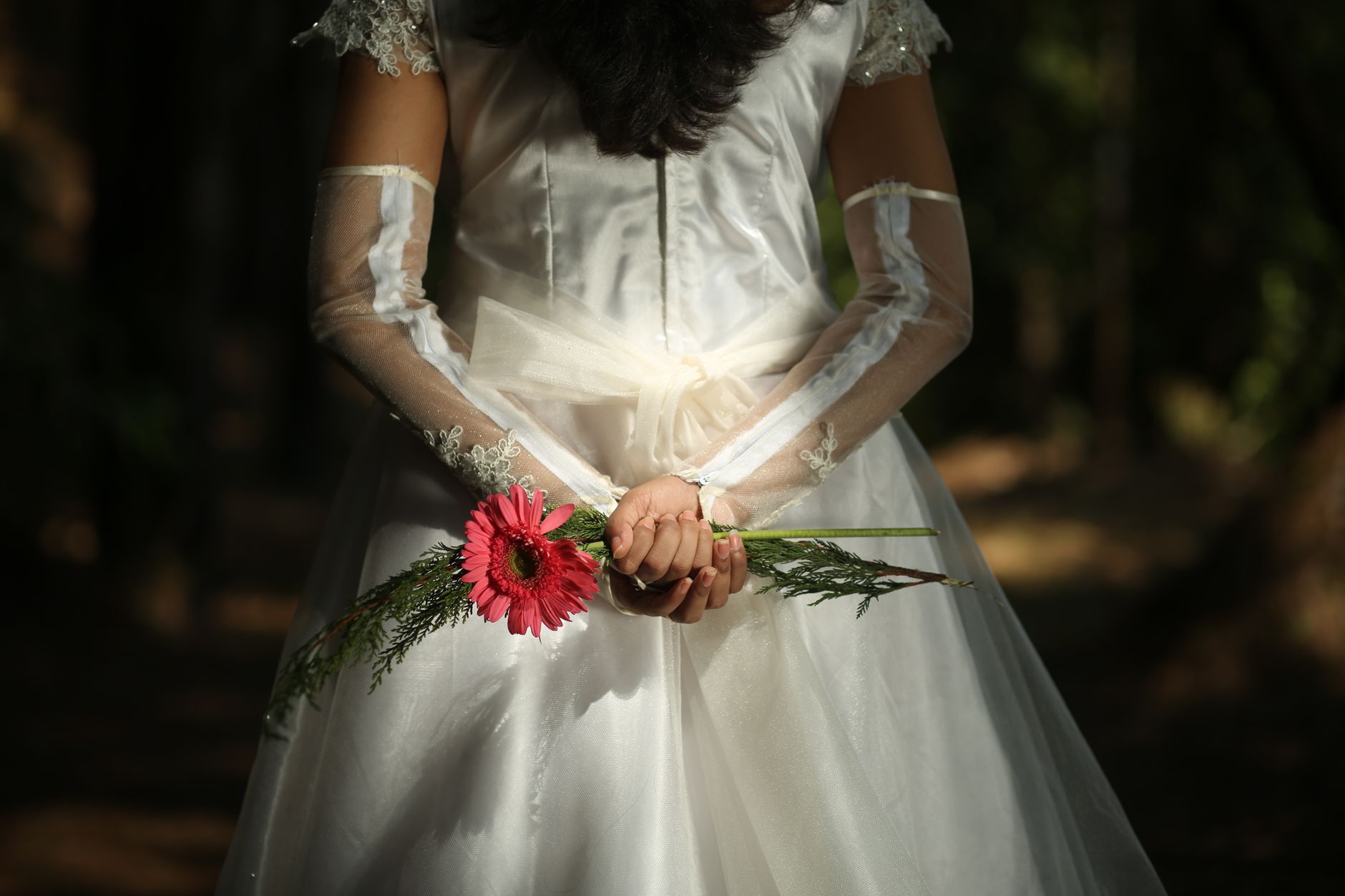
If you want a classic length, there are three calm options. A hem that only grazes the floor gives the cleanest line and the most confident walk. A hem that spreads very slightly at the front photographs beautifully in formal portraits but asks for a more careful step. Satin welcomes that extra centimetre or two because heavy fabric falls straight; tulle and chiffon, by contrast, quickly look bulky if too much length is left.
What to bring to a fitting
A hem is measured on you, in your shoes, in your habitual posture.
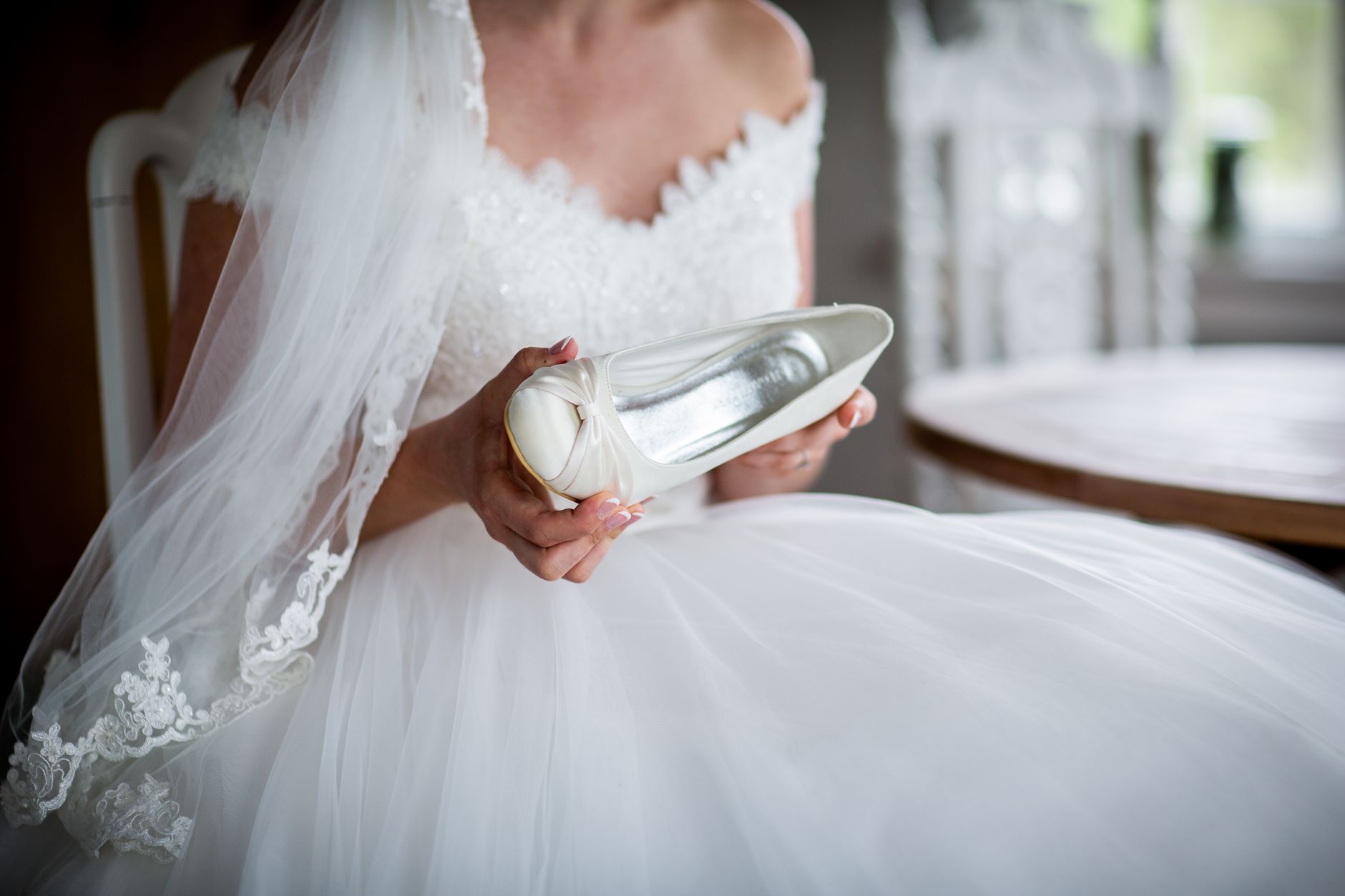
- The shoes you will genuinely wear all day — two centimetres of heel changes the whole measurement.
- Details of the ground: stone steps, grass and gravel forgive nothing that is too long.
- Whether you plan to lift the hem for dancing, or to change into a shorter second look.
Fittings here are by appointment only, unhurried and without other brides in the salon, with gowns to rent or to buy in sizes 34–44. For expectant brides we set the front hem as close to the wedding date as possible, since maternity cuts keep shifting that length until the final weeks. Come without hurry: the hem is the last centimetre of a wedding dress, and almost always the first one people remember once you begin to walk.