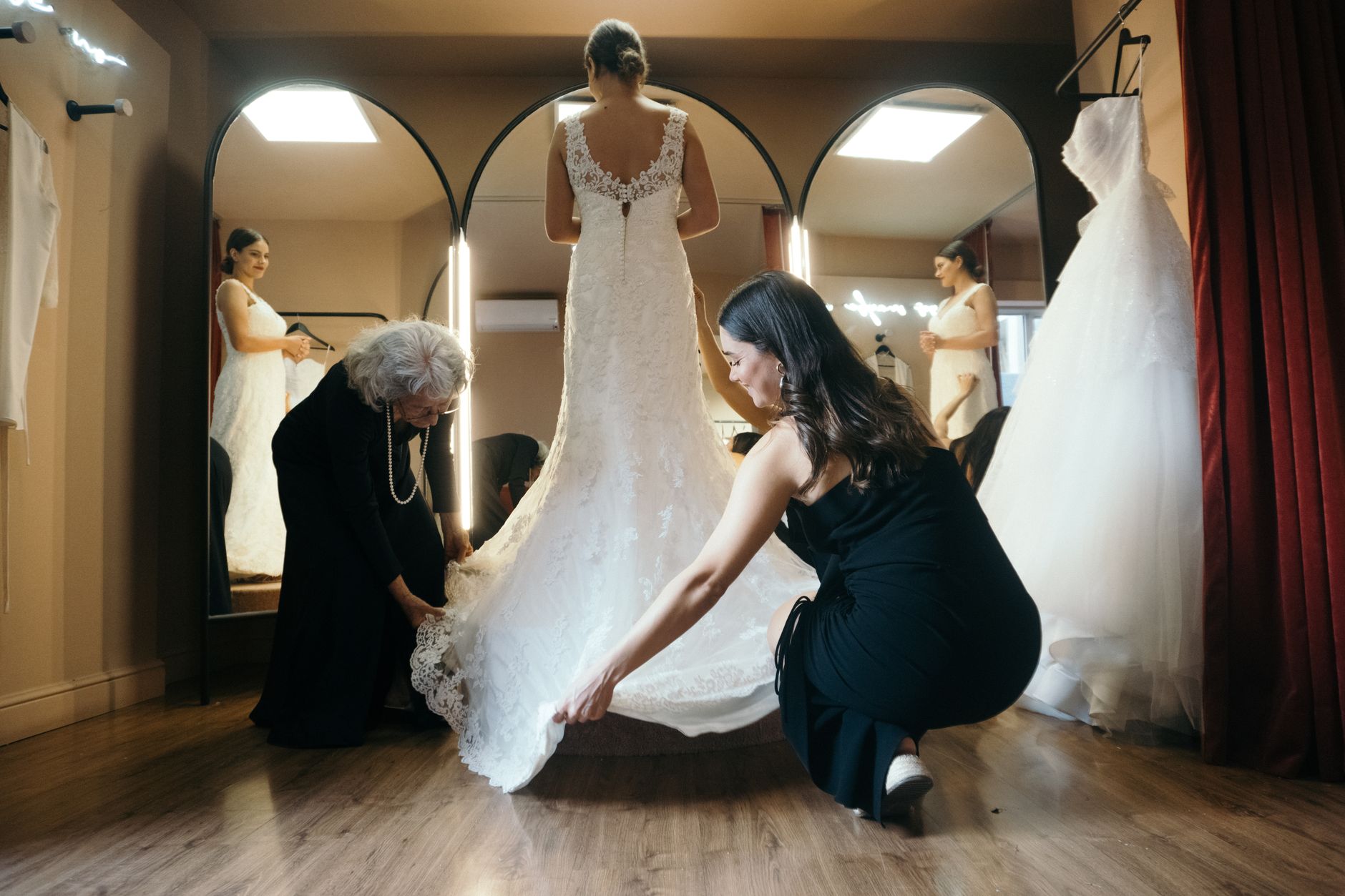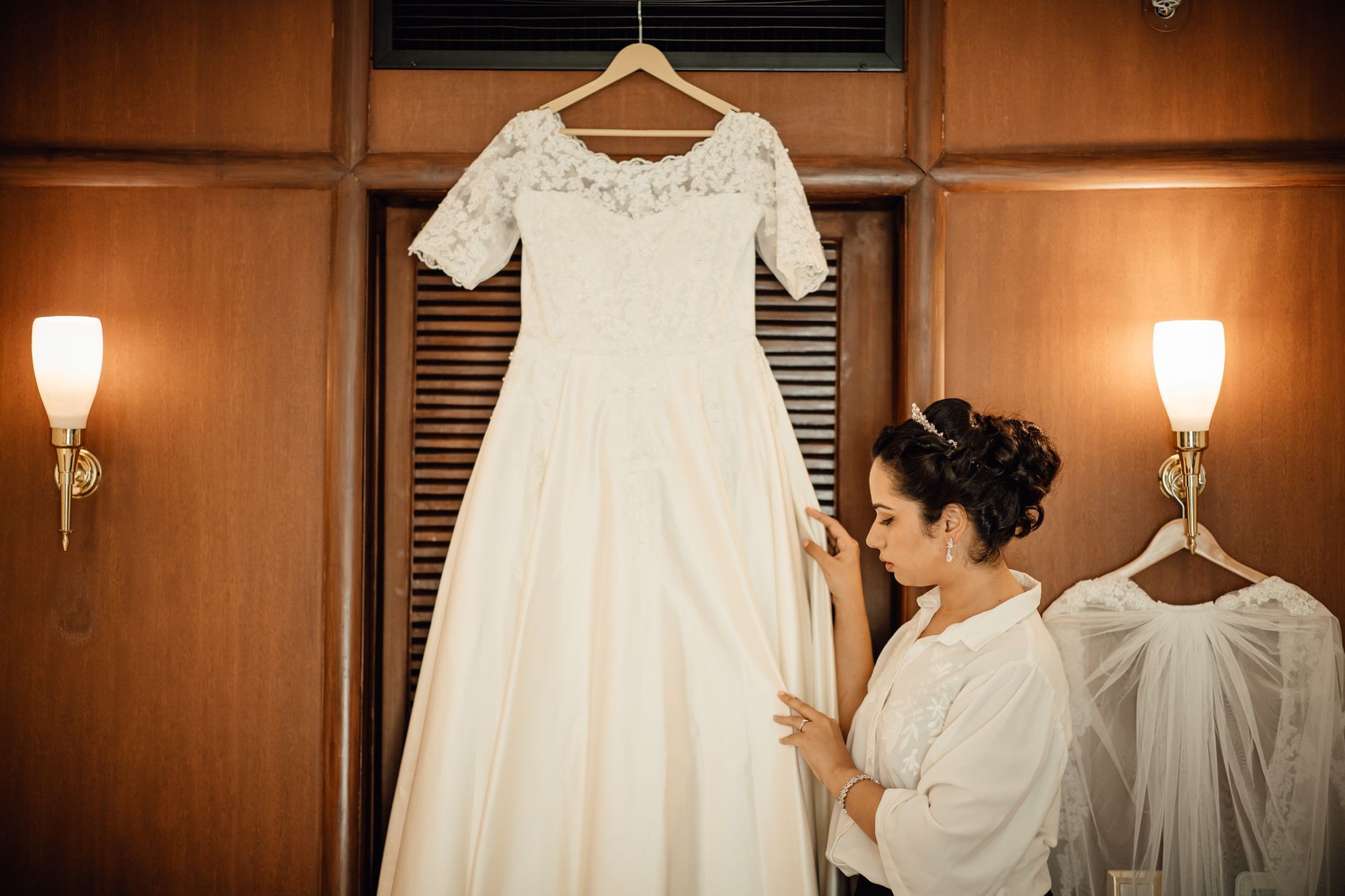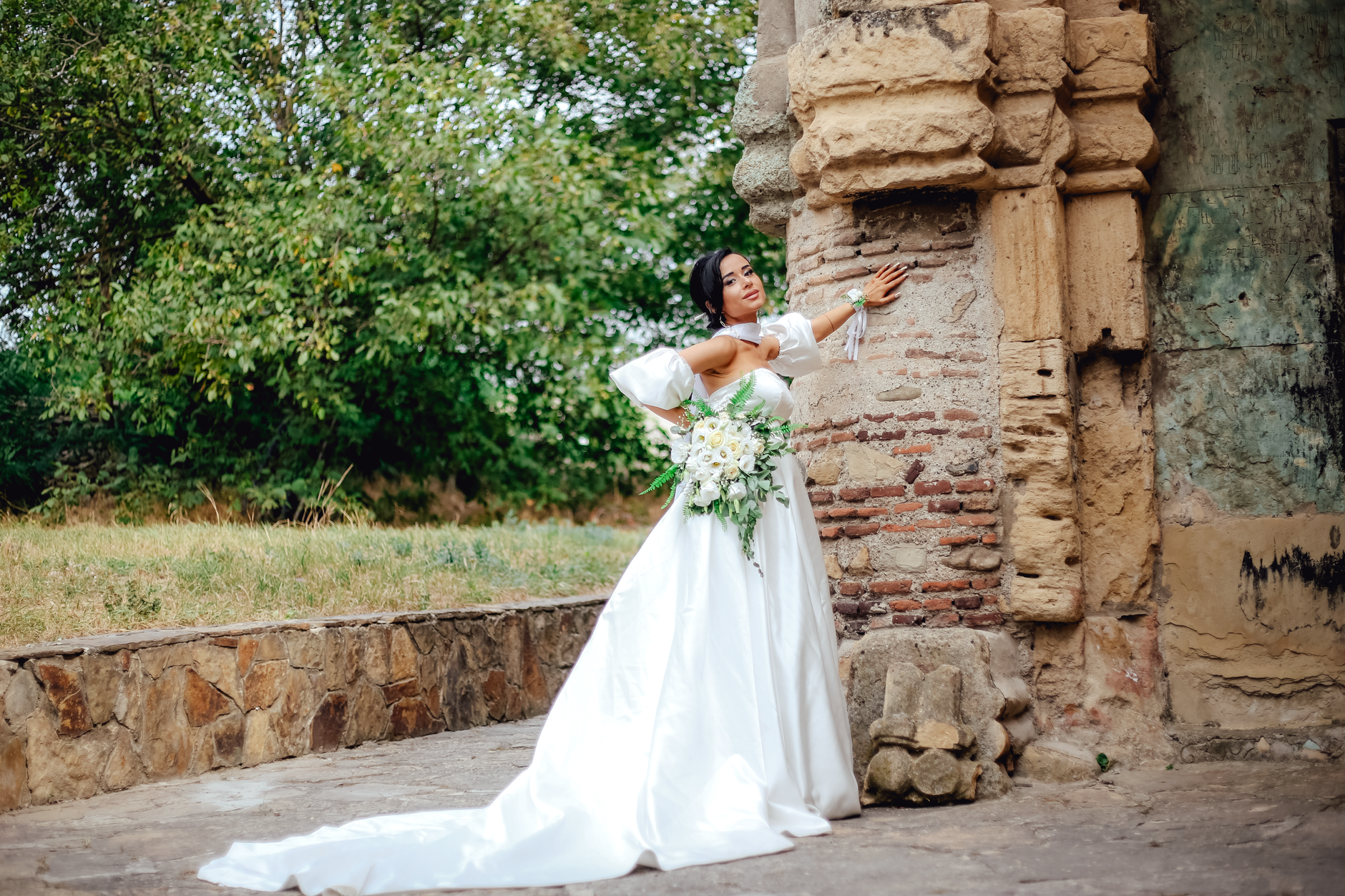

A wedding gown rarely fits perfectly the first time, and it is not meant to. Almost every dress passes through a seamstress's hands before it reaches the aisle. The difference between a beautiful gown and a faultless one usually has nothing to do with the design — it is a few millimetres at the waist and an exact length at the front. Fabric, however, has its limits, and it helps to know them before you fall in love.
What can almost always be done
The silhouettes brides are asking for this season — corseted bodices, dropped waists, quiet columns — take adjustment well, because they are built on clear seams a tailor can open.
- Taking in at the waist, under the bust and across the hips: the most common and most rewarding change of all.
- Length: the hem is set with the shoes you will actually wear, never without them.
- Straps and shoulders: shortened, moved a centimetre or two, quietly secured so they stay put.
- Inner support: sewn-in cups, a band that holds a straight neckline, a bone that keeps the bodice from gaping.
- Small additions: a layer of tulle under a sheer panel, a loop for the train, a hidden fastening.
What takes time — and what is better left alone
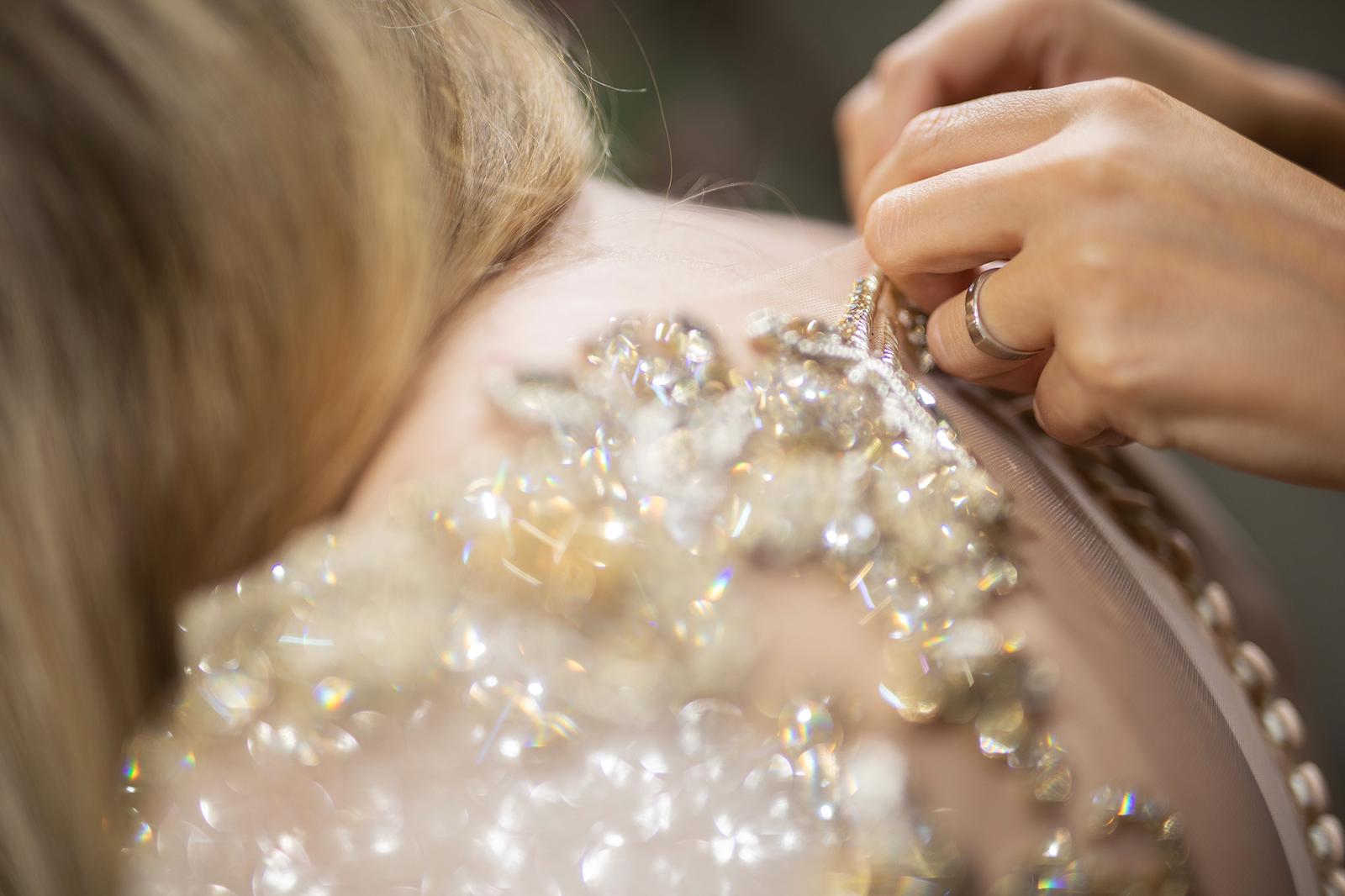
Dense beading and the three-dimensional flowers that are everywhere this season must first be lifted off and then returned by hand along the new seam; that is work measured in hours, not minutes. Lace with a large repeat has to have its motif rebuilt across the join, or the break will show. A bias-cut gown remembers every pin and responds better to an inner waist stay than to opened side seams. Letting out is always limited by the seam allowance, so if you expect your measurements to shift, say so at the first fitting. A neckline, the height of a back, the basic architecture of a skirt — these are not alterations but a different dress, and it is kinder to look for a cut that already does what you want.
Making the most of a fitting
Appointments are booked in advance, so the salon stays calm and the mirror is yours. Bring the shoes and the lingerie you intend to wear; without them a fitting is guesswork. Final measurements are taken when the body has settled, roughly four to six weeks before the date, and for brides expecting a baby we leave the last adjustment to the very end, working with a cut designed from the start to move with you.
Carrying sizes 34 to 44 means we can begin with the gown that needs the least intervention, which is always the best outcome. Gowns that are rented receive reversible adjustments only: what is stitched can be released, and the fabric stays untouched. Brides from Serbia, Croatia and the diaspora receive a rental agreement valid across the border. A gown that is bought accepts permanent work, so we shape it more freely to your line and your posture.
An alteration is not the correction of a mistake. It is the last layer of tailoring — the one that turns a dress on a hanger into yours.