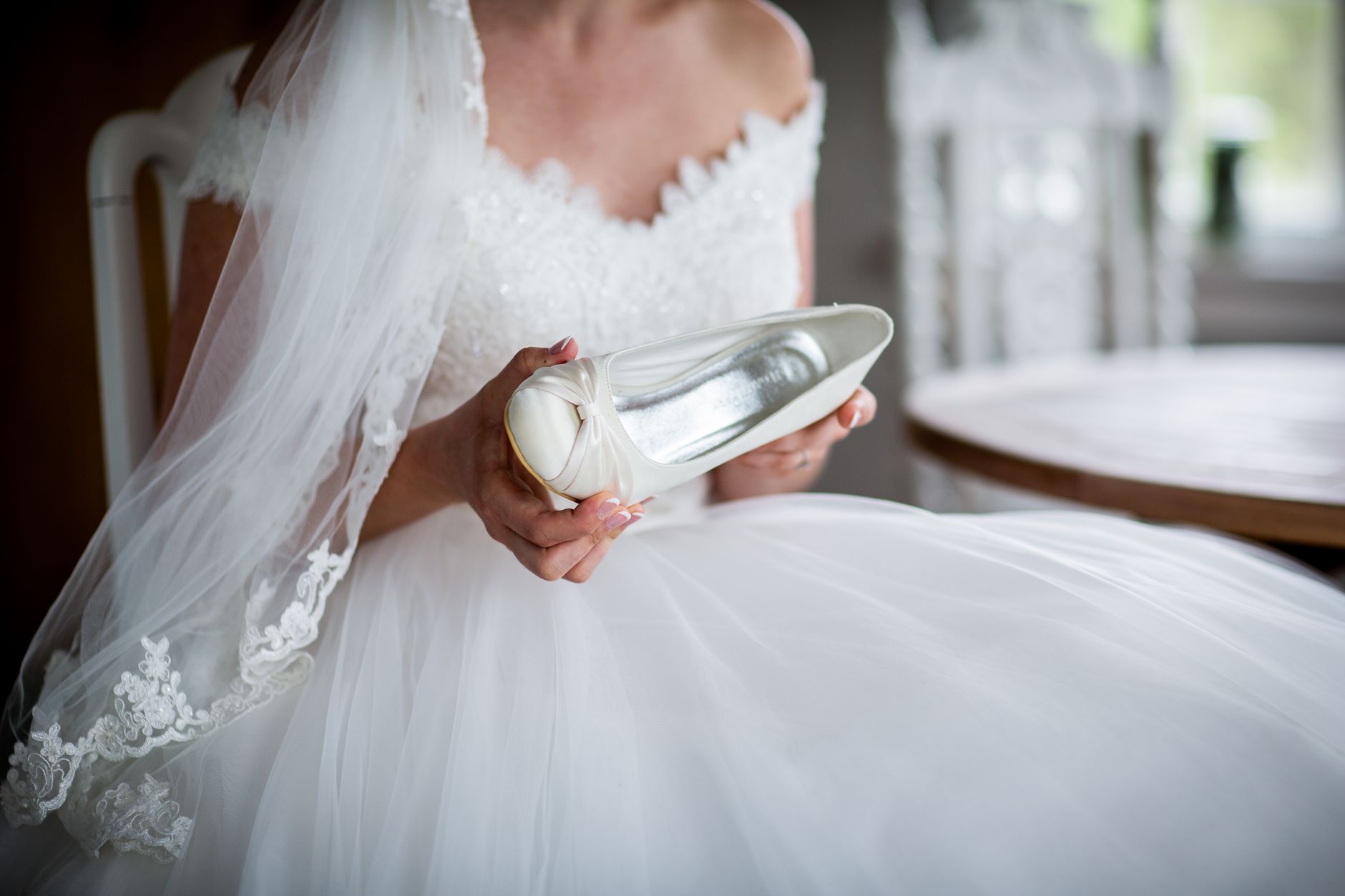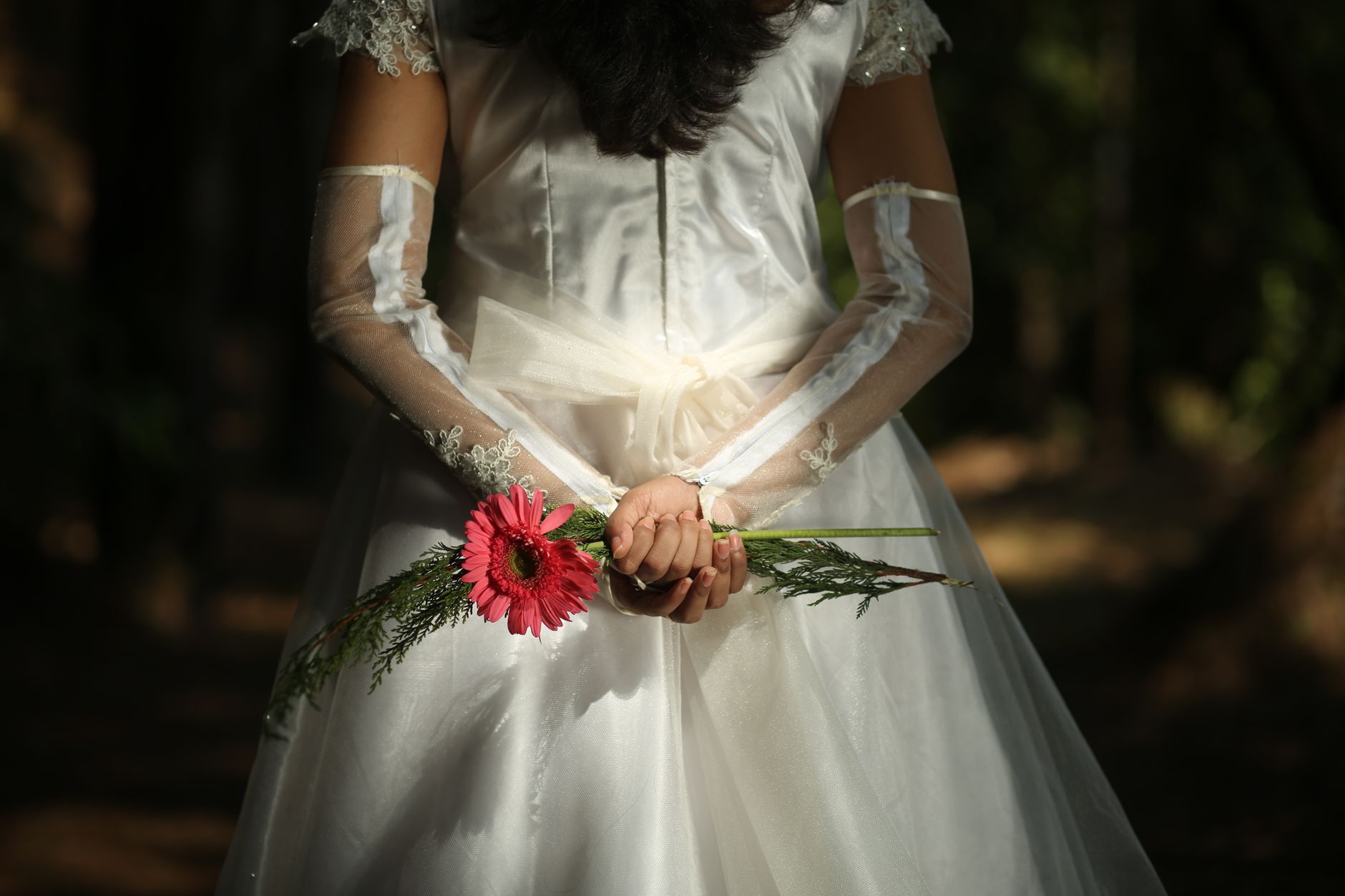

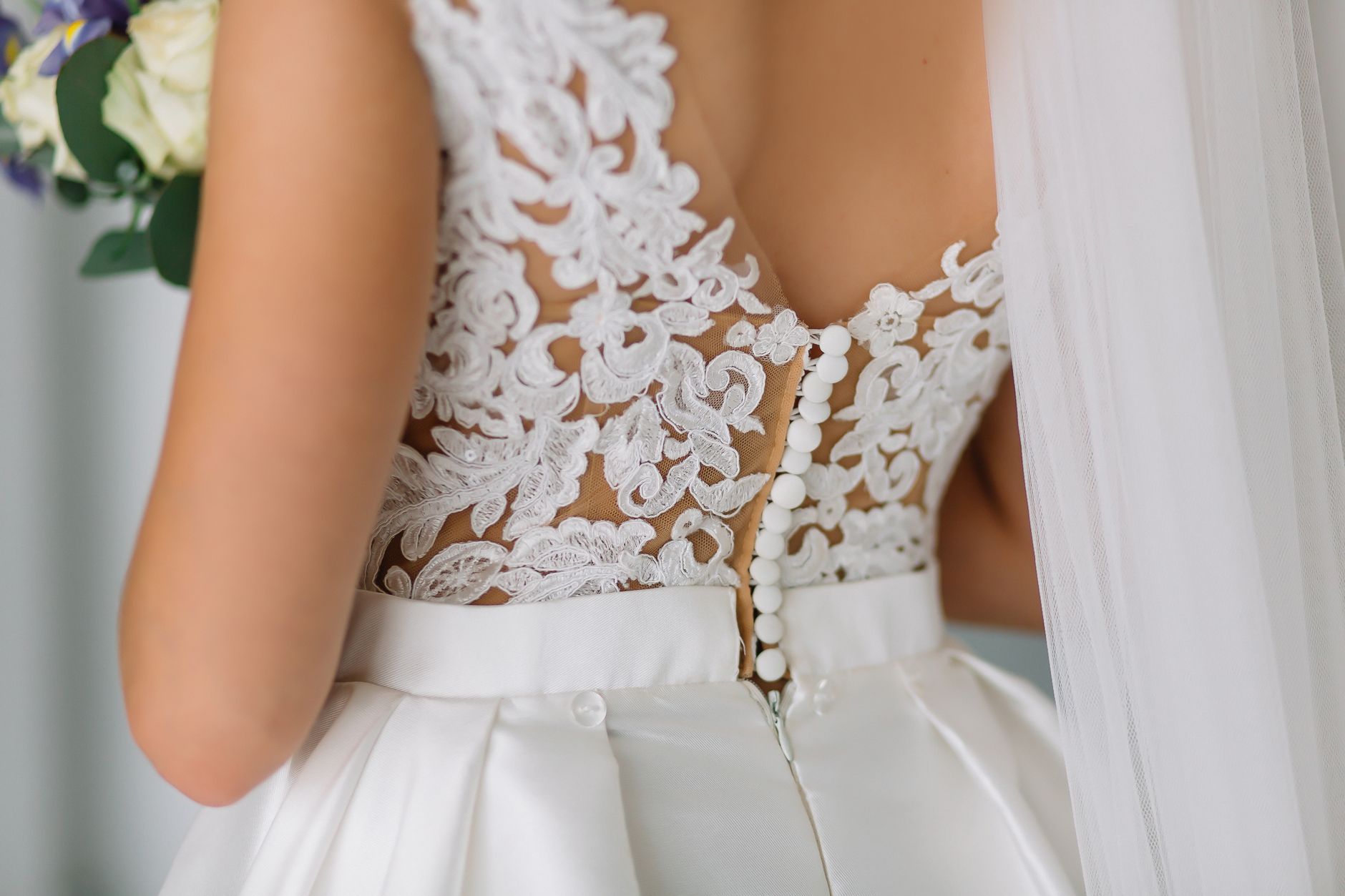
For most of the ceremony, the bride is seen from behind. The vows, the rings, the blessing, the first quiet glances — all of it happens while the guests are looking at her back. This season, designers have finally taken that literally: the front of the gown stays calm and clean, and everything worth saying is said behind.
The bow as a signature
The oversized bow has returned to bridal, though with more restraint than before. It sits low — at the waist or where the train begins — and is usually cut from the same cloth as the gown, mikado, heavy satin or taffeta, so it reads as sculpture rather than trimming. Smaller, softer bows appear at the shoulder or along a neckline, for the bride who wants only a suggestion of romance.
Alongside the bow comes sculptural draping: folds gathered into a single point at the back and released into the train. On a narrow, unadorned silhouette, that one gesture replaces every other ornament.
Lace, buttons and a line of pearls
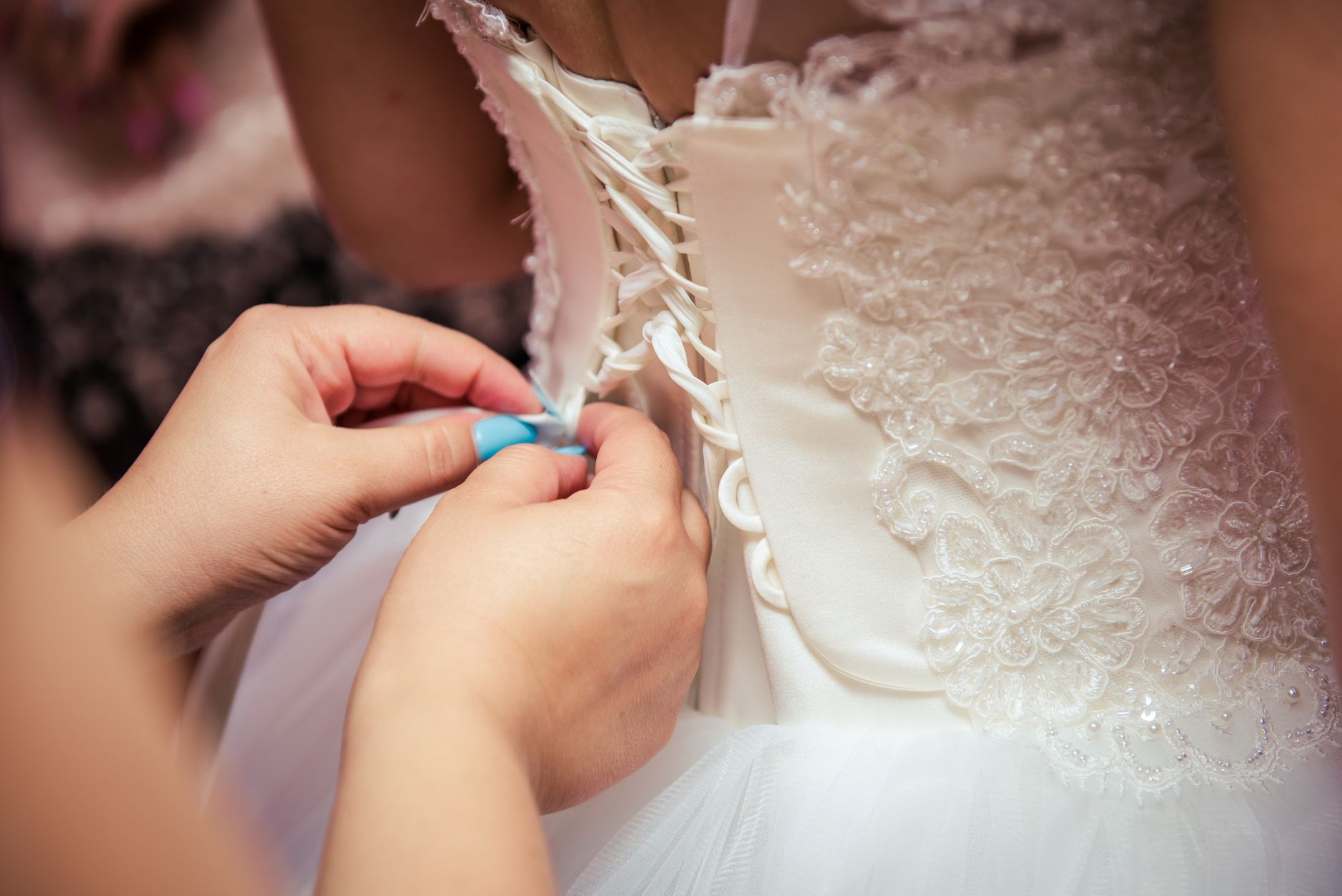
Illusion backs in fine lace remain the most requested of all: the skin is only suggested, and the gown stays composed enough for a church. Beneath the lace runs a row of small covered buttons, this season often continuing to the very end of the train — a detail photographers love, because it draws the eye down the whole figure.
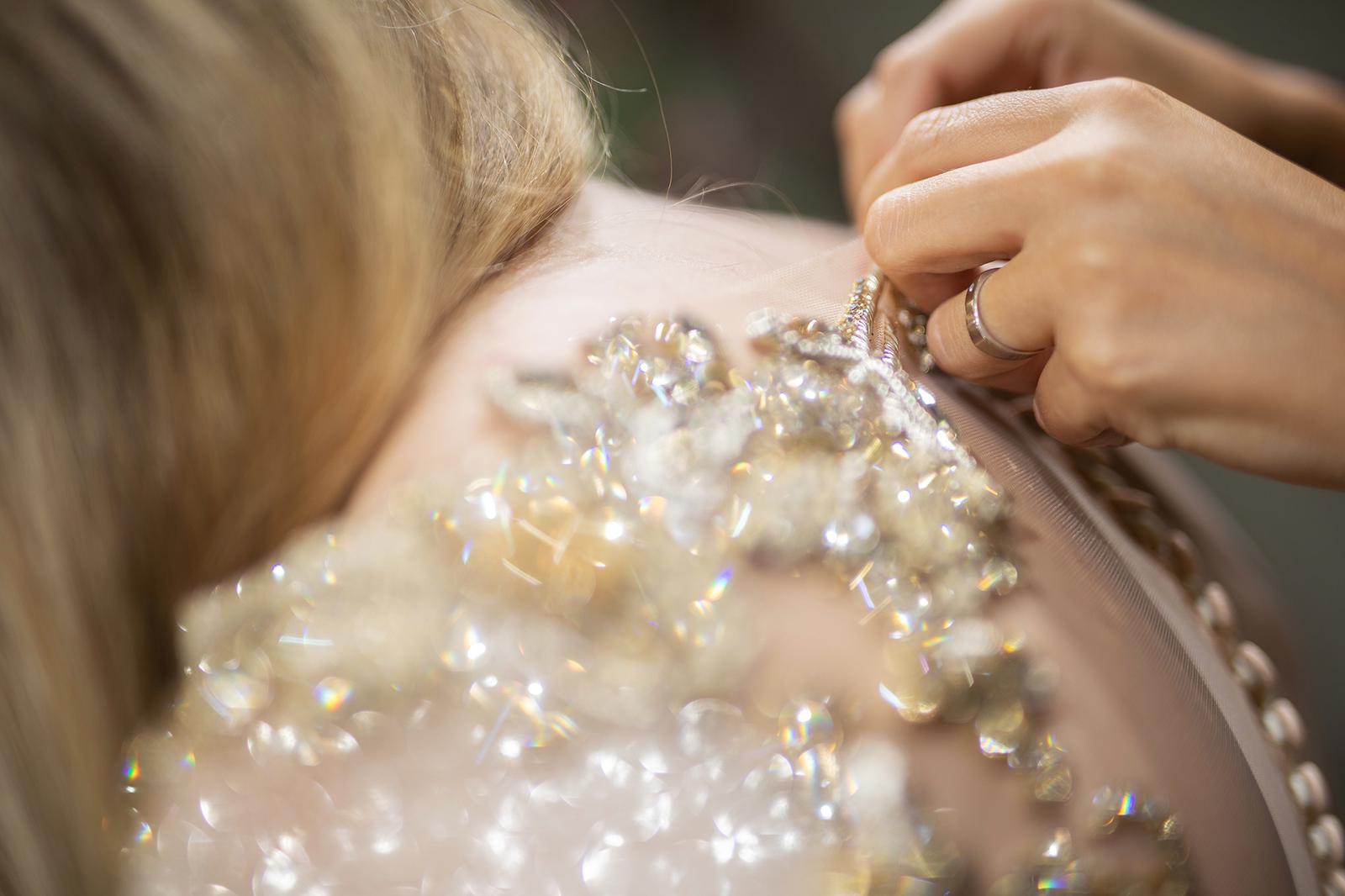
Pearls are used sparingly, scattered along the edge of the opening or traced down the spine. The deep V, the softly scooped back and the narrow keyhole are all in circulation again; each asks for different lingerie and a different way of wearing the hair, which is worth thinking about at the fitting rather than the week before.
A veil that follows rather than hides
Long veils — cathedral and chapel lengths — are once again the first choice, but in a lighter, finer tulle that floats instead of smothering. Instead of dense lace along the full length, texture is doing the work: small pleats, a gently crinkled edge, or a slim lace border. If the back of the gown is the statement, choose a single sheer layer, or lift the veil after the ceremony — the simplest way to keep one beautiful detail from swallowing another.
How to judge it at a fitting
A back cannot be assessed in the mirror in front of you. When you try a gown on:
- stand between two mirrors, or ask someone to photograph you from a few paces away;
- look again while seated, as draped details shift completely;
- walk a little and let the train settle by itself;
- see the gown both with and without a veil before deciding.
In our salon, fittings are arranged by appointment and take as long as they need to, unhurried and private. Gowns are available to rent or to buy, in sizes 34 to 44, with a few cuts made for mothers-to-be. For brides coming from Serbia, Croatia or the diaspora, the rental agreement is valid across the border, so the dress can travel calmly to wherever the wedding is.