
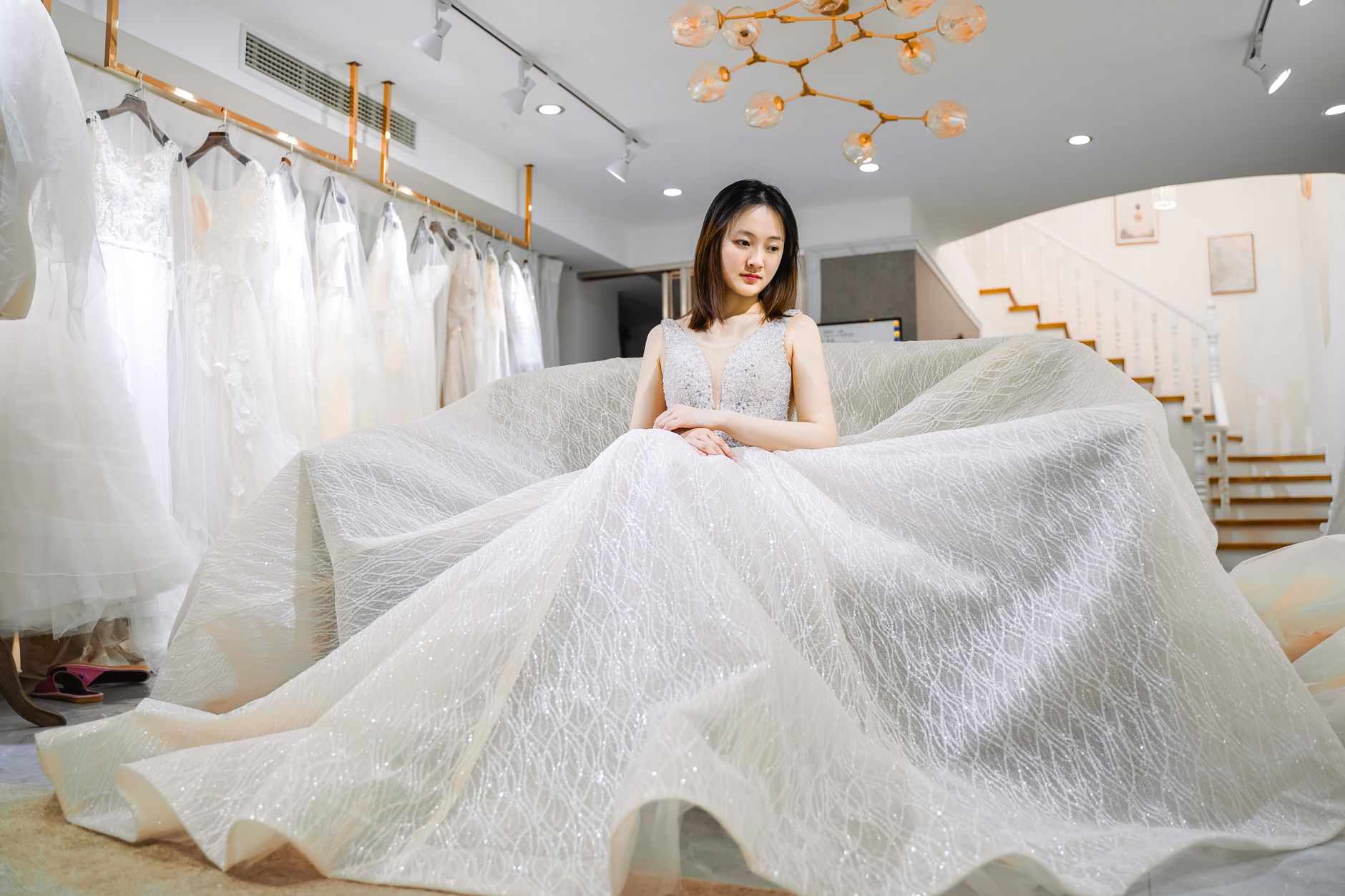
The number on a bridal label rarely matches the number you wear every day. Bridal sizing follows its own charts, older and less forgiving than ready-to-wear, so a bride who usually chooses a 38 often tries a 40 or 42 in the salon. Nothing is wrong with the cut, or with you. That is why fittings are spent talking about measurements rather than sizes, and about how a particular cut carries them.
Three measurements, and one that gets forgotten
Bust, waist and hip form the basis of every choice. A gown is chosen according to the largest of the three, because fabric is far easier to take away than to add. The fourth measurement, the length of the torso from shoulder to waist, is rarely mentioned, yet this season it decides a great deal: the dropped and basque waistlines that have returned to almost every collection read quite differently on a long torso than on a short one. The same gown lengthens one bride and interrupts another.
- Bust and underbust determine how securely a strapless bodice will hold.
- Waist shows how far the side seams can come in before the lace shifts.
- Hip is decisive in narrow cuts and bias cuts, where every centimetre shows.
- Height in your shoes sets the hem, so bring the shoes to the very first fitting.
What alters easily, and what the cut will not allow
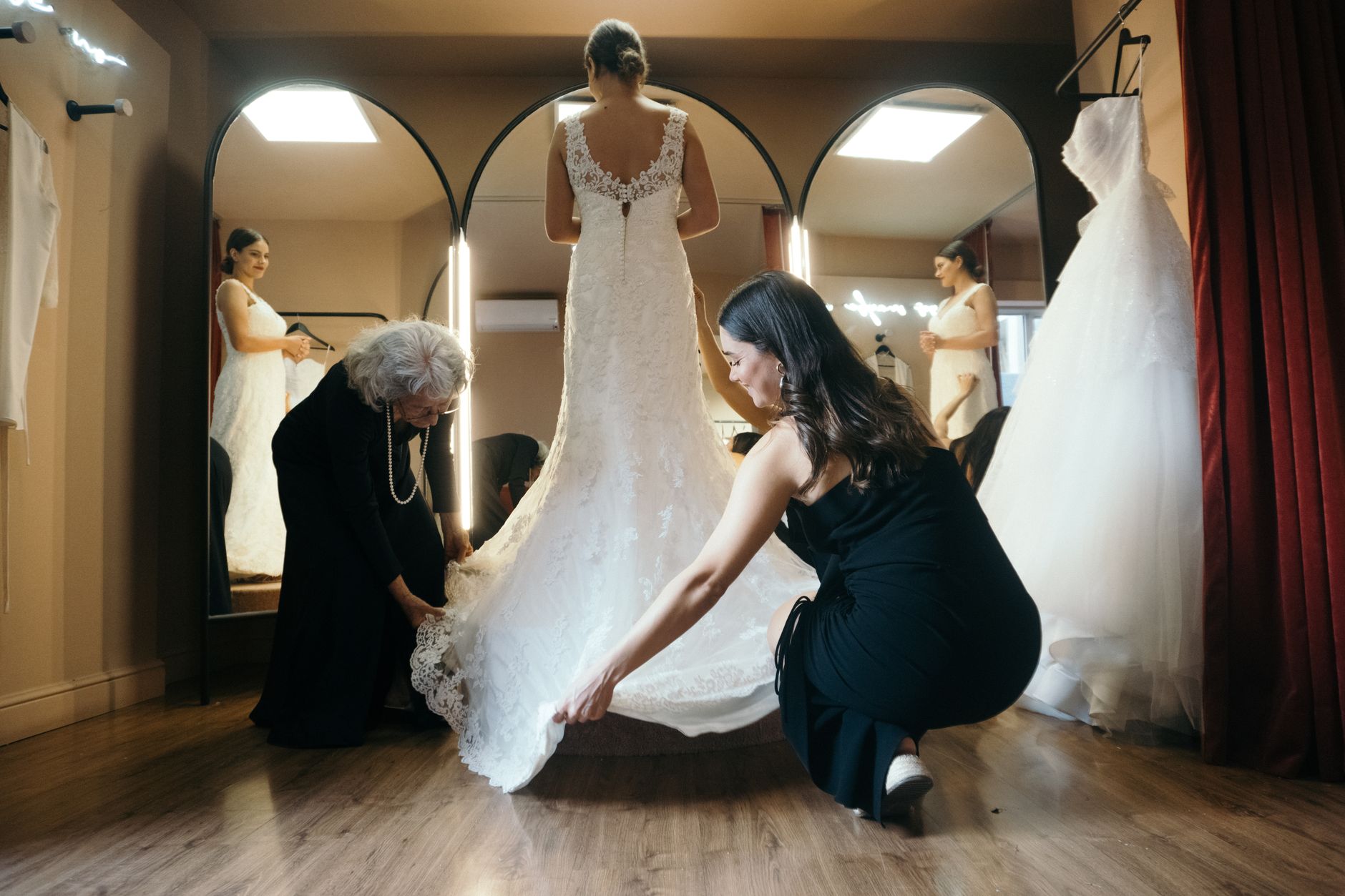
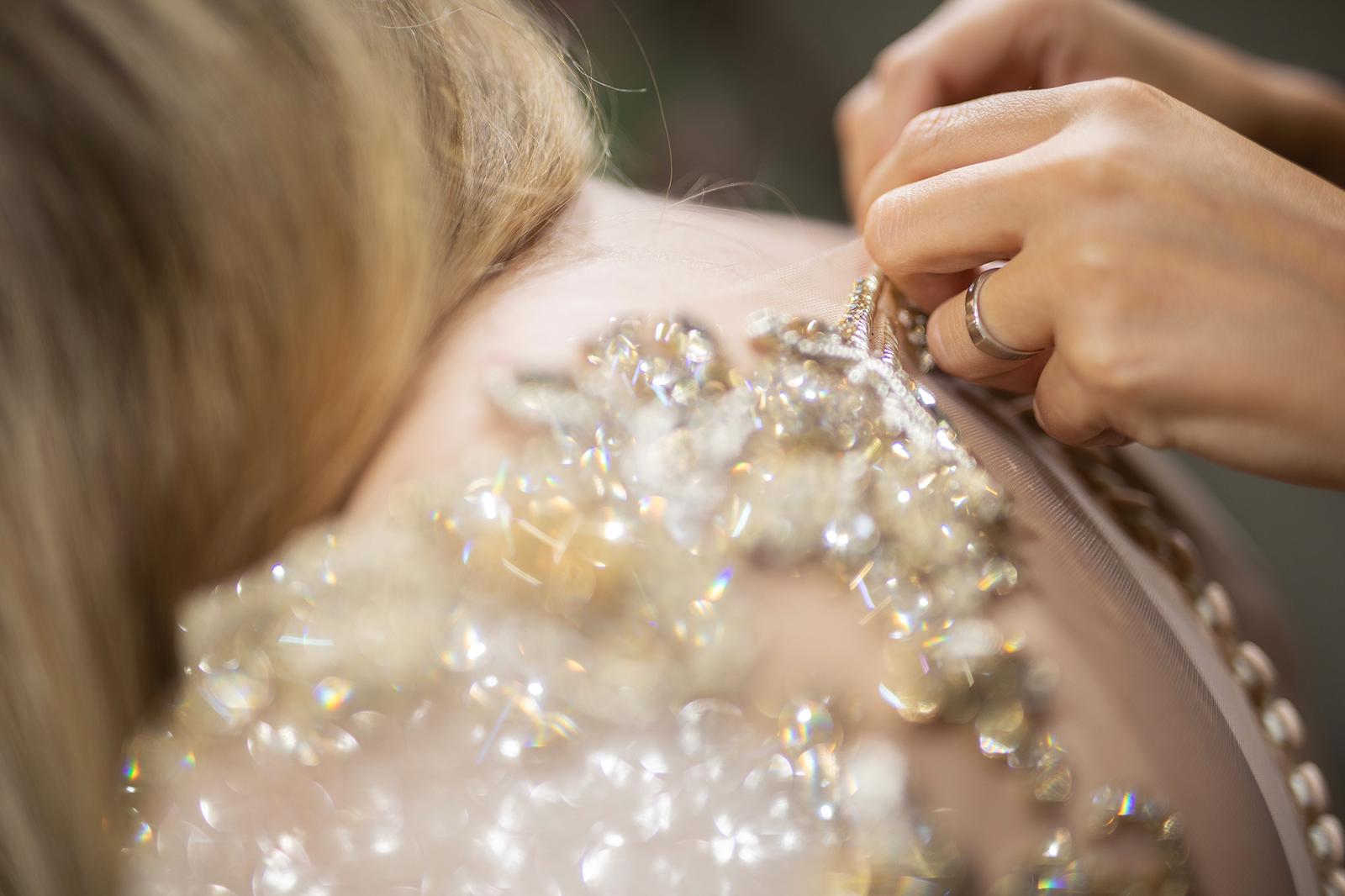
Taking in side seams, shortening straps, lifting a hem, softening a neckline or adding a discreet lining are all routine. Letting a gown out is another matter: it depends entirely on the seam allowance left inside. Moving an applied flower, or redistributing beading that has been hand-stitched across a seam, is slow and sometimes impossible. The constructed corsets with visible boning that dominate this season accept shaping at the hip, but not a lower back — that structure is precisely what carries the weight of the skirt.
A laced back helps here. It forgives several centimetres in either direction and suits brides whose shape is still changing, though it is never a substitute for the right measurement, since the gap between the edges remains visible.
This season's cuts across sizes 34–44
Within the range we keep in the salon, some cuts suit almost every figure while others ask for precision. The softly draped columns and halter necklines that are replacing deep plunges this season follow the body calmly and take small corrections well. Bubble hems, ruffles and organza at the hip change proportion more than expected, so we always look at them in motion rather than in the mirror alone. Maternity cuts are measured differently: the underbust and the ease below it matter most, because the silhouette keeps changing after the fitting.
When the gown is rented
With a rented gown every adjustment is reversible — the dress is fitted so that it can return to its original state. Measurements are therefore taken earlier and more carefully, and fittings are arranged privately, by appointment, without haste. For brides from Serbia, Croatia and the diaspora the rental contract is valid across the border, so the schedule of fittings is planned around the date of arrival.