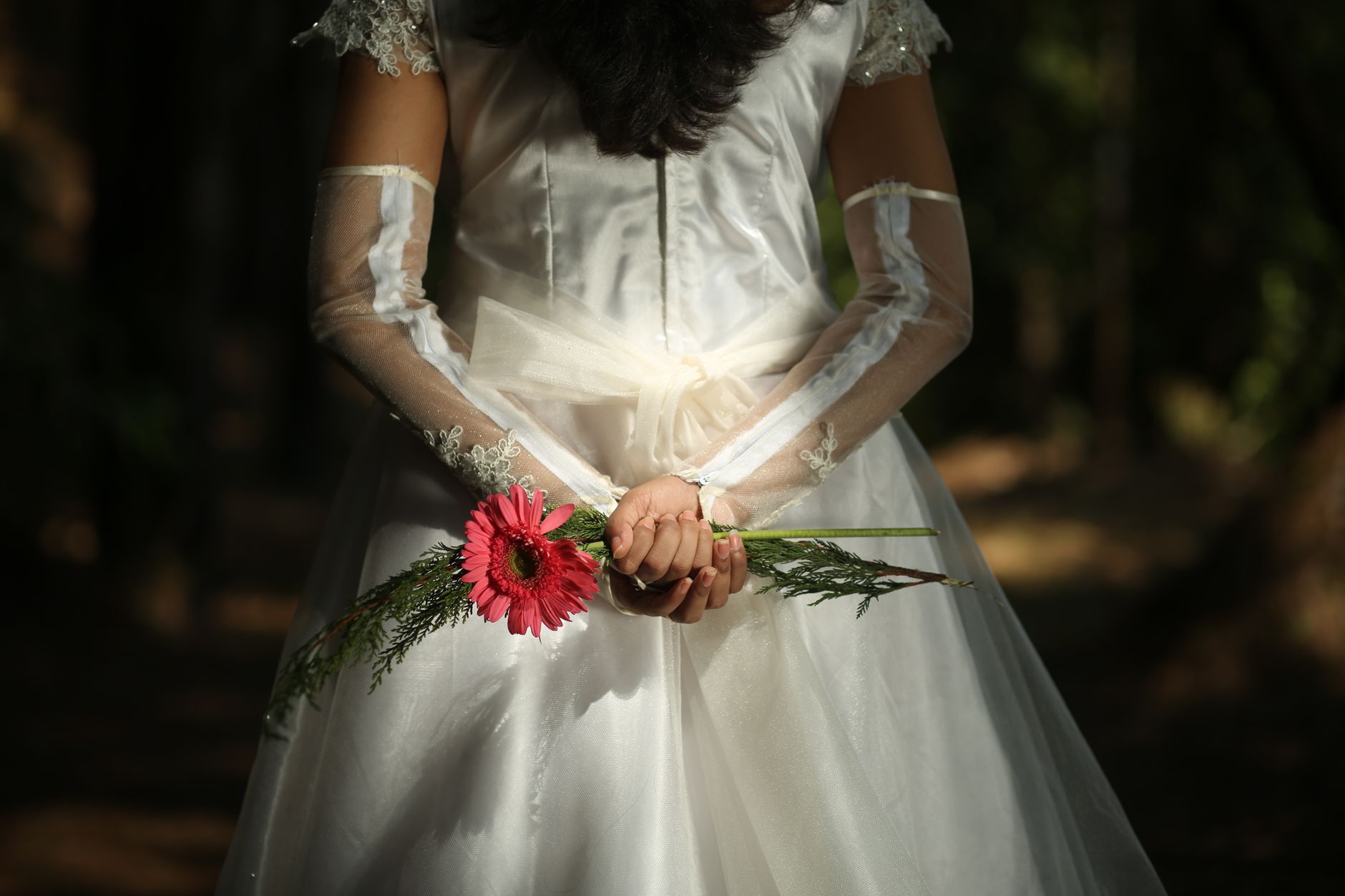

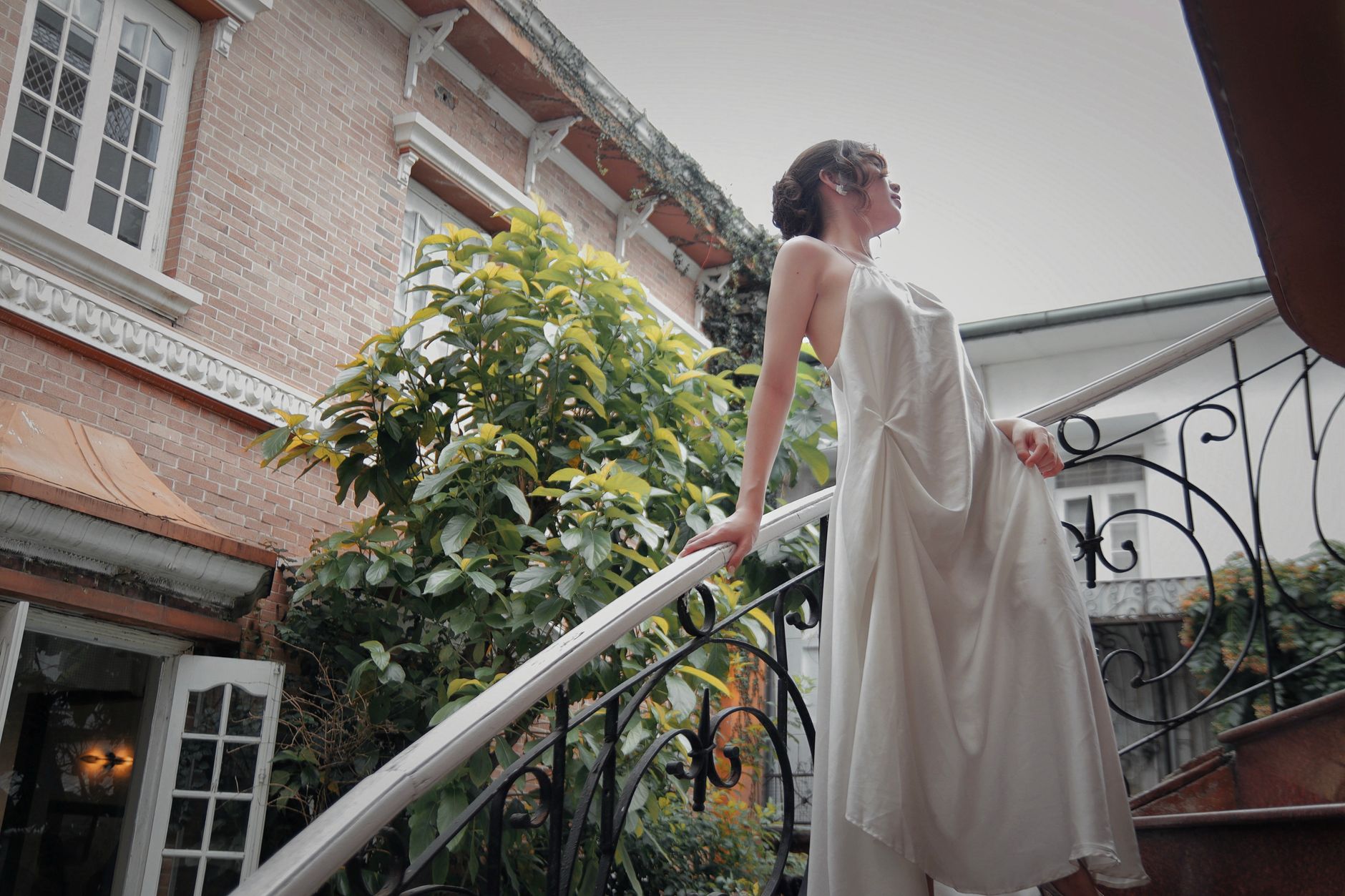
After several seasons of corsetry, boning and visible structure, the mood has turned quieter. More and more brides are trying on gowns with no crystal at all, no seams slicing the body into sections — dresses where the whole effect rests on one thing: the angle at which the cloth was cut.
What a bias cut actually is
Fabric is normally cut along the grain. Cut on the bias, the pattern piece is turned forty-five degrees, and the cloth gains a gentle give it does not otherwise have. A bias gown does not sit on the body; it falls over it, following the shoulder, the waist and the hip without padding or a rigid framework underneath. The look is almost effortless — as though the dress were simply draped over the bride — and yet it is one of the most demanding cuts in dressmaking.
That is what separates it from a conventional fitted line. There is no hard break between bodice and skirt, no seam cutting across the waist; the gown descends in a single movement and ends in a calm, liquid train.
Fabrics that can carry it
The bias is unforgiving with light cloth. It asks for weight, because weight is what pulls the gown down and creates that unbroken fall.
- Heavy crepe — matte, architectural, almost no shine; the strictest and most modern reading.
- Crepe-back satin — two faces in one cloth, so the shine can be kept for straps or the back neckline alone.
- Silk charmeuse — fluid and cool against the skin, with a low shine that shifts as you move.
- Dupion and organza — beautiful in their own right, but too stiff; on the bias they lose their purpose.
A well-made bias gown is almost always lined on the bias too. A straight-cut lining holds the dress back, and the conflict shows immediately across the hips.
What to check at the fitting
This cut reveals everything worn beneath it, so underwear is chosen before the hem is settled, never after. Seamless pieces, skin tone rather than white, ideally with no hard edges. We also ask that the gown hang for a day or two before the length is marked, since bias cloth drops slightly with time and the hem then needs levelling again.
At the fitting, walk in it. Sit down, turn in front of the mirror, let someone see you from behind at a distance. A bias gown rewards patience, both at the cutting table and in the choosing, and gives the restrained bride something no embellishment can — a perfectly quiet silhouette.
That same softness suits maternity styles particularly well, as the line follows a changing body instead of resisting it. Our gowns are held in sizes 34 to 44, tried on unhurriedly and by appointment, and may be rented or bought; the rental agreement also holds for brides travelling to us from across the border.