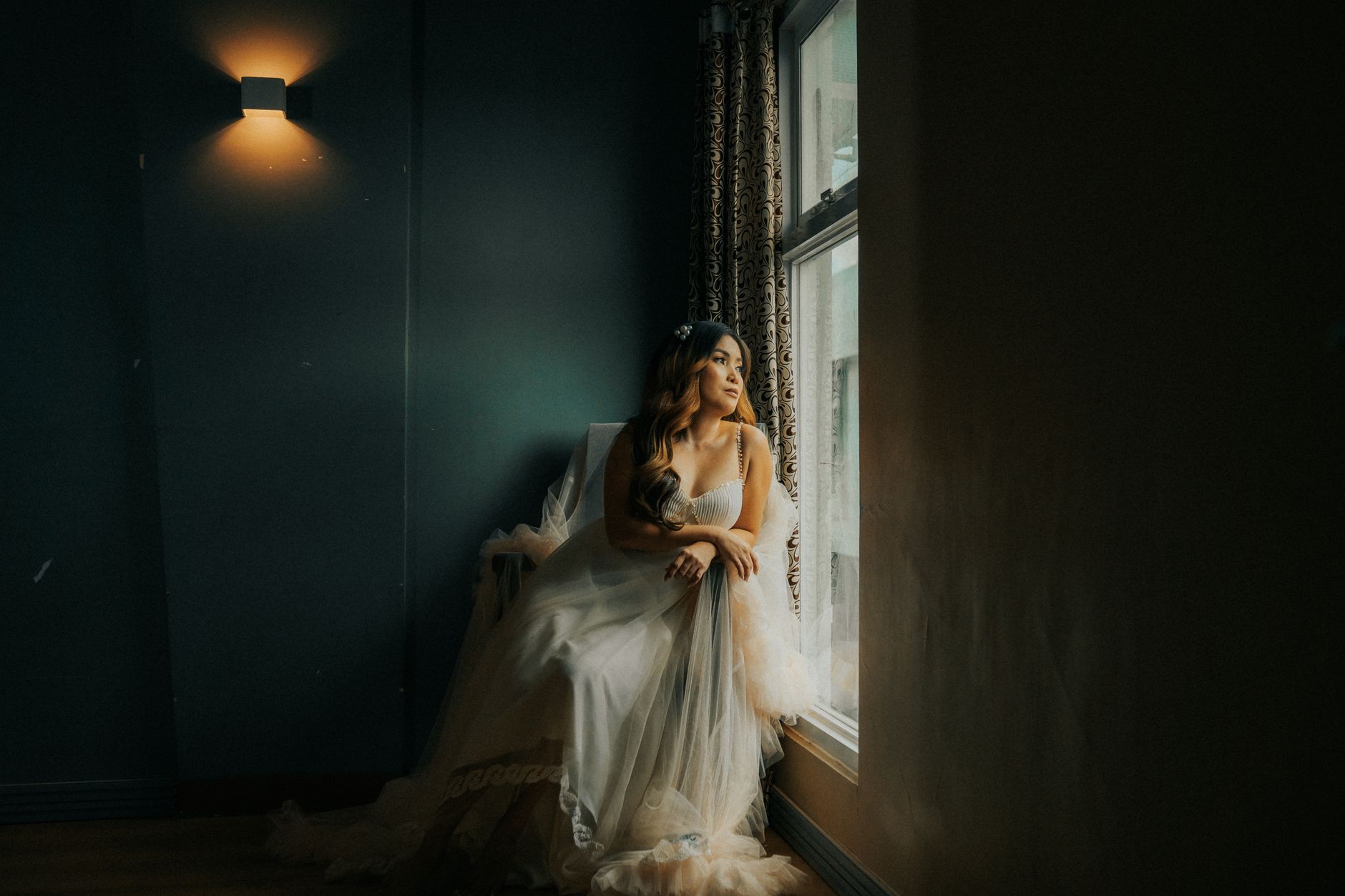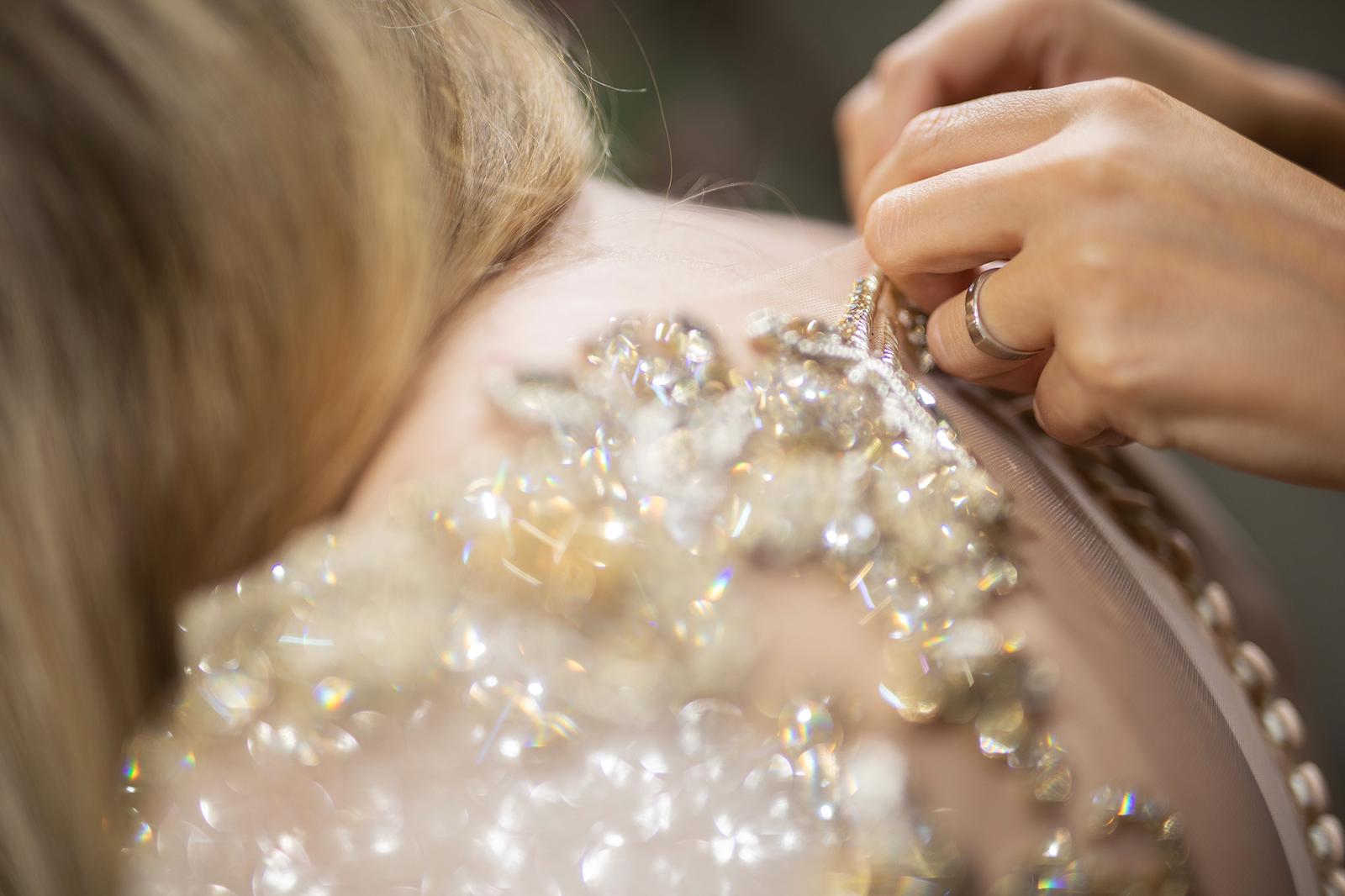

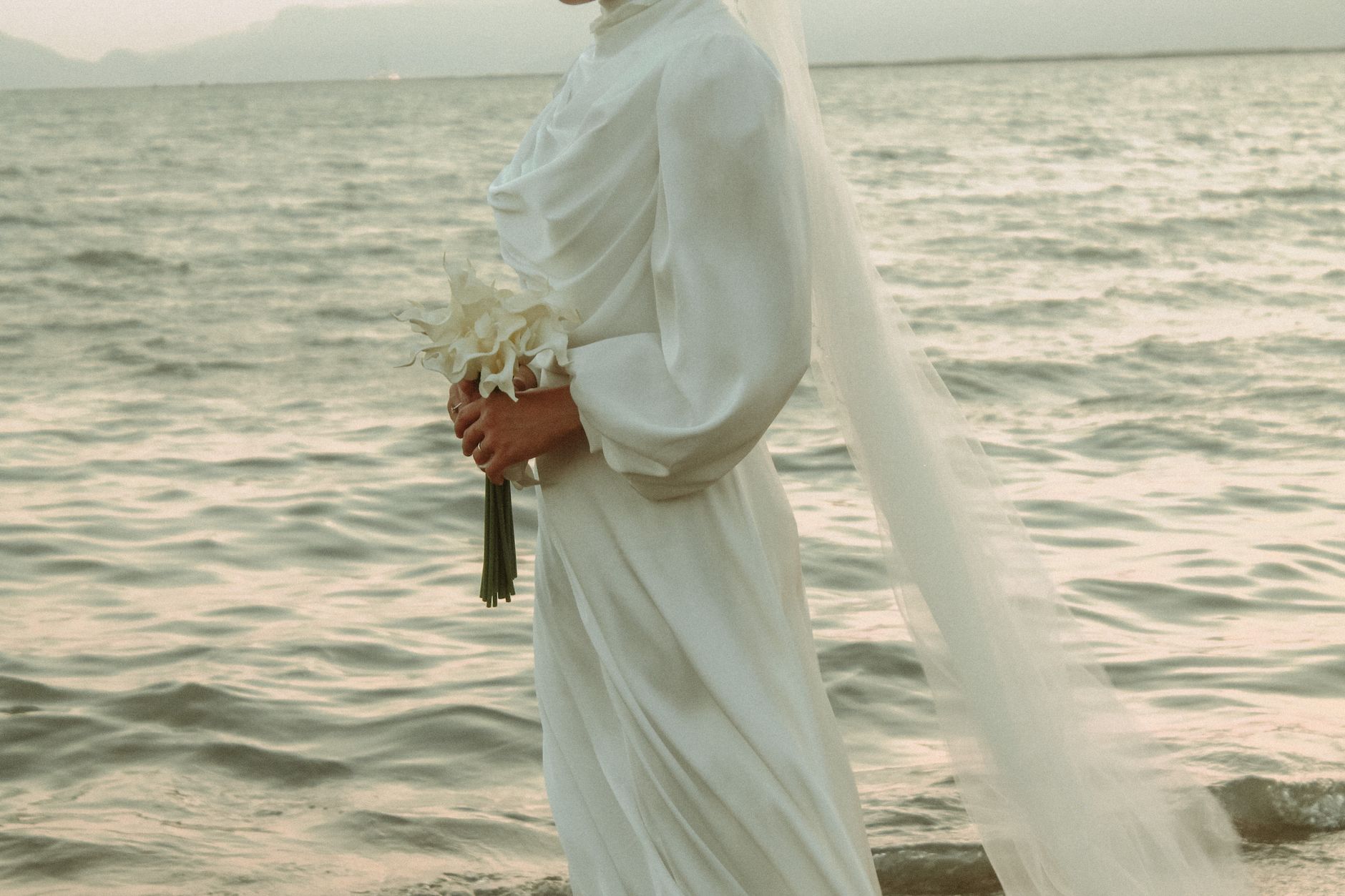
For several seasons, bridal fabric has been about light: satin that catches it, tulle that scatters it, surfaces dense with beading. Quietly, this season brings forward a cloth that does none of that. Crepe is matte, close and still — and because of that, only one thing shows on it. The line.
A fabric that works without ornament
Crepe is woven from tightly twisted yarns, which gives it a fine, almost invisible grain and a completely matte surface. There is no shine to pull the eye away, no pattern to tell the story in place of the cut. What remains is shape. That is why crepe appears most often in upright, unhurried silhouettes: a gown that follows the body, falls to the floor and resolves into a short, soft train at the back.
This return to calm is not accidental. Alongside the season's appetite for volume and sculpted corsetry, a second current runs just as strongly — a pared-back gown in which luxury is read in the material and the making rather than in the quantity of detail. Crepe is its natural cloth.
How it behaves on the body
Unlike organza or taffeta, crepe does not build a shape — it reveals one. The fabric has weight, so it falls straight and quietly, without flutter, wrapping gently around the leg with each step. It is a fabric that looks best in movement and in profile.
- It shows every seam. Crepe is an honest material and asks for exact cutting and a flawless lining — what cannot be seen is very much felt here.
- It wants a smooth foundation. Seamless, unbroken layers belong underneath; any edge beneath the cloth leaves its mark on the surface.
- It favours simple necklines. A softly draped high neck, a fine strap, or a clean, almost geometric shoulder line — crepe takes little, but carries that little perfectly.
- It forgives less and remembers more. Moving a seam leaves a faint trace, so decisions are made earlier with crepe than with lace.
Who it suits, and what to watch at a fitting
Crepe is generous wherever you want length and stillness: it lengthens the figure, settles the proportions, and sits equally well across our range of sizes 34 to 44. In maternity cuts it shows its softest side, falling over the bump without tension and without added volume, so the silhouette stays gentle and composed.
At the fitting, give your attention to two things. The first is length: crepe has no layer of tulle to forgive a couple of centimetres, so the hem is set only in the shoes you will truly stand in. The second is behaviour — stand, sit, walk to the far end of the room. A fabric of this weight tells you everything within the first few steps.
There is one more quiet advantage: crepe creases little and travels easily. For brides carrying a gown across a border — from Serbia, Croatia or further afield — that is the practical difference between a dress that needs tending and one that arrives ready. We show crepe gowns at private fittings by appointment, whether you are choosing to rent or to buy.