
A wedding gown is chosen over months and put on in minutes. Those minutes usually fall into the busiest part of the morning: hair is being finished, someone is looking for the shoes, the photographer is already in the room. Knowing the order in advance changes everything. A gown that has been put on properly sits better, falls more calmly and carries the bride comfortably until the last dance.
The Night Before: The Gown Comes First
- Hang it high — over a door or a beam, so the train and the under-layers never rest on the floor.
- Let the tulle recover. Most creases from the garment bag relax overnight; the rest is settled with steam held at a distance, never a hot iron on the fabric.
- Gather everything in one place: lingerie, shoes, veil, jewellery, and a needle with thread in the shade of the gown.
- Decide who helps. One person who came to the fitting is worth more than four pairs of hands in the room.
An Order That Protects the Morning
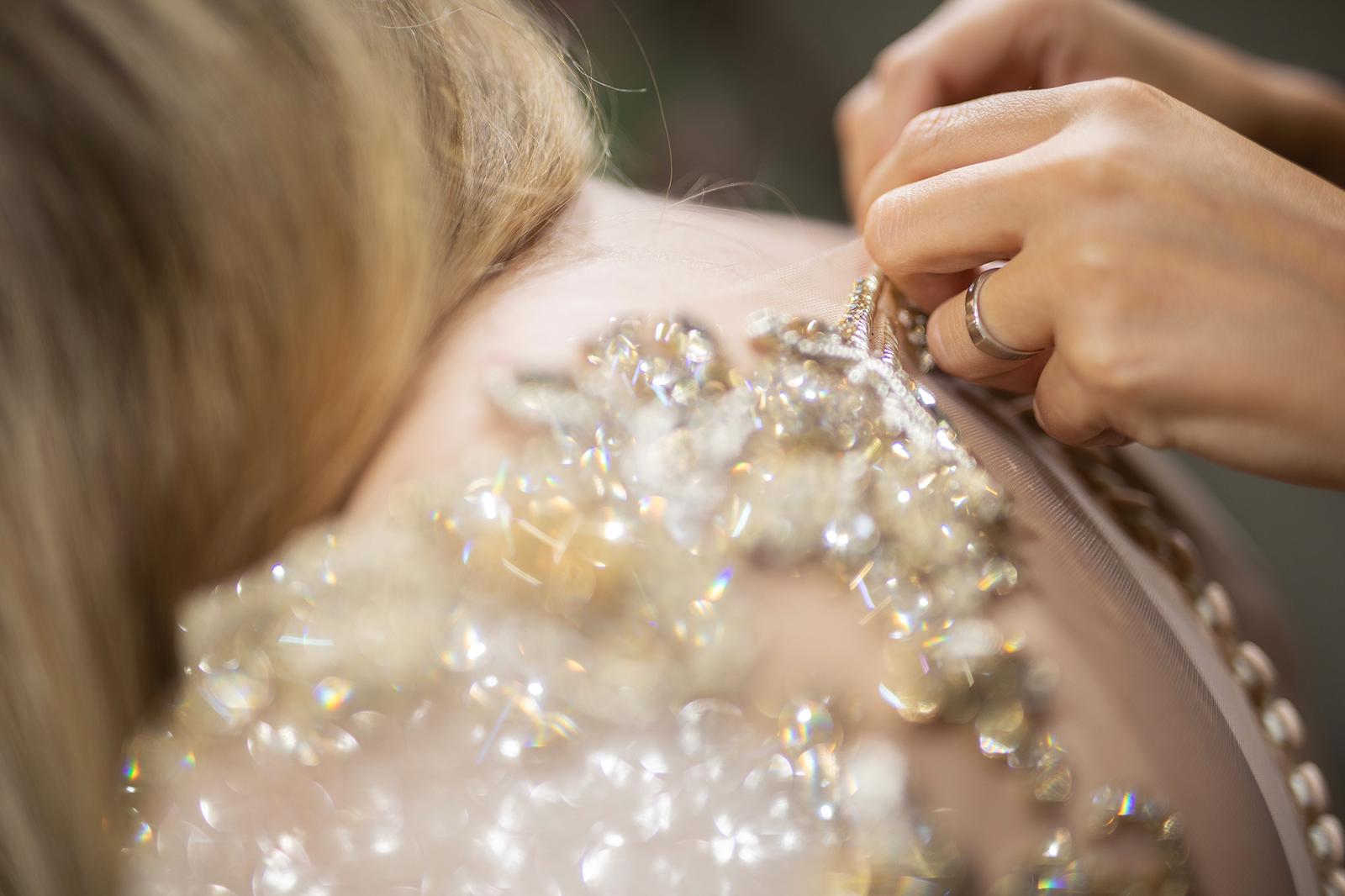
Hair and make-up come before the dress, worn in a shirt or robe that buttons at the front and never has to pass over the face. Hands should be clean and dry, with no cream. Rings and bracelets are best removed while the gown goes on: this season brings a great many sheer sleeves, scattered pearls and soft layers of tulle, and all of them catch in an instant.
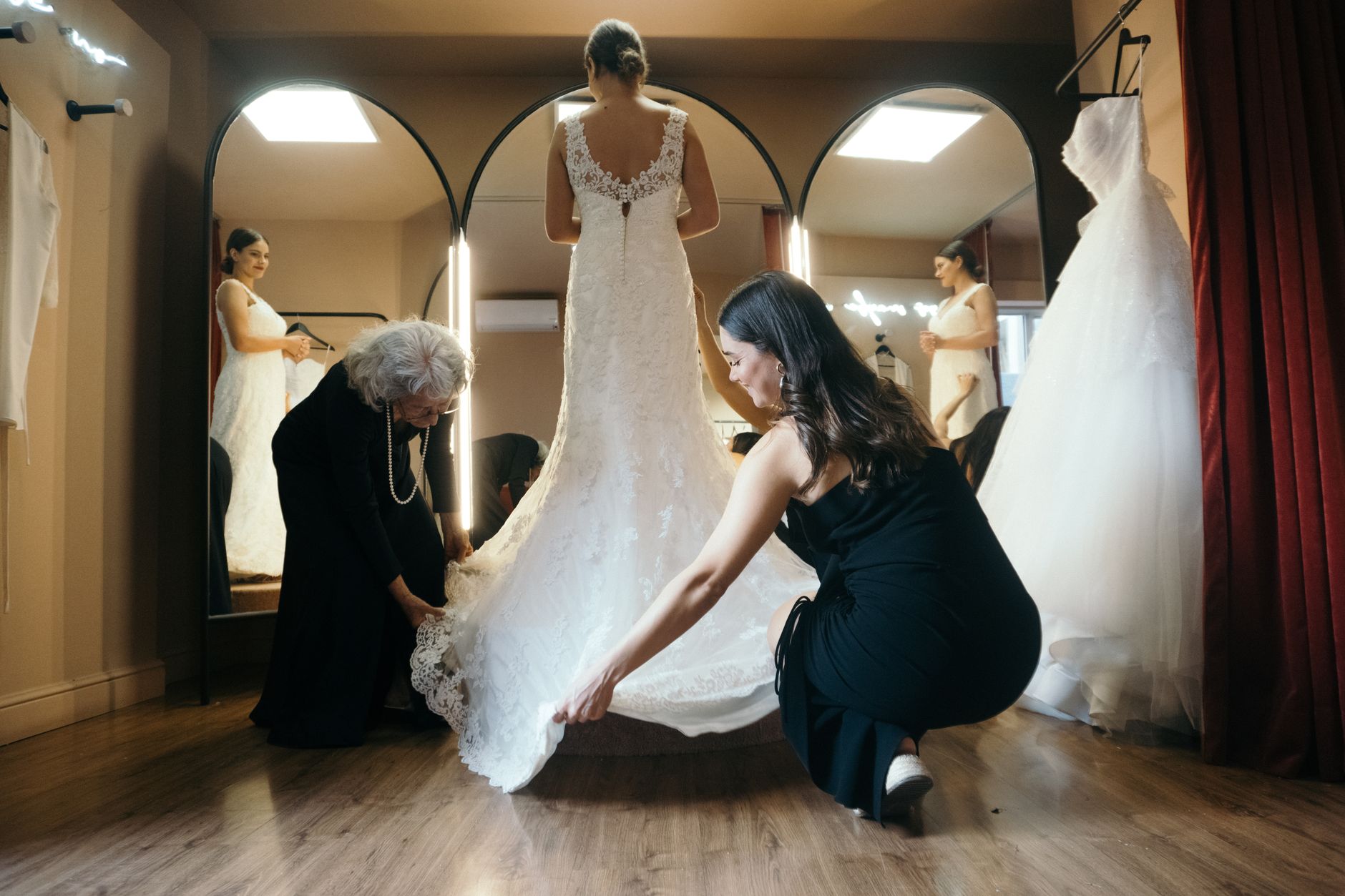
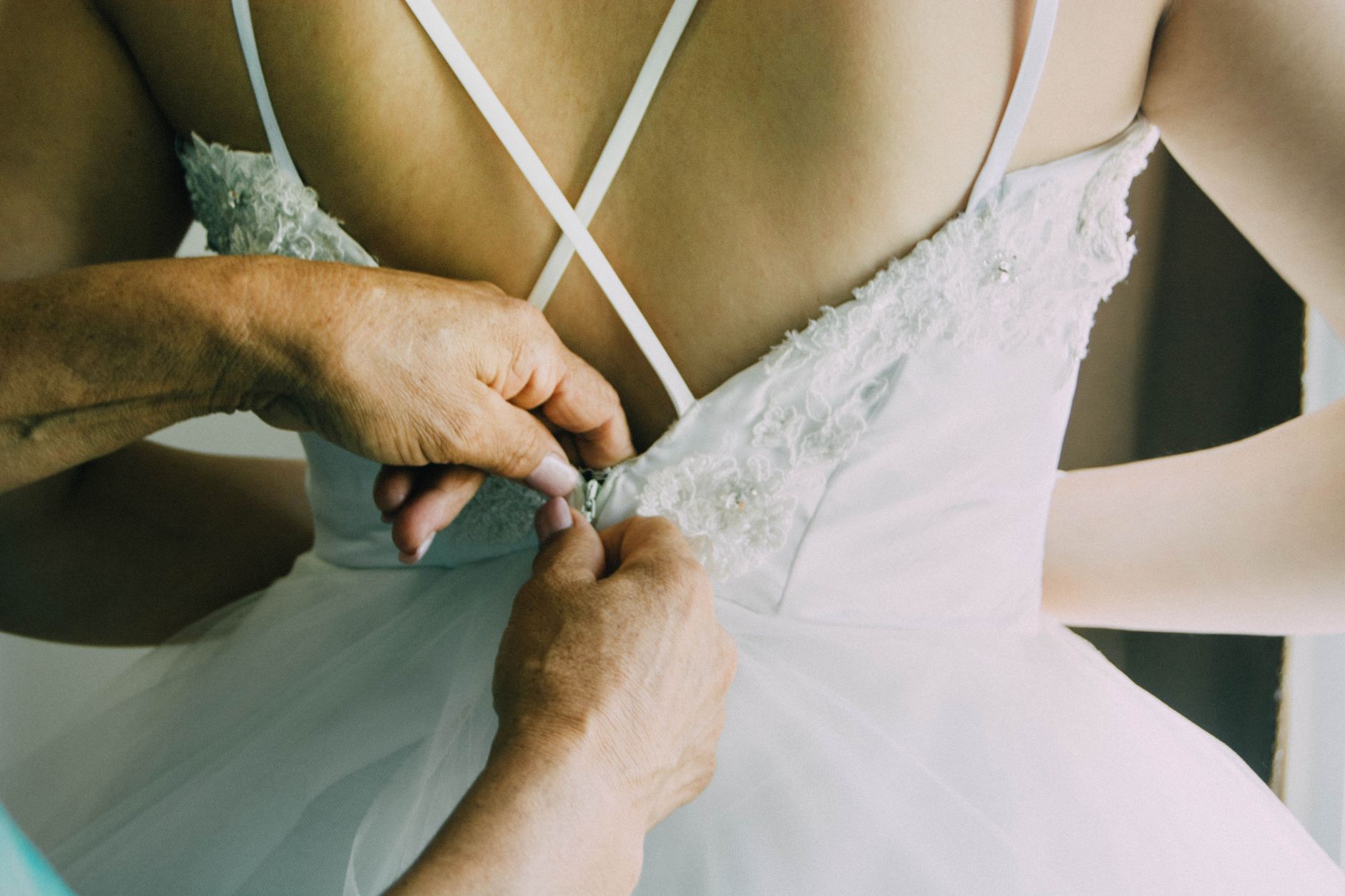
Most structured cuts are stepped into rather than pulled over the head. Fastening then works upward from the waist. A laced back — increasingly common now that visible corsetry has become the foundation of so many gowns — is not quick: allow a calm quarter of an hour and someone who knows how to draw the ribbon evenly, without sudden pulls. A zip or a row of small covered buttons moves faster, but asks for a patient hand and good light. Put the shoes on before the back is closed completely, especially with narrow silhouettes and long trains.
The Last Layers and the First Few Steps
Detachable sleeves, a belt, an overskirt or a bow belong at the very end, once the back is finished. The veil or cape comes last of all, after the hair is set. Before leaving the room, walk a little, sit down once and stand again, and see how the train gathers in the hand and how the fabric returns to shape. If the gown has a bustle for dancing, let your helper practise it at the salon during a fitting; a short video on a phone is worth far more that morning than any explanation.
At our private fittings, booked in advance, we go through exactly this: how the corset is laced, how the train is lifted, where the veil is secured. Gowns may be rented or bought, in sizes 34 to 44, with softer lines for brides expecting a baby. The rental contract is valid across the border as well, so brides from Serbia, Croatia and the diaspora can plan the collection day without haste — and begin the wedding morning quietly.