
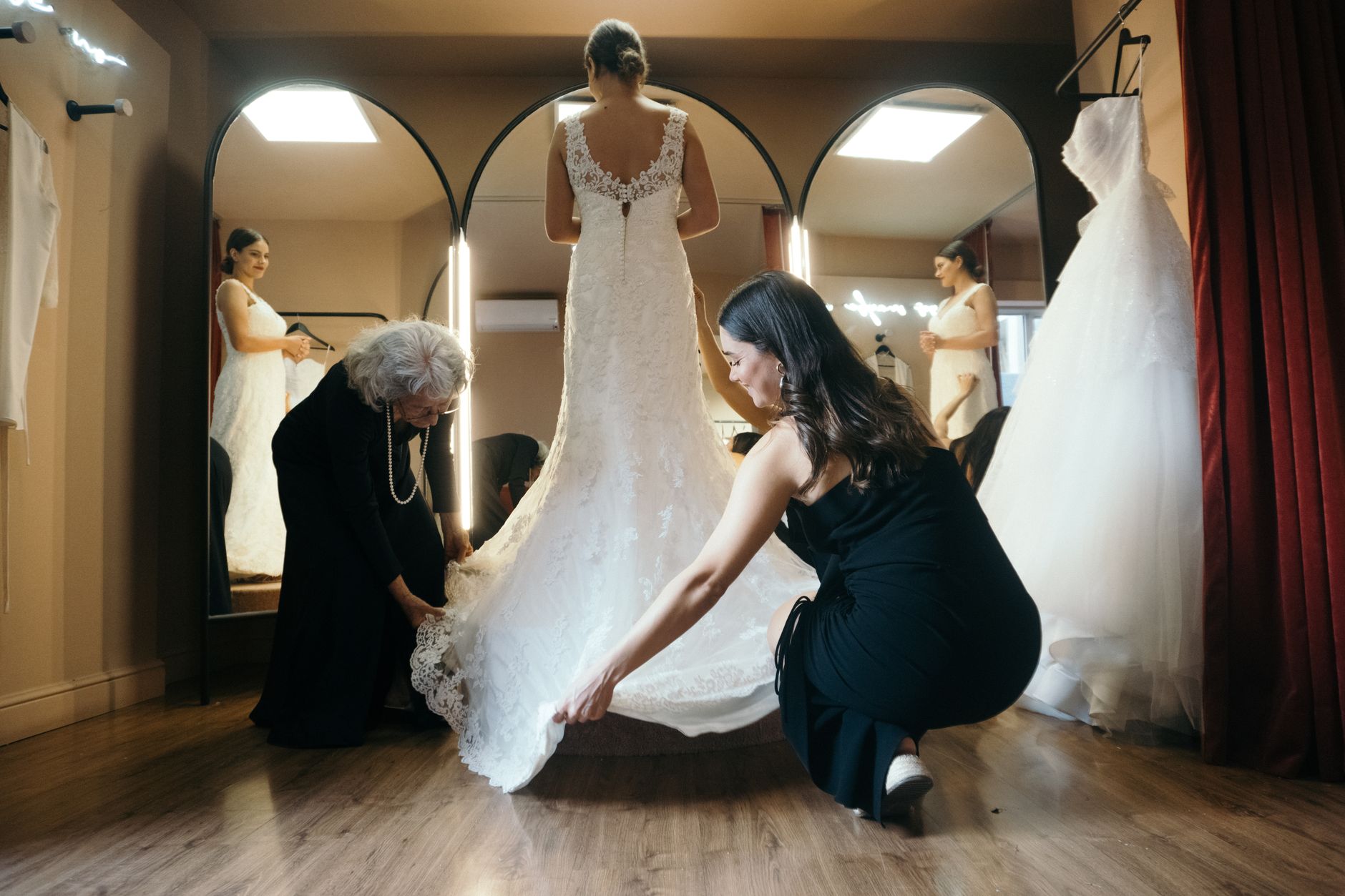
Sooner or later, every bride in the salon arrives at the same question — not which gown is more beautiful, but what happens to it after the day is over. This season brides are answering it far more openly than they once did. Some want a dress that stays in the family; others choose a richer, more demanding construction than they would ever keep in a wardrobe. Both choices are sound. They simply ask different things of you beforehand.
How much altering the cut demands
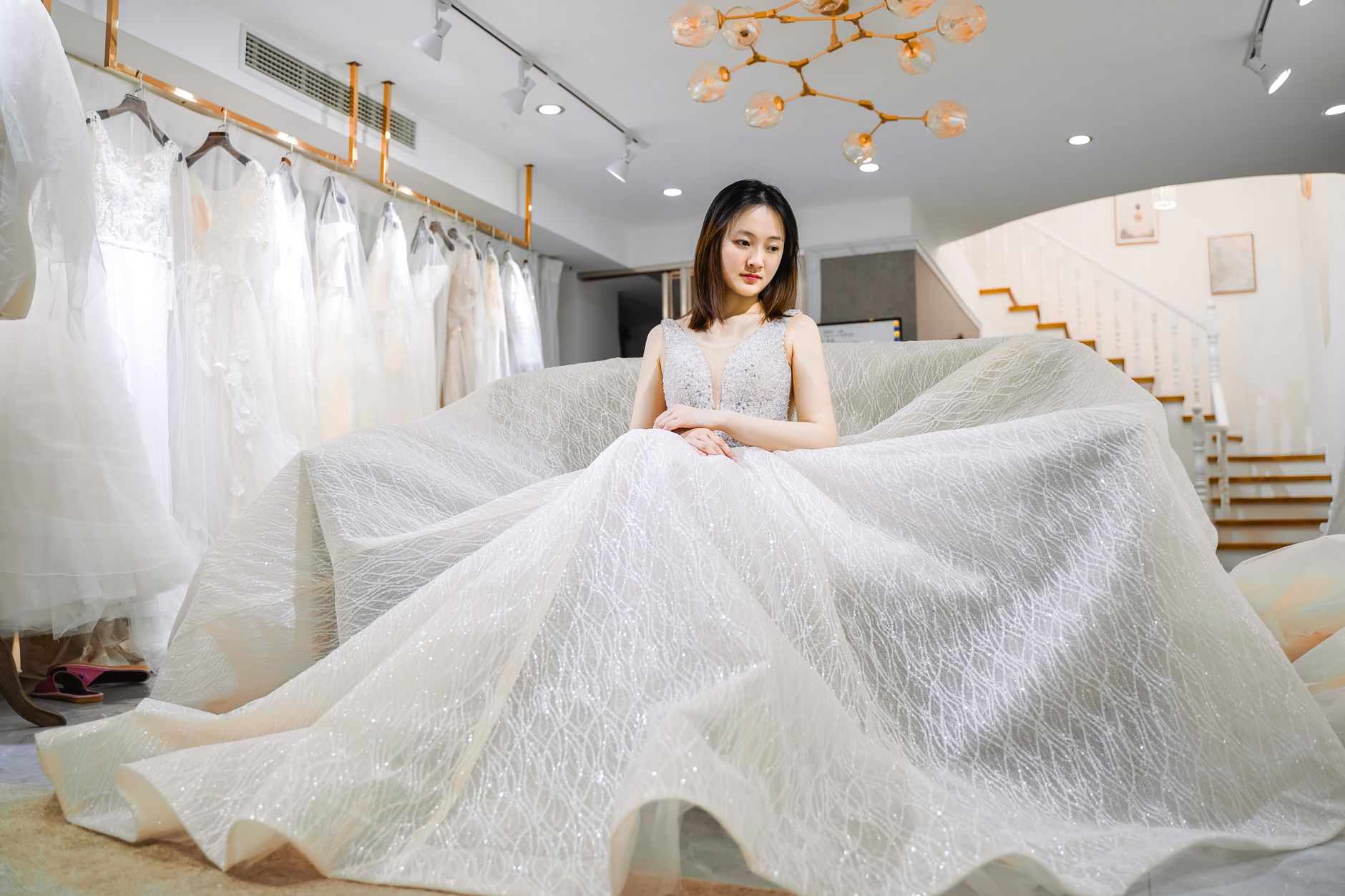
The most reliable guide is not taste but silhouette. Close-fitting shapes — mermaid, trumpet, a visible boned corset — live on millimetres. They call for boning to be moved, the waist to be set precisely, and more hours in the fitting room. Softer lines forgive a great deal more: an A-line, a bias-cut column, a slip gown on fine straps or a raised waist will sit beautifully after only a few adjustments, which also suits a body still changing in the months before the wedding.
So the decision really begins once the cut is known. Across sizes 34 to 44 most brides find a base that can be refined by hand, and for maternity styles a fluid, moving line is the natural starting point — it allows measurements to be taken late, when the picture is real.
Fabric and the journey to the altar
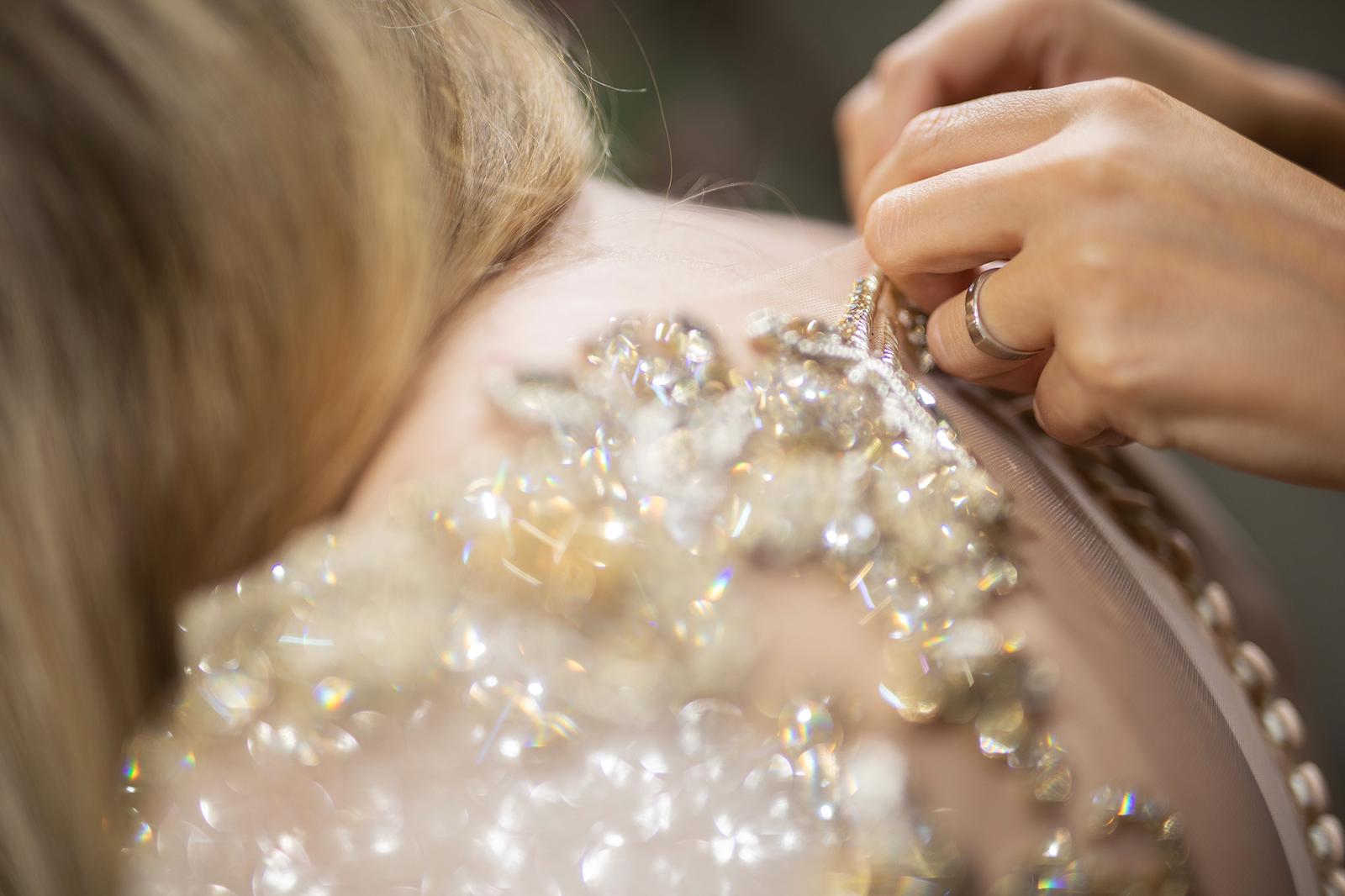
Not every fabric in favour this season travels equally well. Three-dimensional fabric flowers, fringing that sways with each step, layered tulle and hand-applied appliqué are glorious in movement, but they need careful packing and a few hours to settle before dressing. Heavy silk, mikado and densely woven jacquard are far calmer companions on a long drive.
If the wedding is held far from the salon, timing matters as much as taste: when the gown leaves, who cleans it, when it returns. For brides coming from Serbia, Croatia or the diaspora, the rental agreement holds across the border, so that part is usually settled quietly in a single appointment.
What you want to remain afterwards
A gown you own needs a plan for afterwards: specialist cleaning, an acid-free box, a dark and dry place. Without that, white fabric yellows over the years and lace stiffens. If keeping the dress matters to you, it is worth choosing a cut that will not look tied to one season — a quiet line, good cloth, one discreet detail.
If what matters more is how you feel on the day itself, renting opens the door to more elaborate workmanship and gives the gown a second life afterwards. It is also how many brides end up with two looks: something structured for the ceremony, something lighter for the evening.
You do not have to decide in advance. At a private fitting, with the hour reserved for you alone, the answer tends to arrive on its own — the moment you see how much the cut asks for, how the fabric weighs, and how you move in it.