
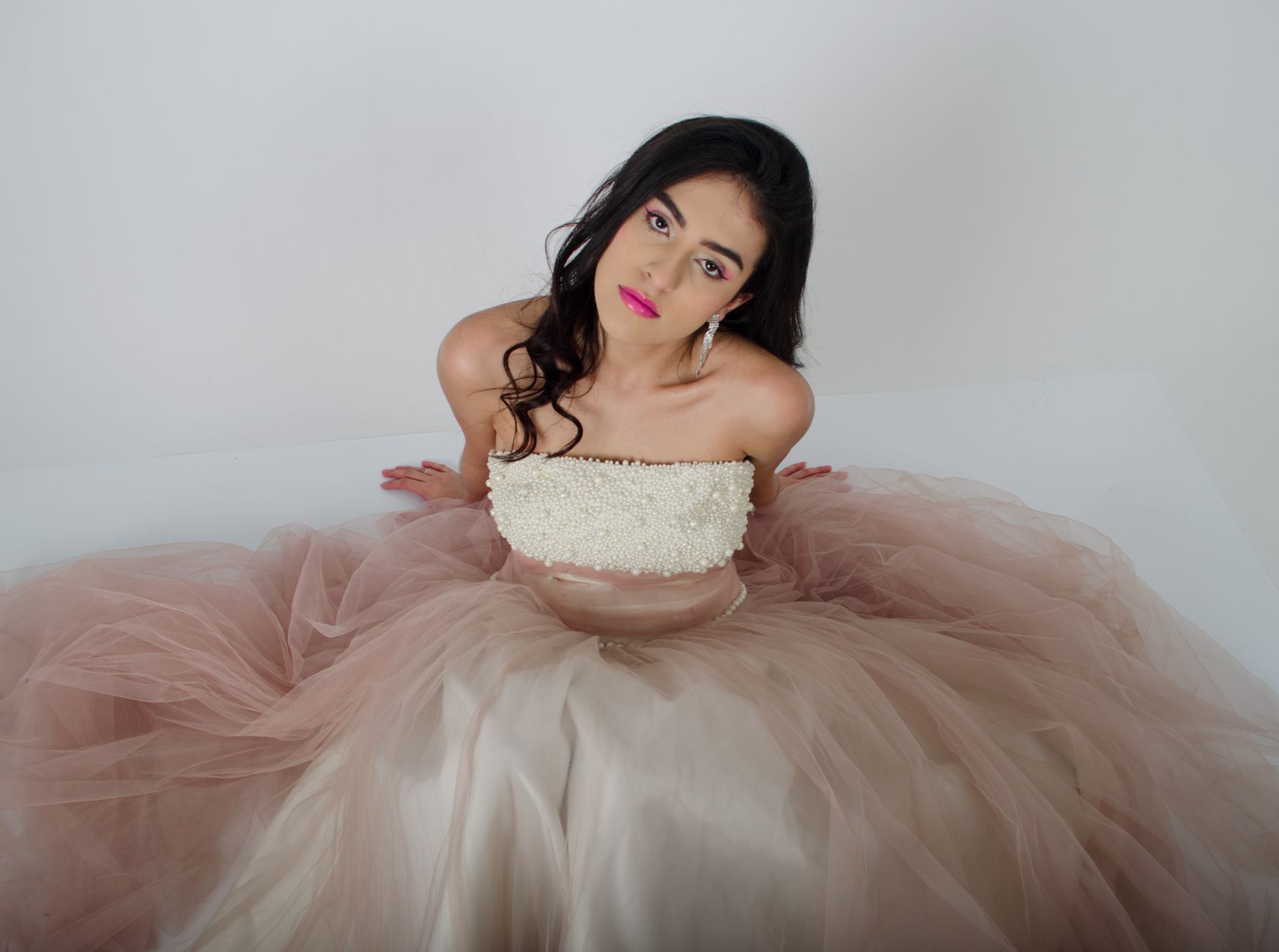
For a long time a wedding gown was understood as one piece, cut in a single breath from neckline to hem. This season it increasingly arrives as two: a top and a skirt chosen separately, meeting at the waist. It is not a compromise. It is a different way of thinking about a silhouette — the top chosen for its shape, the skirt for the way it moves.
Why the line breaks at the waist
Separates allow pairings that a single gown rarely carries well. A sculpted mikado corset above a cloud of tulle. A cropped lace bodice above a quiet, narrow skirt in heavy silk. Firm against soft, matte against sheer — a contrast that can look restless in one garment and entirely natural in two.
The break also does something to the eye, which settles exactly where the line changes. That makes the placement of the join the most important decision of all. A few centimetres higher lengthens the leg and lifts the whole figure; a few lower, with a gently dropped waist, reads calmer and more classical.
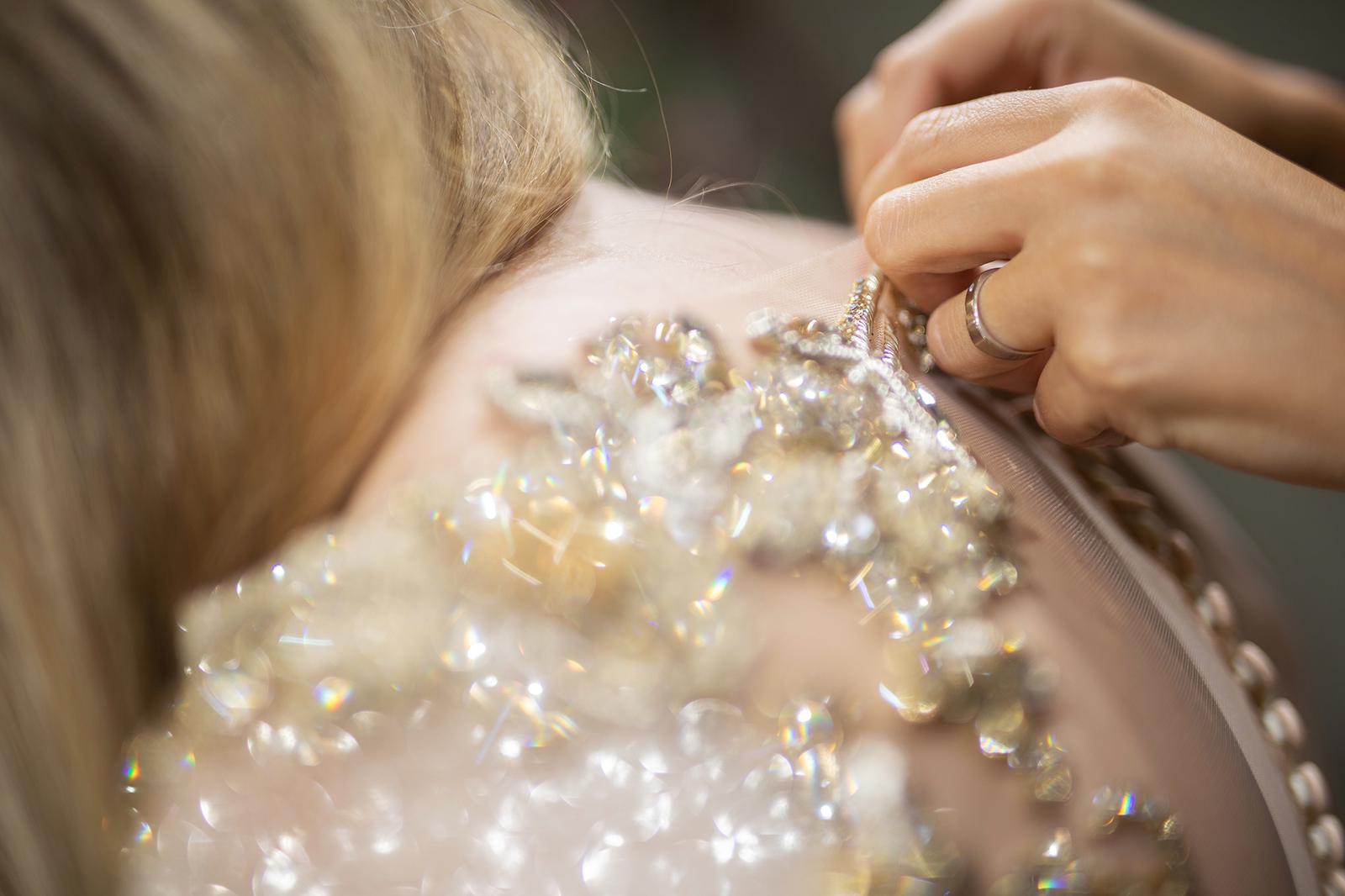
- A constructed corset — boning and an inner waist stay hold the shape without straps, and without constant adjusting.
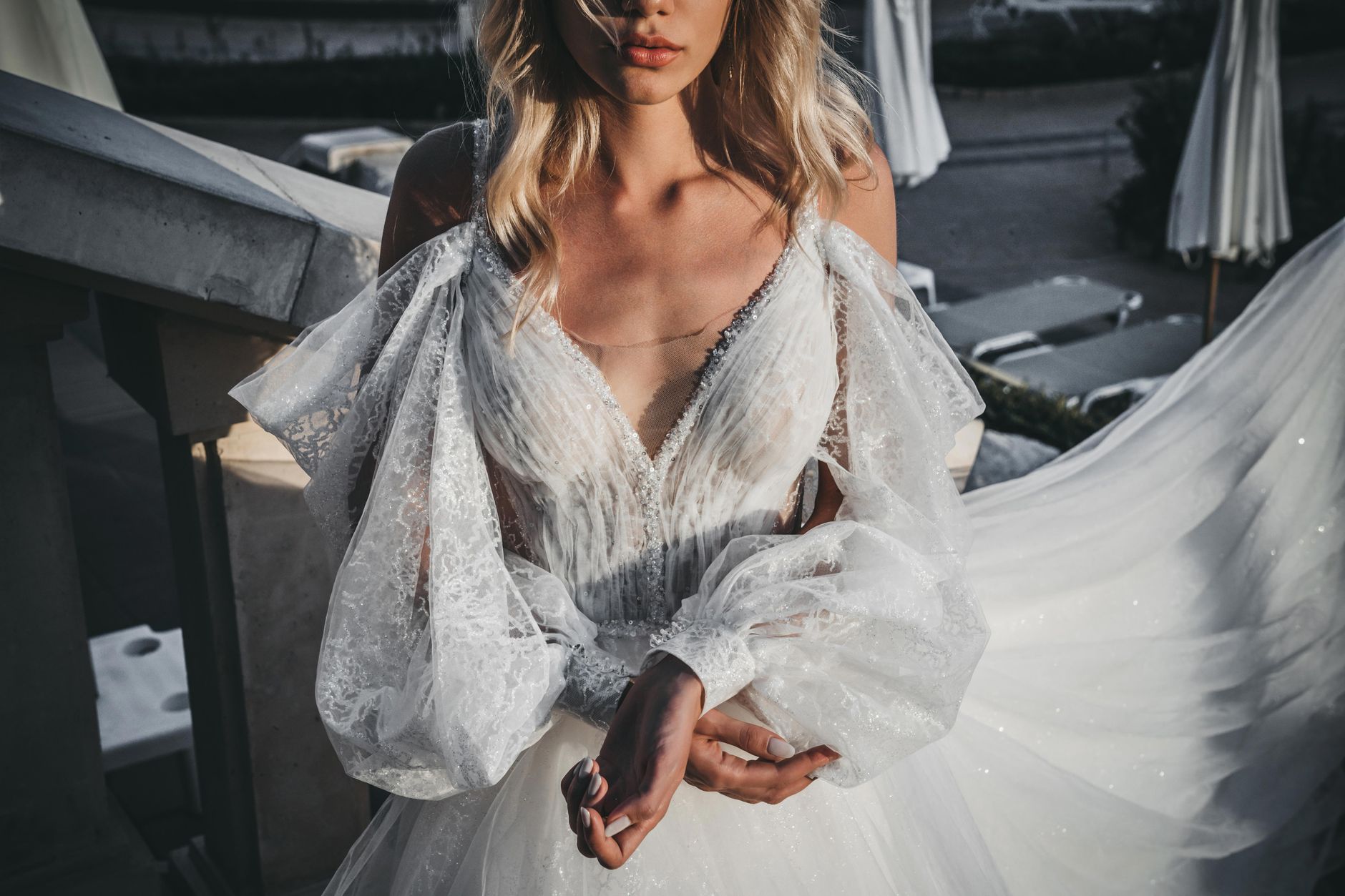
- A soft top — gathered tulle or lace over a lining, for a less severe shoulder.
- A narrow skirt — silk or crepe, long and quiet, without a single unnecessary fold.
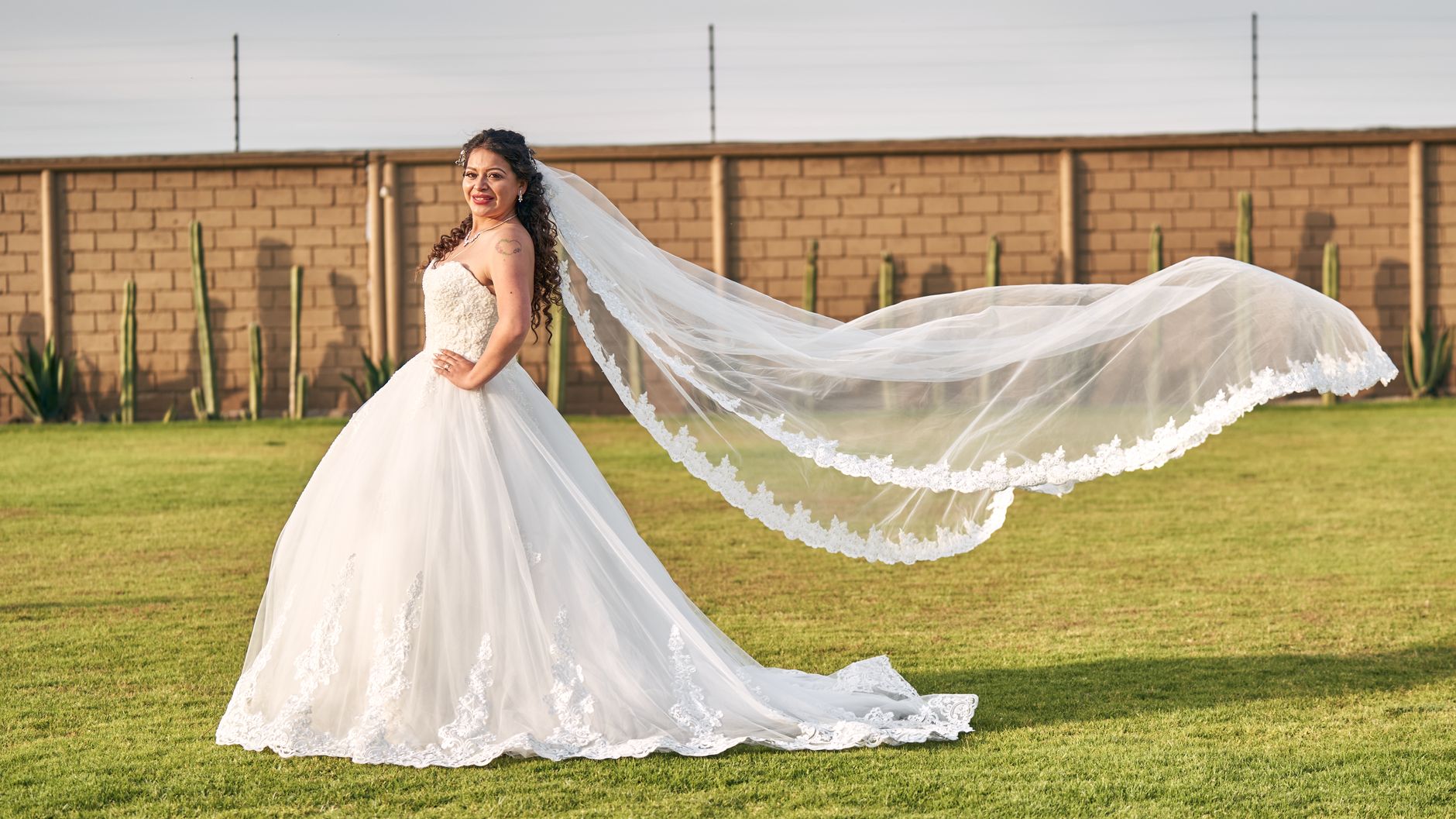
- A full skirt — layers of tulle or organza that give volume without weight.
The overskirt: volume you add
Alongside separates, the overskirt has returned — a sheer layer of tulle or organza worn above a narrow underskirt. It changes nothing beneath it; it adds width, a train, and that extra layer of light a camera reads so well. In a stone courtyard or a church, the additional fabric earns its place, just as leaving it off earns its place at a small, quiet ceremony.
If this is the direction you are drawn to, look at two things: how the upper layer closes at the waist, and whether its seam shows through a lighter fabric underneath. A well-made waistband disappears under the corset and leaves no ridge.
A cut that leaves room
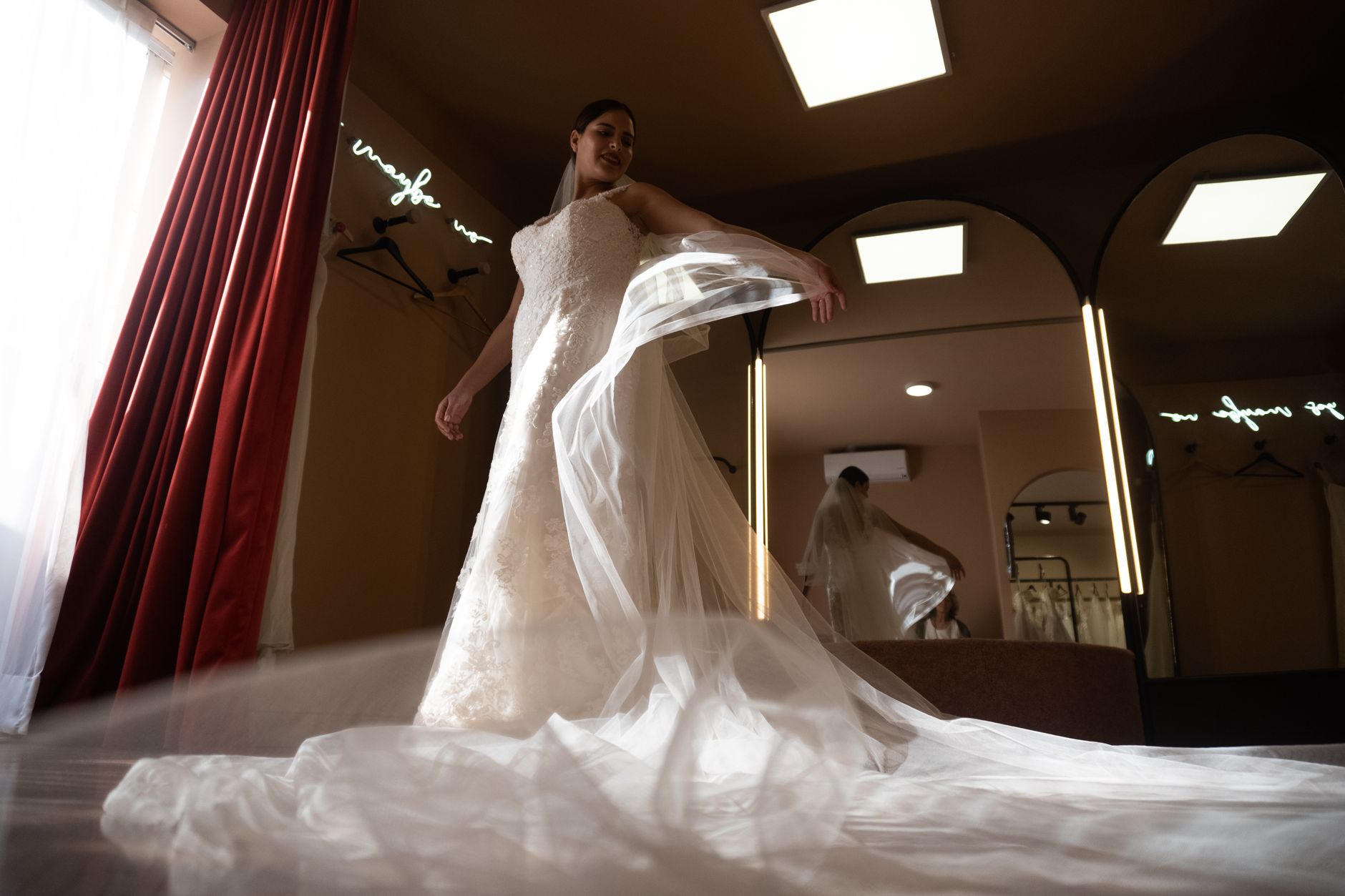
The most practical argument for separates only reveals itself in the fitting room. Few bodies ask for the same size above and below the waist, and with two pieces that is simply not a problem: the top and the skirt need not match in size. Within our range of 34 to 44 this shortens alterations considerably and protects the line the cutter intended.
The same principle serves brides who are expecting. A soft top and a skirt set high at the waist leave room a one-piece gown cannot offer, while the silhouette stays clean and unhurried.
Separates are worth trying even if you are not sure they are for you — it is often at that fitting that a bride discovers how much volume she actually wants. Appointments are private and unhurried, and a gown may be rented or bought. For brides coming from Serbia, Croatia or further afield, our rental agreement is valid across the border, so visits can be planned into a single trip.