
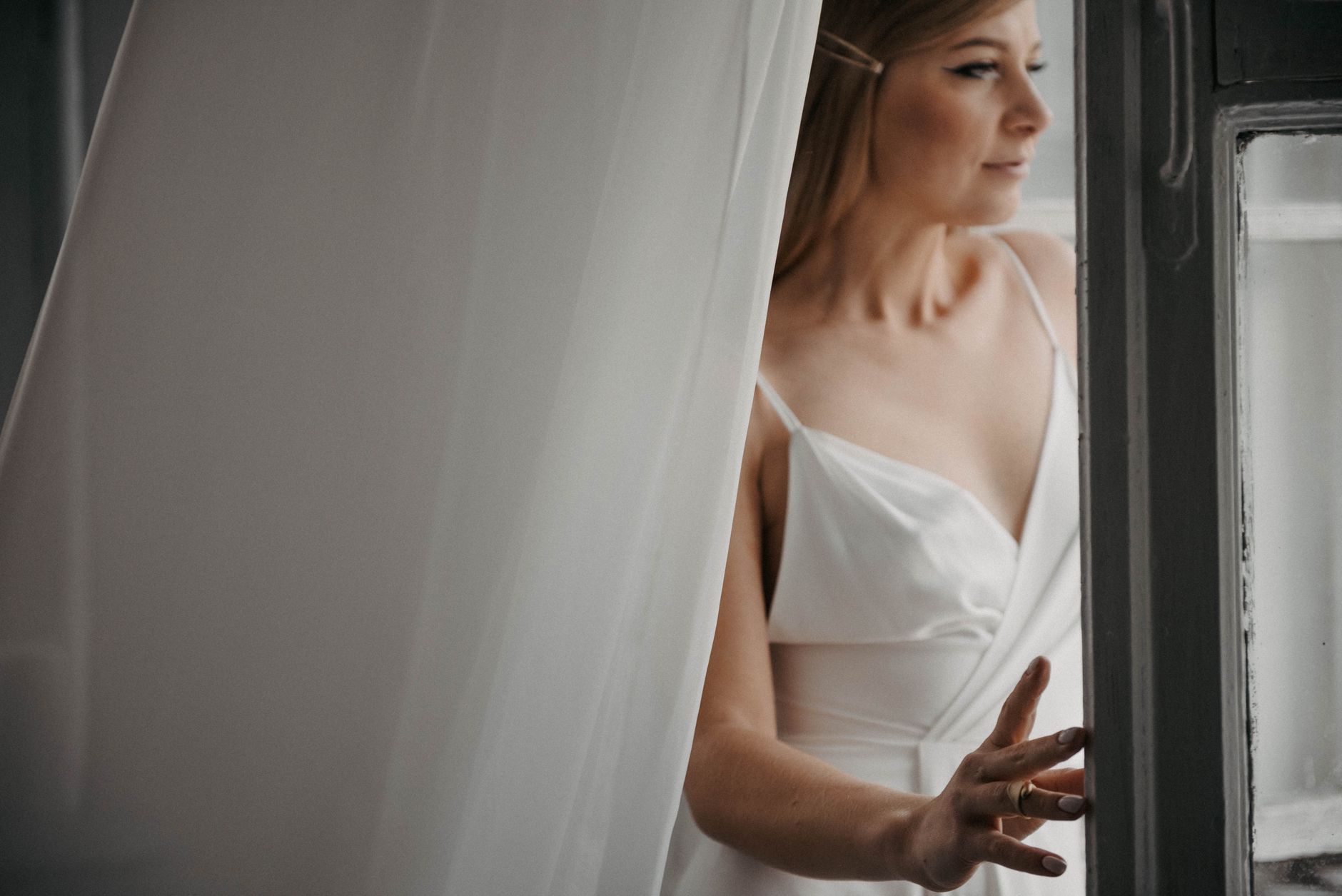
If you have been looking at gowns this season, you may have noticed that the attention has shifted away from appliqué and crystal, and onto the fabric itself — how it is gathered, drawn across the body and then released. Draping is back, but without the heaviness: instead of decoration, the shape comes from the folds.
The fold as construction, not trim
The difference between a beautifully draped gown and a merely creased one is intention. In a well-cut dress the folds gather at a single point — most often beneath the bust, at one hip, or diagonally across the torso — and open out from there in soft lines. Fluid silk, crepe and chiffon take on a quiet sculptural quality: the waist reads narrower, the hips calmer, the silhouette longer, without a single seam that cuts.
Three directions stand out this season:
- The gathered, sculpted bodice — folds worked over corsetry soften the structure, so the firm foundation stays invisible.
- Asymmetry — a draped shoulder, a diagonal neckline, or a skirt gathered on one side only; deliberately uneven, and modern for it.
- Cascading panels — loose lengths of fabric that ripple as you walk and settle back into stillness.
Who wears folds particularly well
Draping is the most forgiving technique in dressmaking. Soft folds across the torso cover whatever a bride would rather not emphasise, yet they never hide the figure — they simply redirect the eye. This is why the cut works across a broad range of sizes, from 34 to 44, and why it is so generous in maternity styles: fabric gathered under the bust lets the waist breathe, falls softly, and stays elegant even as the silhouette changes in the weeks before the wedding.
If you are petite, choose finer folds in lighter fabrics so the volume does not overwhelm you. Taller brides can carry bolder, larger draped lines that travel the length of the body.
What to check at the fitting
A draped gown cannot be judged standing still in front of a mirror. Sit down, raise your arms, walk a little — the folds should recover their shape rather than stay crushed. Look at where each fold ends, too: a good cut has a clean, flat transition, with no sudden thickening of fabric.
It is worth noticing how the fabric feels against the skin. Soft, fluid cloth is comfortable to wear all day and behaves beautifully in natural light, but it asks for a faultlessly fitted underlayer, because every line beneath it will show.
Gowns like these reveal themselves slowly, in an unhurried room. We arrange fittings by appointment and keep them private, and every gown may be rented or bought — a decision best made once you have walked in it, sat in it, and seen how the folds move with you.