
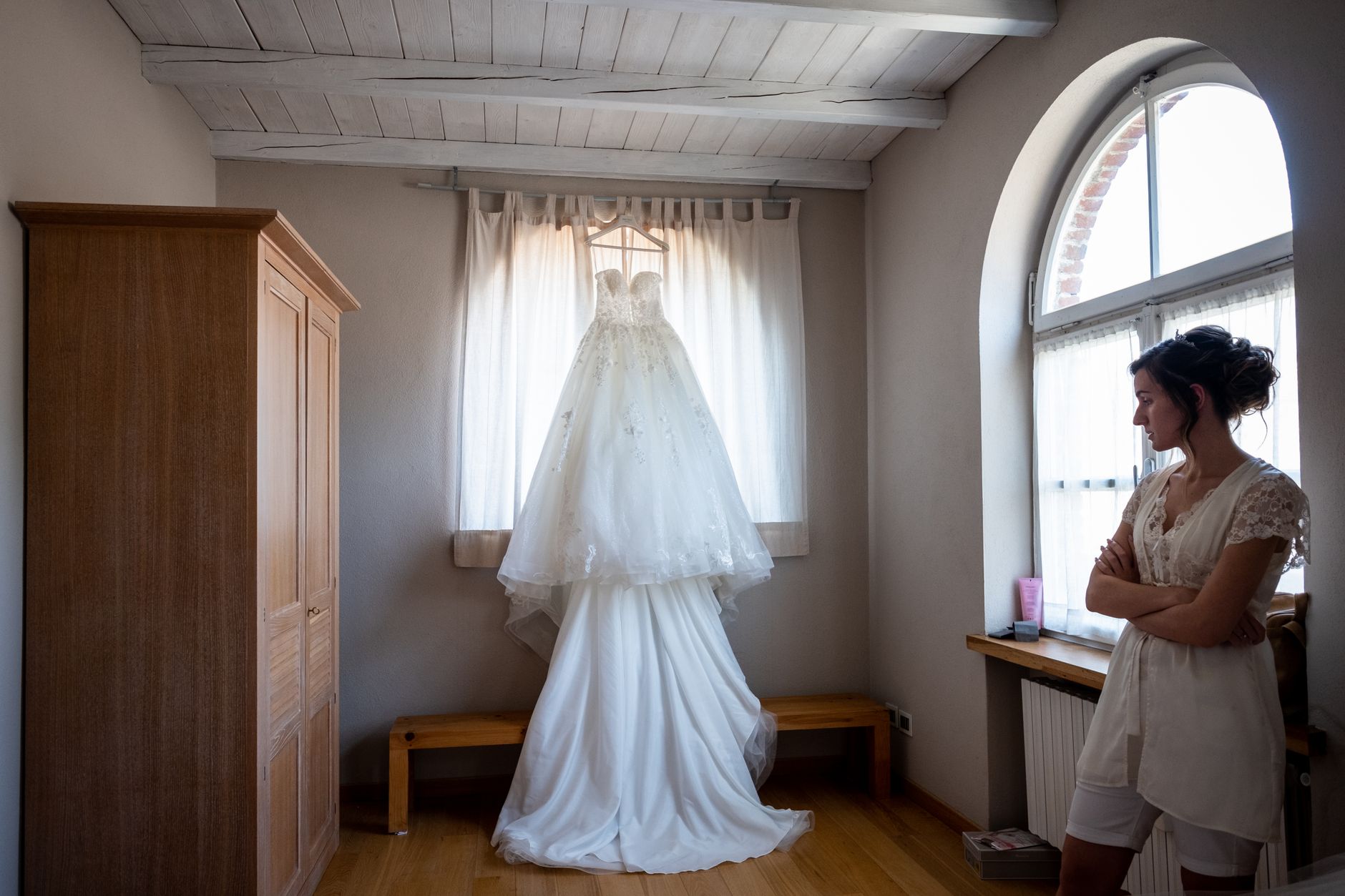
Long before lace or a train enters the conversation, there is a question many brides leave until last, and it belongs at the very beginning: where, exactly, will you be moving in this gown? A stone courtyard in August, a garden at midday, a cool church in March and a parquet ballroom ask for three different fabrics and three different hem lengths. This season the point is easier to see, because collections have returned to a clear formula: a quiet base and one strong feature, carried by a fabric that can hold it effortlessly.
Fabric weight is really a comfort decision
Choose material by how it behaves rather than by its name. Dense satin and firm mikado hold architecture; they build a sculpted skirt, a defined hip line and a clean hem on their own. Organza and tulle build volume out of air, so even a full skirt stays light. Crepe and softer, fluid satins fall along the body. For an outdoor ceremony in high summer, breathable bases and a thin, breathing lining are worth more than any embellishment; for early spring, late autumn or a cool stone interior, a denser cloth and a stable lining keep the silhouette exactly as it was in the morning. One caution: under several layers the body warms its own small climate quickly, so a "winter" gown is often warm even in an unheated hall.
The ground underfoot decides the hem
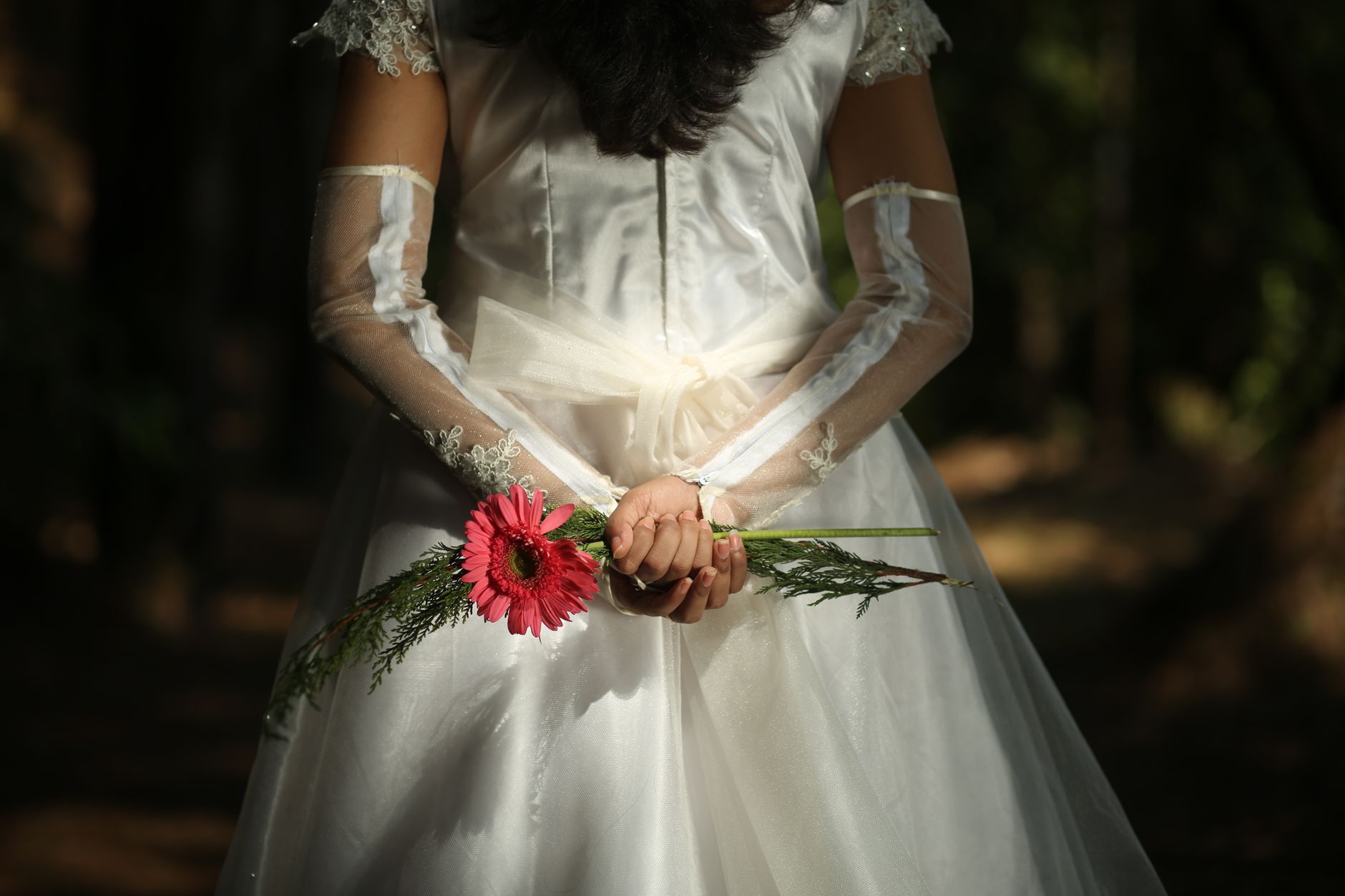
Grass, gravel, cobblestone, sand and polished floors are not equal partners for a long train. Outdoors, a short or mid-length train stays composed, while a long one wants a hand to arrange it and a cloth that shakes clean. The most practical answer this season is the detachable layer: a train or overskirt lifted away after the ceremony, so the dancing hours begin with a lighter silhouette. For longer ceremonies, sit down during the fitting as well; a crisp fabric keeps a crease, a soft one recovers by itself.
Light in the room, surface on the cloth
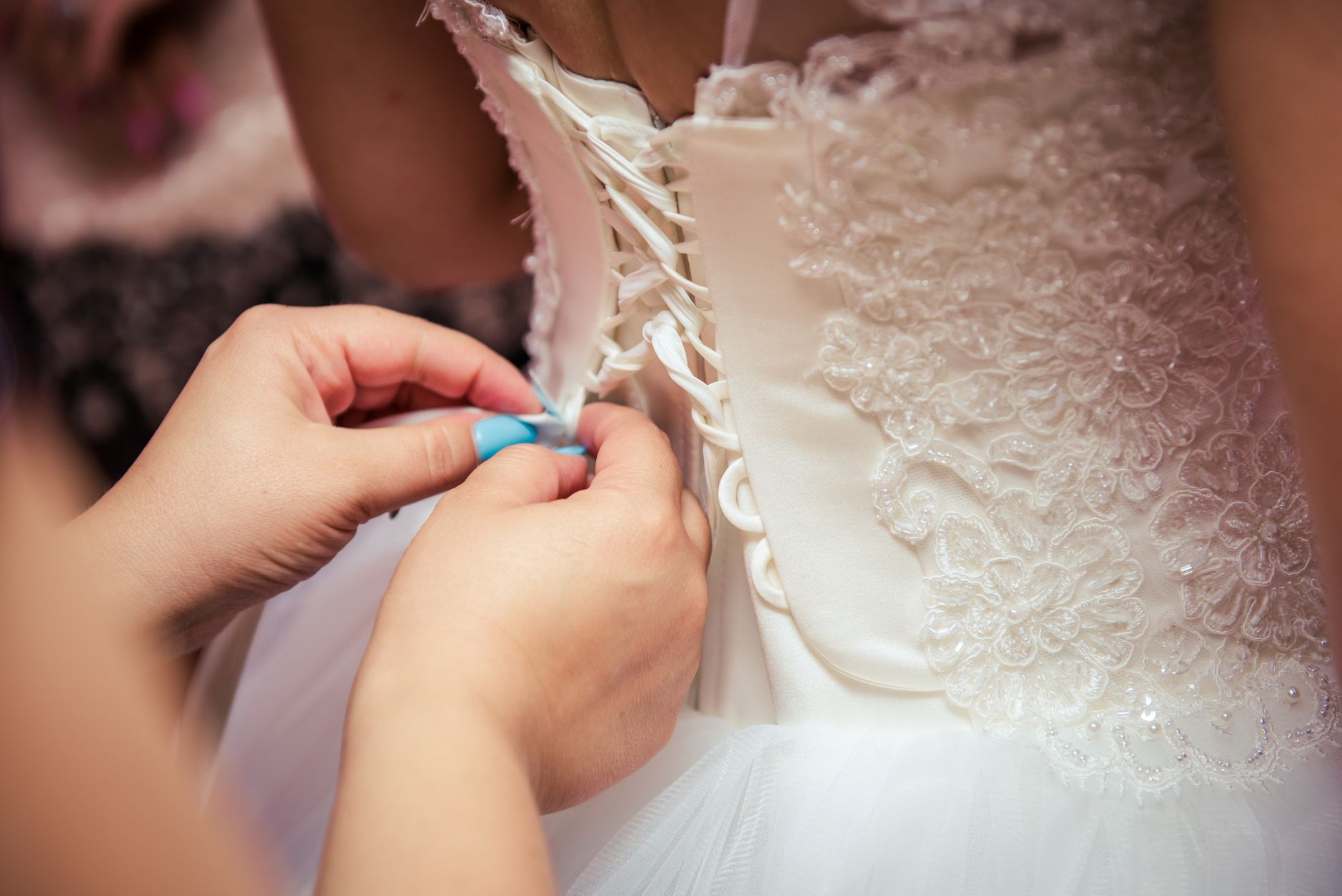
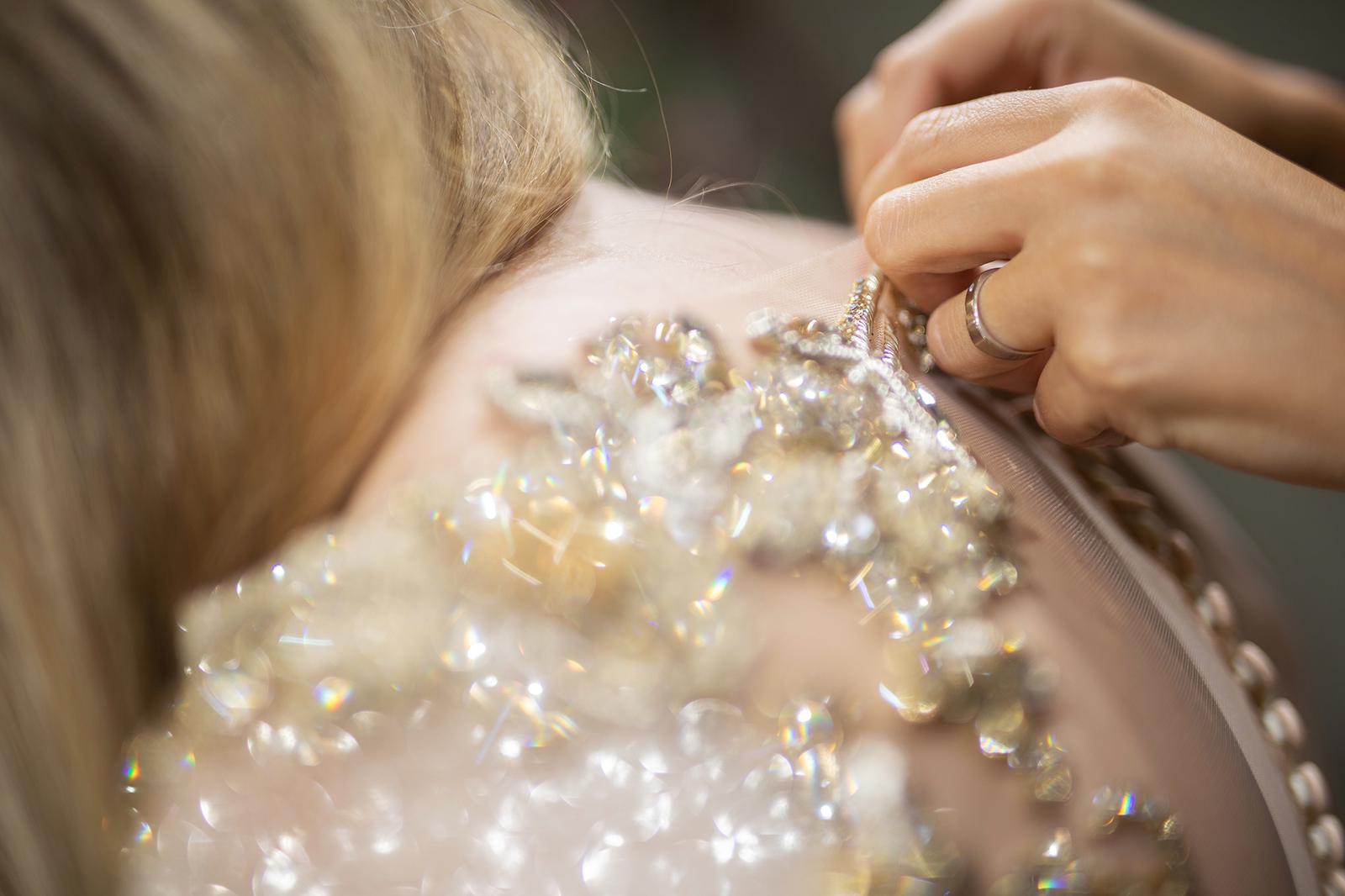
The same material reads differently in noon sun, in the shade of old trees and under warm lamps. Matte surfaces such as crepe and matte satin look calm and quietly luxurious in strong daylight, with no glare in photographs. Lustrous cloth comes alive indoors and by candlelight. A sheer organza sleeve, fine lace across the back or a three-dimensional flower at the waist gains depth only when light strikes at an angle, which is why a gown deserves to be seen both by the window and deeper in the room.
What to test at the fitting
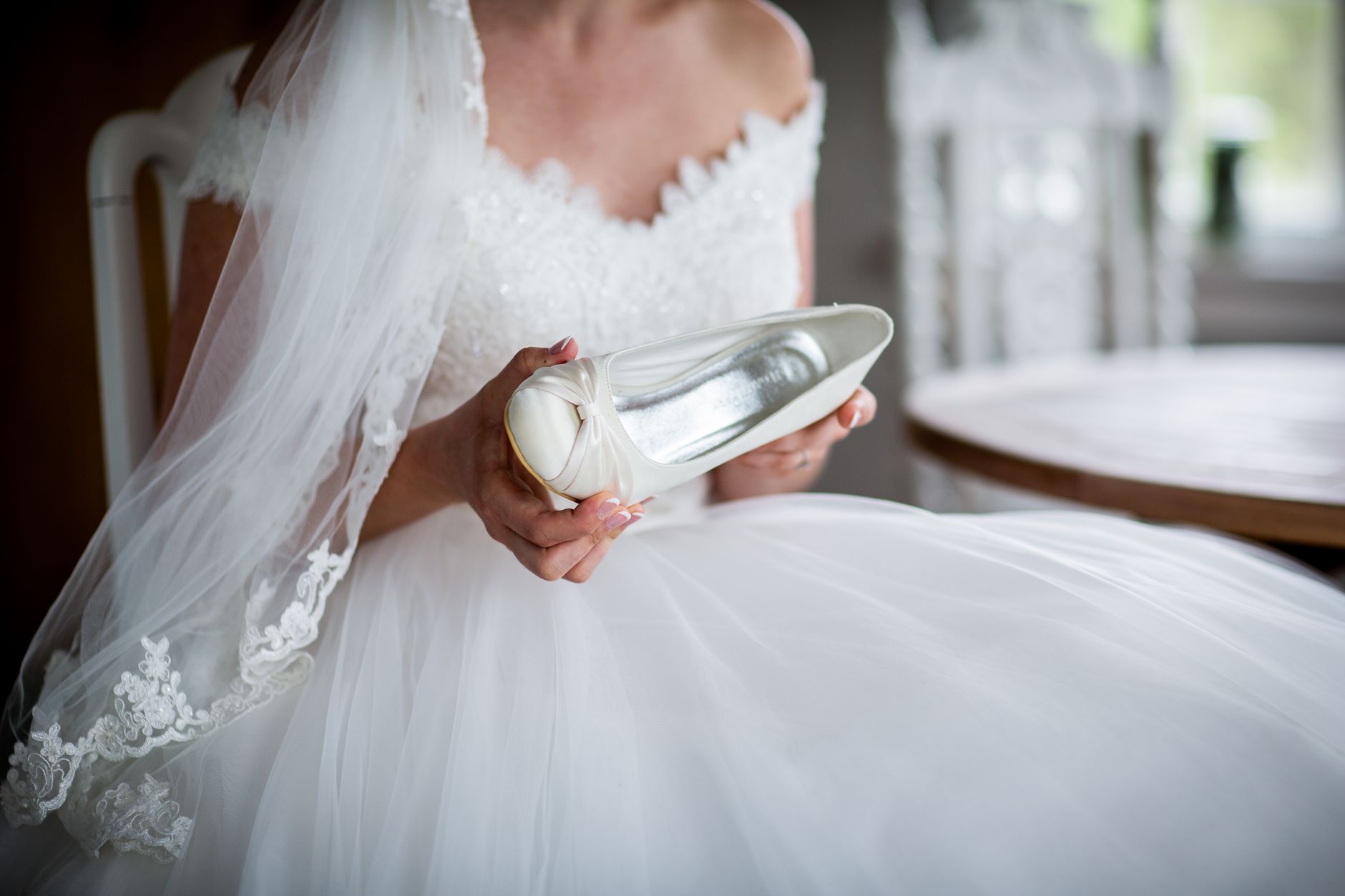
Bring what you already know about the day: the month, the hour, the kind of space, your shoes and heel height. Then walk, sit, raise your arms and turn; fabric tells the truth in movement.
- Season: weight and lining before cut.
- Space: ceiling height and light guide volume and shine.
- Ground: hem and train length to suit the terrain.
- Movement: dancing, stairs, getting into a car.
Our fittings are unhurried and by appointment, in sizes 34 to 44, with cuts suited to mothers-to-be. Gowns may be rented or bought, and the rental contract is valid across the border, for brides from Serbia, Croatia and the diaspora.